Weighted Cossack Squats
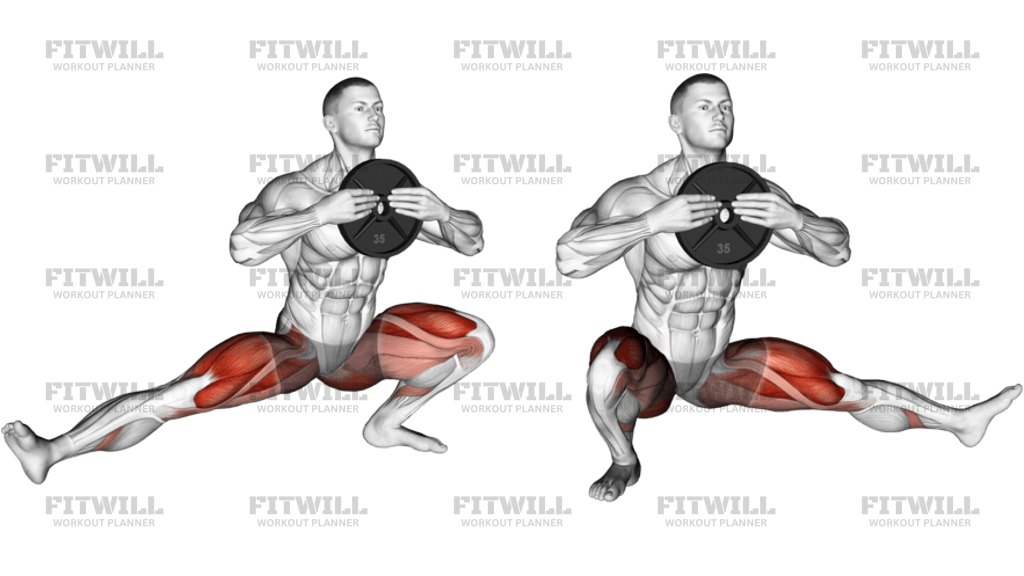
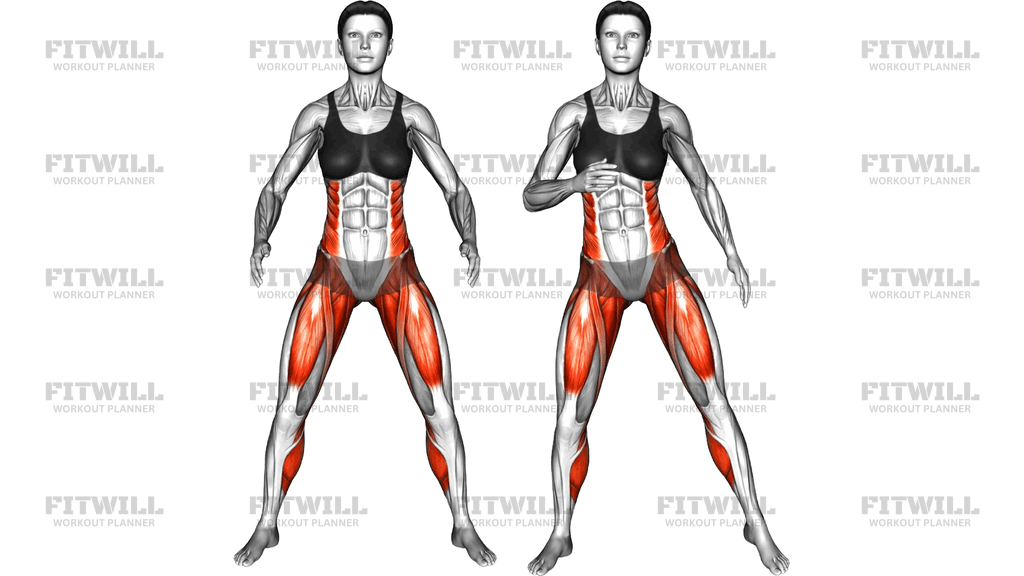
Weighted Cossack Squats are a wide-stance lateral squat pattern that trains the hips through deep side-to-side range while loading the upper body with a plate, dumbbell, or kettlebell at the chest. The movement asks one leg to bend and support most of the load while the other leg stays long and straight, so the exercise challenges hip mobility, adductor strength, glute control, and trunk stability at the same time.
Because the stance is so wide, the setup matters more than in a standard squat. The weight should stay close to the chest so the torso can remain upright, and the feet need enough turnout to let one hip sit down while the opposite leg lengthens. If the stance is too narrow, the motion turns into a sloppy side lunge; if it is too wide or the load is too heavy, the pelvis will tilt, the chest will collapse, and the knees will fight for position instead of moving smoothly.
A good repetition starts by shifting the hips toward one side, keeping the working foot planted and the opposite leg extended with the toes lifted or turned up. The bent-side knee should track in line with the toes as you sink under control, and the non-working leg should stay long enough to create a clear stretch through the inner thigh. At the bottom, pause briefly without bouncing, then drive through the bent-side foot to stand tall before repeating on the other side.
This exercise is useful when you want strength that carries over to lateral movement, groin resilience, and better control in deeper squatting positions. It fits well in lower-body accessory work, athletic prep, mobility-focused strength sessions, or any program that needs more frontal-plane training than a normal squat provides. The best reps are deliberate and even on both sides, not fast or forced.
Use a load that lets you stay tall, shift cleanly, and keep the heels and midfoot stable. If one side feels dramatically tighter, reduce the depth and earn the range gradually instead of forcing it. The goal is a controlled side squat with a long, steady return to center, not a rushed balance drill.
Fitwill
Log Workouts, Track Progress & Build Strength.
Achieve more with Fitwill: explore over 9600 exercises with images and videos, access built-in and custom workouts, perfect for both gym and home sessions, and see real results.
Start your journey. Download today!




Instructions
- Stand with a very wide stance and turn both feet slightly out so one leg can bend while the other stays long.
- Hold a weight plate, dumbbell, or kettlebell close to your chest with your elbows lifted and your ribs stacked over your pelvis.
- Shift your hips toward one side and sit down into that hip while the opposite leg stays straight and long.
- Keep the working foot flat and let the other foot rotate so the toes lift or point upward as the leg lengthens.
- Track the bent-side knee in line with the toes as you lower under control.
- Descend only as far as you can while keeping your chest tall and the load close to your body.
- Pause briefly at the bottom without bouncing, then drive through the bent leg to stand back up.
- Return to the center under control and repeat on the other side for the planned number of reps.
Tips & Tricks
- Keep the load at chest height; letting it drift forward makes the torso tip and the squat turn into a balance fight.
- Let the non-working leg stay long instead of letting both knees bend the same amount.
- If the heel on the working side starts to rise, shorten the depth and make the stance slightly less wide.
- Aim the bent knee toward the second or third toe so it does not cave inward as the hips shift.
- Use a controlled 2 to 3 second descent so the inner thigh and glute do the work instead of momentum.
- Exhale as you drive out of the bottom and keep the brace firm through the standing phase.
- A lighter plate often works better than a heavy one because the wide stance already adds a lot of difficulty.
- If one side is much tighter, spend an extra rep there at a reduced depth rather than twisting through the hips.
- Stop the set if the pelvis tucks hard under you or the spine rounds to reach more range.
Frequently Asked Questions
What muscles do Weighted Cossack Squats work?
They emphasize the hips and inner thighs, especially the adductors, while the glutes, quads, and core help control the squat.
Should I hold the weight at my chest or let it hang?
Hold it at the chest like the image shows. That keeps the torso more upright and makes the side shift easier to control.
How deep should I go on the working side?
Go as deep as you can while keeping the working heel planted, the chest tall, and the opposite leg long. Do not force depth if the pelvis starts to tuck.
Can beginners do Weighted Cossack Squats?
Yes, but start with bodyweight or a very light load and a shallow range. The lateral mobility demand is often the limiting factor.
What is the biggest technique mistake in this squat?
Letting the torso collapse forward or the working knee cave inward. Both usually mean the stance is too wide or the load is too heavy.
Do both feet stay flat the whole time?
The working foot should stay flat, but the straight leg usually rotates so the toes lift or point upward as that leg lengthens.
Is this the same as a side lunge?
Not quite. A Cossack squat uses a wider stance, a deeper side-to-side shift, and a more upright torso to load the hips and adductors differently.
What weight should I use?
Use the lightest load that still lets you stay tall, shift smoothly, and repeat both sides evenly.
How should I breathe during the rep?
Inhale as you lower into the side squat, then exhale as you drive back to standing.