Suspender Weighted Inverted Row
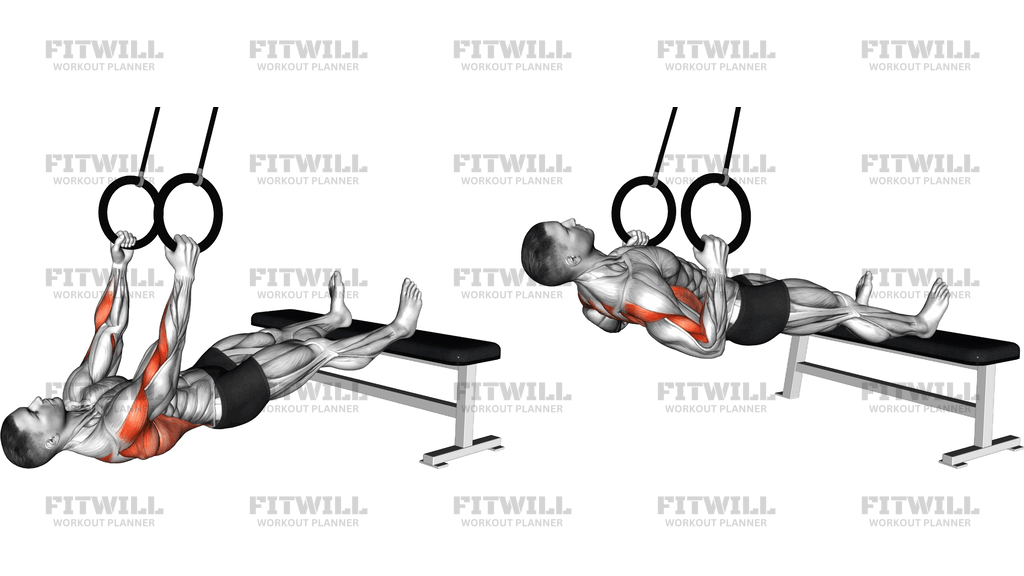
Suspender Weighted Inverted Row is a suspended rowing exercise that builds upper-back strength while asking the core, glutes, and grip to keep the body rigid. The feet are elevated on a bench, which puts the torso in a more demanding horizontal position and makes every rep depend on clean body tension instead of a loose swing. It is a useful option when you want a row that feels more athletic than a machine pull and more stable than a free-hanging bodyweight version.
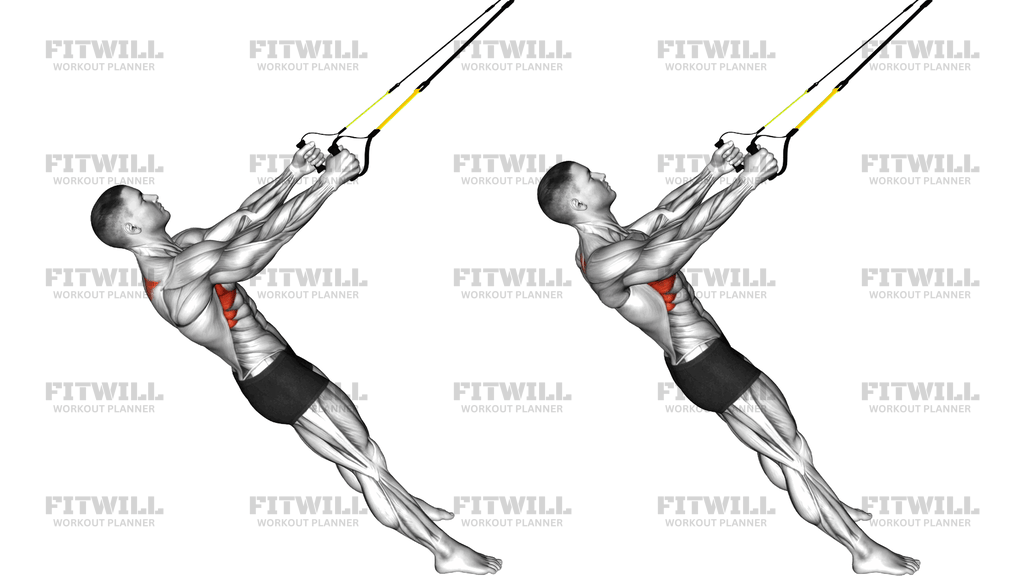
The main training effect comes from pulling the handles toward the lower ribs while keeping the shoulders organized and the torso straight. That action challenges the lats, mid-back, rear shoulders, and biceps, while the abs and glutes work hard to stop the hips from sagging. Because the load is carried through suspension straps, small changes in body position can make the exercise much easier or much harder, so the setup matters as much as the pull itself.
A good Suspender Weighted Inverted Row starts with the handles set evenly and the feet placed securely on the bench before the first rep begins. Lie back under the straps, grip the handles with neutral wrists, and organize your body into one long line from shoulders to heels. If you are using extra load, keep it centered and snug so it does not shift when you start the pull.
From there, drive the elbows back and down until the handles reach the lower ribs or the sides of the chest, then pause long enough to feel the upper back finish the rep. Lower yourself slowly until the arms are straight again and the shoulders stay packed, rather than dumping forward at the bottom. The best reps feel strong through the pull and controlled on the way down, with steady breathing and no jerking from the legs or hips.
Suspender Weighted Inverted Row works well as a strength accessory for back day, a pulling balance to pressing work, or a tougher horizontal-row option in a full-body session. It is especially useful when you want to train the back without loading the spine directly, but it still demands respect for shoulder position and setup quality. If the body starts to bend at the waist or the straps begin to wobble, the load is too high or the angle is too aggressive.
[ Workout Log & Planner ]
Put your next workout in Fitwill
Keep your plan and training log ready when you are.


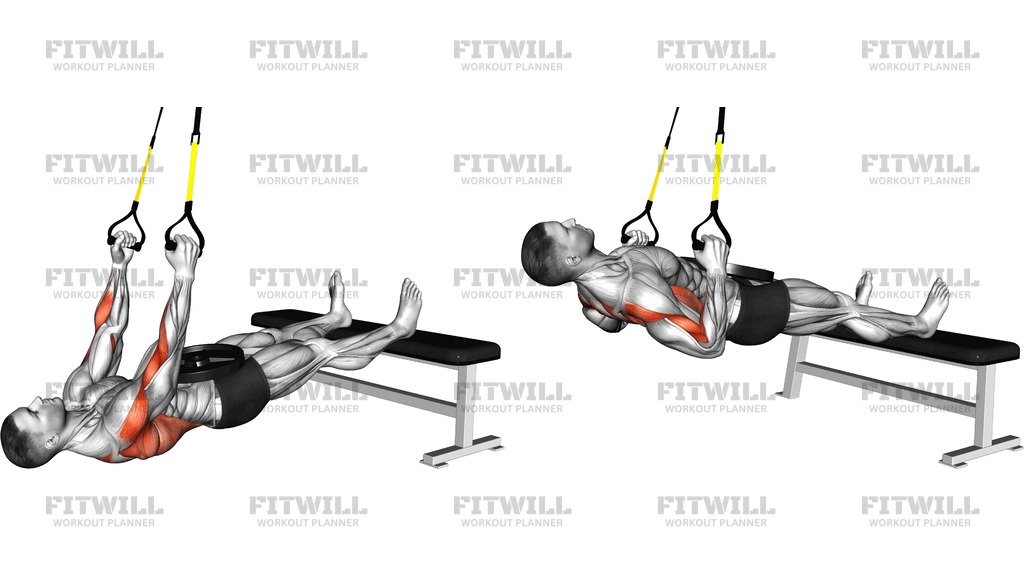
Instructions
- Set the suspension handles at equal height and place a flat bench behind you so your heels can rest on it securely.
- Lie under the straps with your heels on the bench, feet together or hip-width apart, and your body lined up from shoulders through ankles.
- Grip the handles with neutral wrists, then pull your shoulders down and back before the first rep starts.
- Brace your abs and glutes so your ribs stay down and your hips do not sag as you row.
- Pull the handles toward your lower ribs by driving your elbows back and slightly down.
- Keep your chest lifted as one piece with your torso instead of craning your neck or twisting your shoulders.
- Squeeze your shoulder blades together briefly at the top without shrugging into your ears.
- Lower yourself under control until your arms are straight and your shoulders stay set, then inhale on the way down.
- Reset your feet and grip before the next rep if the bench contact, straps, or added load shifts out of position.
Tips & Tricks
- Use a more upright body angle if your hips start to bend or your heels slide on the bench.
- Keep the handles moving to the lower ribs, not the throat, so the lats and mid-back stay in control.
- If you are using a vest or plate, keep it centered on the torso so it does not pull you into a twist.
- Stop the pull before the shoulders roll forward; the top position should feel tight, not jammed.
- A slower lowering phase makes the row harder without turning the movement into a swing.
- Keep the wrists straight through the rep so the handles do not fold the hands back.
- Press the heels into the bench to help the glutes stay on and prevent the torso from sagging.
- Shorten the range slightly if the straps wobble as you finish the rep.
- If your neck tightens, keep the chin tucked and look at the ceiling instead of reaching your head toward the handles.
Frequently Asked Questions
What muscles does Suspender Weighted Inverted Row train?
It mainly trains the lats, mid-back, rear shoulders, and biceps, with the abs and glutes working hard to keep the body straight.
Is Suspender Weighted Inverted Row too hard for beginners?
It can be, especially with the feet elevated on a bench. Beginners should use less body angle, reduce any added load, and keep the reps slow and strict.
Where should the handles touch at the top of Suspender Weighted Inverted Row?
Aim to pull the handles toward the lower ribs or the sides of the chest. If they drift much higher, the shoulders usually take over and the row gets sloppy.
Why are the feet on a bench in Suspender Weighted Inverted Row?
The raised feet make the body position more horizontal and increase the load on the back and core. Keep pressure through the heels so the hips do not drop.
Should I use a neutral grip or overhand grip?
A neutral grip is usually the most shoulder-friendly choice for this row. Use overhand only if the handles and your shoulder comfort allow it.
How do I keep my body from sagging during the row?
Brace your abs and squeeze your glutes before each pull, then keep the ribs down as you row. If the hips drop, shorten the range or make the body angle easier.
What is the difference between Suspender Weighted Inverted Row and a regular suspension row?
This version adds extra resistance and usually uses a more demanding body position, so it challenges the upper back and core more than a basic bodyweight row.
What should I do if the straps wobble?
Lower the load, make the body angle slightly easier, and start each rep from a dead-still shoulder position. Wobble usually means the set is too aggressive for your current control.