Dumbbell Standing Windmill
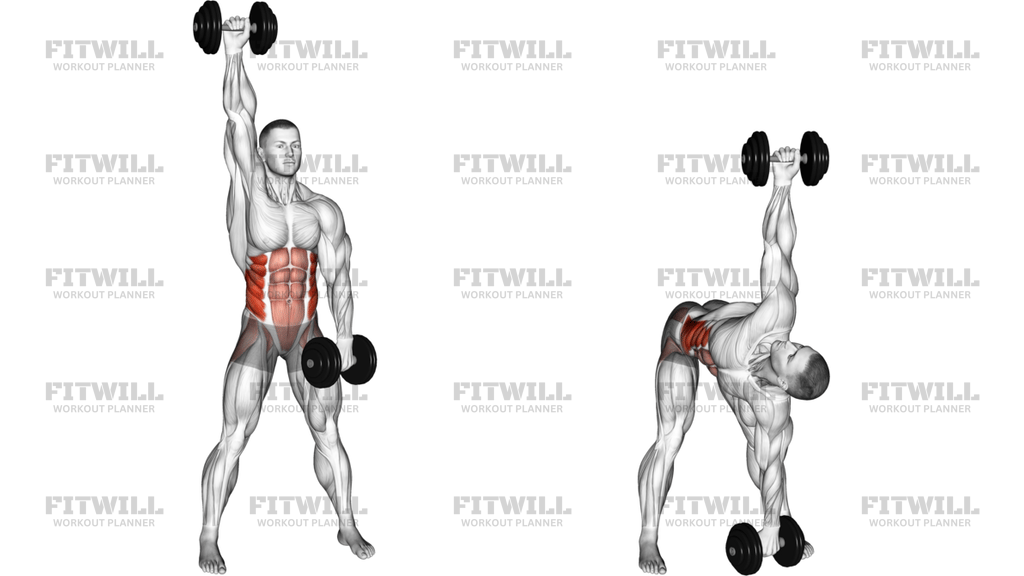
Dumbbell Standing Windmill is a standing anti-rotation and hip-control drill built around one dumbbell locked overhead while the other hand travels down the same-side leg. It asks the shoulder, trunk, and hips to work together so the torso can hinge and rotate without losing the vertical line of the overhead arm. That makes it useful for building overhead stability, oblique strength, hip mobility, and the kind of body control that carries over to presses, carries, and other unilateral work.
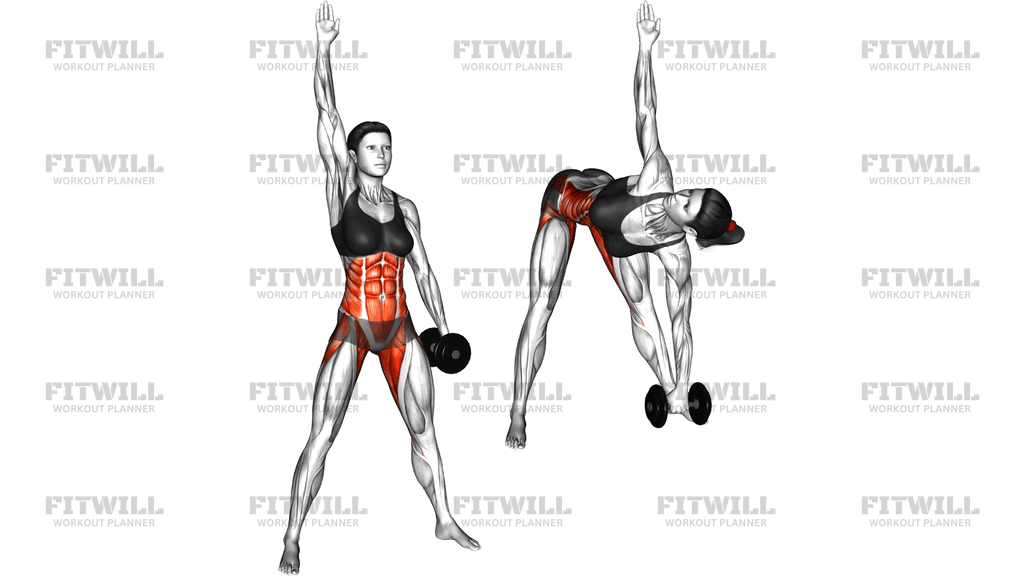
The setup matters more than most people expect. A narrow stance, an unstable rack position, or a soft overhead elbow will turn the rep into a side bend instead of a controlled windmill. In the image, the overhead arm stays stacked while the torso folds toward the floor and the free dumbbell tracks down the inside of the leg. That shape only works when the ribs stay controlled, the shoulder is packed, and the hips do the reaching instead of the lower back.
Each rep should feel like a deliberate hinge and turn, not a collapse. Start by setting your feet, bracing, and fixing your eyes on the overhead weight. Then let the hips shift away from the weighted side as the free hand slides toward the ankle or shin. The goal is to keep the top arm vertical, keep the chest open enough to avoid rounding, and stop the descent the moment the overhead position starts to drift. On the way back up, drive through the feet and bring the hips back under you without jerking the bells.
This is best used as a technique-focused strength or mobility exercise rather than a maximal lift. Light to moderate loading usually gives the best result because the limiting factor is control, not brute force. Beginners can learn it with a very light dumbbell and a shorter range of motion, but the movement should still look clean: stable overhead lockout, smooth hip shift, and a controlled return to standing. If the shoulder pinches, the lower back arches, or the free dumbbell stops tracking under the shoulder line, reduce the range or load and clean up the setup before adding reps.
Fitwill
Log Workouts, Track Progress & Build Strength.
Achieve more with Fitwill: explore over 9600 exercises with images and videos, access built-in and custom workouts, perfect for both gym and home sessions, and see real results.
Start your journey. Download today!




Instructions
- Stand with your feet a little wider than hip width and turn the toes out slightly. Hold one dumbbell overhead with that arm fully stacked and hold the second dumbbell at the side of the same-side leg.
- Lock the overhead elbow, keep the wrist over the shoulder, and set your eyes on the top dumbbell before you move.
- Brace your midsection, soften the knees, and shift your hips slightly toward the side of the lower dumbbell.
- Hinge at the hips and send the outside hip back as you begin lowering your torso toward the floor.
- Let the lower dumbbell slide down the inside of the thigh and shin while the overhead arm stays vertical and quiet.
- Rotate only as far as you can without letting the top shoulder drift forward, the ribs flare, or the lower back round.
- Pause briefly in the lowest controlled position, then drive through both feet to bring the hips back under you.
- Stand tall again with both dumbbells steady, reset your breath, and repeat for the desired reps before switching sides.
Tips & Tricks
- Choose a light overhead dumbbell first; the movement breaks down when the top arm has to fight for position.
- Keep the overhead biceps close to the ear so the shoulder stays stacked instead of drifting in front of the body.
- Let the hips travel back and slightly away from the weighted side; do not chase range by twisting the chest toward the floor.
- A slight bend in the knees is fine, but if the knees collapse inward you are probably hinging too deep for your mobility.
- Track the lower dumbbell along the inside of the leg instead of reaching straight down and rounding the spine.
- Use your eyes to help balance: looking at the overhead bell usually keeps the trunk more organized than looking at the floor.
- Move slowly on the way down so you can feel where the shoulder starts to lose its stack.
- If the free dumbbell bangs the shin or foot, shorten the range and clean up the hip shift before adding load.
Frequently Asked Questions
What does the Dumbbell Standing Windmill train?
It primarily trains overhead shoulder stability, oblique control, hip mobility, and the ability to hinge and rotate without losing posture.
Should the overhead dumbbell stay directly above my shoulder?
Yes. The top dumbbell should stay stacked over the shoulder and midfoot so the rep looks like a vertical post rather than a drifting press.
How far down should the lower dumbbell travel?
Only as far as you can keep the overhead arm vertical and the spine long. For some people that is mid-shin; for others it may be just below the knee.
Is it normal to feel this in the hips and hamstrings?
Yes. The hip hinge and side bend will load the glutes, hamstrings, and adductors on the descending side along with the trunk.
Can beginners learn this movement?
Yes, but they should start with a very light dumbbell, a wider stance, and a short range until the overhead position stays clean.
What is the most common mistake with the lower dumbbell?
People usually reach straight down and round the back instead of sliding the bell along the leg while the hips create the range.
Why should I keep my eyes on the overhead weight?
Looking at the top bell helps you keep the shoulder stacked and makes it easier to avoid collapsing through the ribcage.
What should I do if the overhead shoulder pinches?
Reduce the load, shorten the range, and make sure the elbow stays locked with the ribs down; if the pinch persists, stop the set.