Static Position Lying Back With Pad
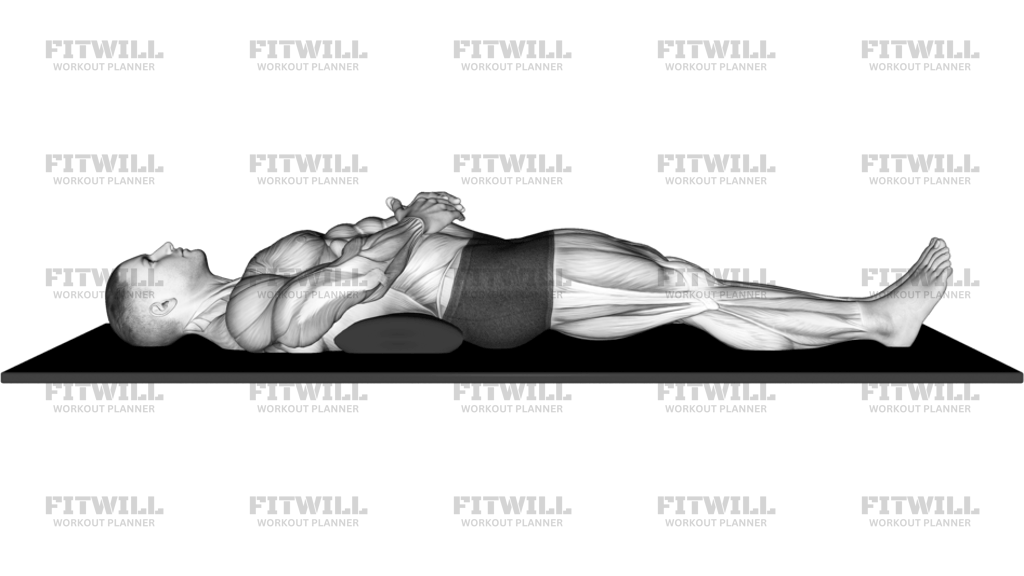
Static Position Lying Back With Pad is a supported floor hold for practicing a quiet, organized supine position. You lie on your back with a small pad under the low back or pelvis, then settle the ribs, pelvis, and head so the body feels stacked instead of strained. It is not a fast or explosive drill; the value comes from finding a stable position and keeping it consistent while you breathe.
Because the movement is static, the main training effect comes from postural control, core awareness, and tolerance for a gently supported spine. The pad changes how the torso rests against the floor, so small adjustments in its placement can make the position feel either calm and balanced or overly arched. The goal is a controlled hold where the abdomen, hips, and back can relax without collapsing.
Set up carefully before you start timing the hold. A pad that is too thick can push the low back into excess extension, while one that is too small can make the position feel pointless. Keep the shoulders heavy, the neck long, and the jaw relaxed. If the legs are straight in the version you are doing, let the heels rest naturally and avoid turning the feet out just to compensate for tight hips or hamstrings.
During the hold, breathe low and steady rather than bracing so hard that the torso becomes rigid. You should feel enough tension in the trunk to stay organized, but not so much that the ribs flare or the lower back feels compressed. If the position is being used as a reset, the hold should feel cleaner by the end than it did at the start, with less fidgeting and less strain.
Static Position Lying Back With Pad works well as a warm-up, a cool-down, or a low-intensity core drill when you want to reinforce alignment without loading the joints. It can also be useful after harder lifting sessions because it gives you a simple place to practice breathing and body awareness. If the pad, neck position, or low-back pressure feels off, adjust the support before extending the hold.
[ Workout Log & Planner ]
Put your next workout in Fitwill
Keep your plan and training log ready when you are.


Instructions
- Place a mat or flat bench down and position a small pad or folded towel under your lower back or pelvis, depending on where the support feels intended.
- Lie back with your head supported, shoulders relaxed, and legs extended in front of you or resting the way the setup calls for.
- Let your ribs settle down and keep your neck long so your chest does not flare up around the pad.
- Set your hands on your chest or by your sides and keep your jaw, face, and shoulders relaxed.
- Take a slow breath in through your nose, then exhale and feel your abdomen soften around the support without losing position.
- Hold the position without shifting your hips, arching harder, or pressing your lower back aggressively into the pad.
- If you are using the hold for time, stay still and breathe evenly for the planned duration instead of fidgeting for a bigger stretch.
- When the hold is complete, roll to one side, remove the pad, and stand up without twisting suddenly.
Tips & Tricks
- A thinner pad usually works better than a thick one; too much height can turn this into an uncomfortable low-back arch instead of a calm hold.
- If your ribs flare upward, exhale longer and let the sternum soften rather than trying to force the position with your abs.
- Keep the back of your neck long and your chin neutral; craning the head up makes the hold feel more like a neck exercise than a positioning drill.
- Straight legs will often tug on the pelvis more than bent knees, so bend the knees slightly if hamstring tension is pulling you out of place.
- Let the shoulders stay heavy on the mat instead of pinching them back hard; the goal is support, not a maximal chest lift.
- Use the hold to practice slow nasal breathing, especially if you are using it as a reset between harder sets.
- If the pad feels like it is digging into one point of the spine, move it a little higher or lower before you settle in.
- Stop the hold if the sensation becomes sharp, numb, or pinchy rather than a mild supported stretch.
Frequently Asked Questions
What does Static Position Lying Back With Pad train?
It mainly trains core awareness, postural control, and the ability to hold a supported supine position without flaring the ribs or over-arching the low back.
Where should the pad sit in Static Position Lying Back With Pad?
Place it under the lower back or pelvis area so it supports the position without creating a hard pressure point. If the arch feels excessive, move to a thinner pad or shift it slightly.
Should my legs stay straight during Static Position Lying Back With Pad?
They can, but straight legs usually make the pelvis work harder to stay settled. If your low back feels pulled, bend the knees a little and keep the feet relaxed.
Is Static Position Lying Back With Pad a beginner-friendly exercise?
Yes, as long as the pad is not too thick and the hold stays short at first. Beginners should focus on breathing and comfort rather than forcing a bigger stretch.
How long should I hold Static Position Lying Back With Pad?
Use a short hold first, such as a few slow breaths, then build to longer holds if the position stays comfortable. The right length is the one that keeps your ribs, neck, and low back calm.
What if my lower back feels pinched during Static Position Lying Back With Pad?
Reduce the pad thickness, reposition it, or stop the hold if the sensation is sharp. The exercise should feel supported, not jammed into one spot.
Can I use Static Position Lying Back With Pad as a warm-up between lifting sets?
Yes, it works well as a reset when you want to practice breathing, rib control, and body position before a harder set.
What is the most common mistake in Static Position Lying Back With Pad?
Most people either over-arch the low back or keep the ribs flared up the whole time. The fix is usually a thinner pad, a softer exhale, and a quieter upper body.