Static Position Standing
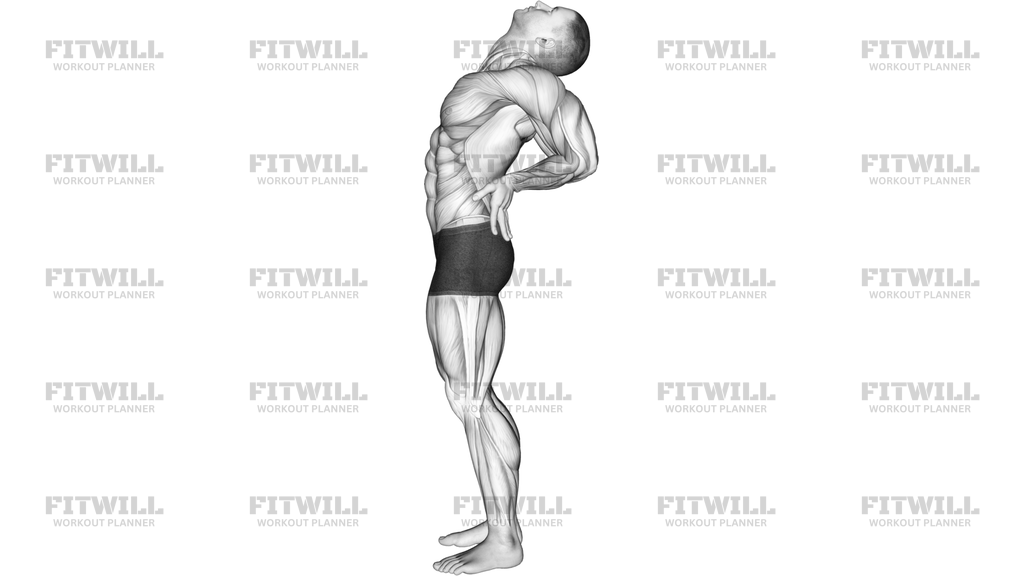
Static Position Standing is a bodyweight standing hold built around a controlled backward arch of the torso. In practice, it looks more like a posture drill or gentle standing backbend than a fast exercise, so the quality of the setup matters more than the number of seconds you can hold it. The goal is to open the front of the body, organize the ribs over the pelvis, and keep the neck and lower back from taking all of the stress.
This position asks the spinal erectors, glutes, abs, and upper back to work together while the hips and chest stay open. The hands on the lower back or hips help the torso find support, but the real work comes from controlling how far you extend and how evenly you distribute the arch. If the pelvis shoots forward and the ribs flare hard, the hold turns into a sloppy collapse instead of a useful static position.
Set up with your feet about hip-width apart and your weight centered over the whole foot. From there, lengthen through the crown of the head, lift the sternum, and gently press the hips forward until you reach a comfortable back-arching position. The movement should feel deliberate and smooth, with enough extension to open the front line of the body without pinching the low back.
Breathing is part of the exercise, not an afterthought. Stay in the position with slow breaths, keeping the face relaxed and the shoulders from creeping toward the ears. If the neck feels compressed, soften the gaze and reduce the range; if the low back feels jammed, come out of the hold and reset with less arch and more abdominal support.
Static Position Standing works well as a warm-up drill, a posture reset, or a light mobility hold between harder sets. It is also useful for beginners learning how to control standing spinal extension before progressing to more demanding backbend patterns. Treat it like a precision position: steady feet, quiet ribs, controlled breathing, and a clean return to neutral when the hold is finished.
[ Workout Log & Planner ]
Put your next workout in Fitwill
Keep your plan and training log ready when you are.


Instructions
- Stand tall with your feet about hip-width apart and your weight spread through the full foot.
- Place both hands on your hips or lower back so you have a clear support point for the torso.
- Keep your knees soft, not locked, and lengthen the back of the neck before you lean back.
- Lift your chest and gently press your hips forward until you reach a comfortable standing backbend.
- Keep the glutes lightly squeezed so the extension comes from the whole torso, not just the low back.
- Hold the top position with the ribs stacked as well as you can instead of letting them flare wildly.
- Take slow breaths while you hold the position, keeping the shoulders down and the face relaxed.
- Come back to tall standing by bringing the hips back under you and stacking the ribs over the pelvis.
Tips & Tricks
- Think about lengthening up before you lean back; a tall torso keeps the arch cleaner.
- If your low back pinches, reduce the range and keep more tension in the abs and glutes.
- Hands on the lower back are there for support, not to force a deeper bend.
- Keep the chin from driving straight up; a gentle gaze back is usually enough.
- A small knee bend often helps you find the arch without locking the joints.
- Exhale slowly to keep the ribs from popping open too aggressively at the top.
- The hold should feel like a smooth standing backbend, not a collapse into the lumbar spine.
- If you lose balance, shorten the range and keep your weight centered over midfoot.
- Use this as a controlled mobility drill, not a max-effort stretch.
Frequently Asked Questions
What does Static Position Standing work?
It mainly trains the spinal erectors, glutes, abs, and upper back as they support a controlled standing backbend.
Is this more of a stretch or a strength exercise?
It is both a posture and mobility drill, with the muscles working isometrically to hold the standing back-arching position.
Where should I feel the hold?
You should feel a stretch across the front of the hips, abdomen, and chest, with support from the back and glutes.
What is the most common mistake?
Most people dump the movement into the low back and flare the ribs instead of spreading the arch through the whole torso.
Can beginners do this exercise?
Yes, beginners can use a smaller range and a shorter hold while they learn to stay balanced and breathe.
Should my knees be straight?
Keep them soft rather than locked so you can control the pelvis and avoid turning the hold into a rigid lean.
How long should I hold it?
Use a short, comfortable hold first, then extend the time only if you can keep the chest lifted and the low back calm.
How do I make it harder?
Increase the hold time, improve the range of motion, or make the posture cleaner before adding any external load.