Static Position Lying Front
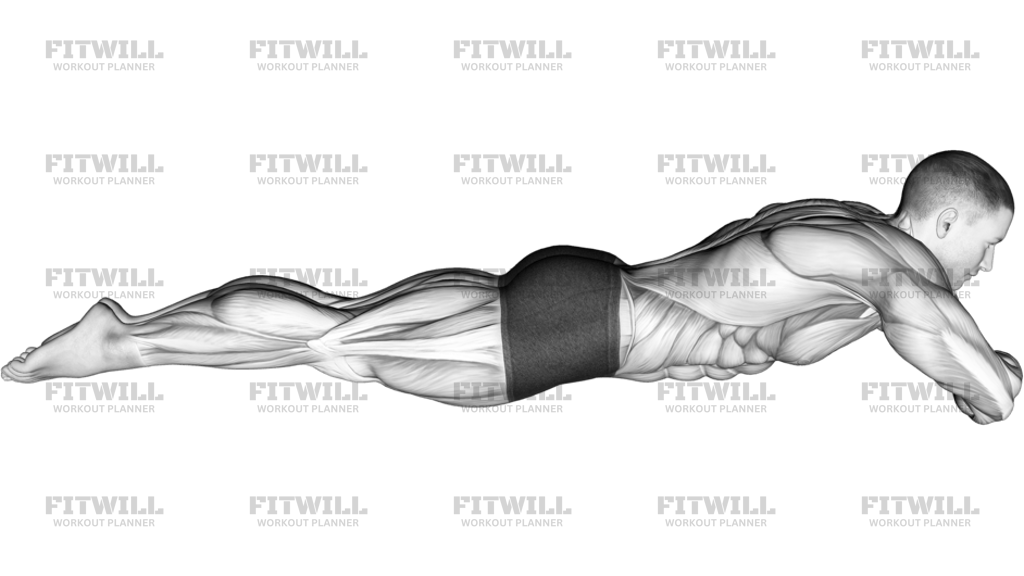
Static Position Lying Front is a prone isometric hold performed face down on the floor or a mat with the body held long and quiet. In the version shown here, the chest is lifted slightly while the arms reach forward and the legs stay straight behind you. It is less about movement and more about holding a clean shape, so the quality of the position matters more than how long you can grit through it.
Because the drill depends on self-generated tension, the setup has to be exact. Lie with the pelvis heavy, the ribs controlled, and the neck long so the head does not crane upward. When the torso and hips stay organized, the exercise becomes a useful test of posture and endurance instead of a sloppy low-back arch.
This hold mainly trains the spinal erectors, glutes, upper back, rear shoulders, and deep abdominal muscles that keep the rib cage from flaring. It is useful in warm-ups, posture work, accessory blocks, or rehab-style conditioning when you want a low-load exercise that still asks for precision. The long front-lying position also makes it easy to notice if one side of the body starts twisting, shrugging, or losing tension first.
The best version feels smooth and deliberate: lift into position without jerking, keep the shoulder blades controlled, and breathe behind a light brace instead of turning the set into a breath hold. If the chest is rising only because the low back is cranking hard or the neck is jutting forward, the hold is too aggressive. Reduce the lift, shorten the hold, and keep the body line long from fingertips to toes.
Use Static Position Lying Front as a control drill, not a race. Crisp posture and steady breathing matter more than forcing a bigger range or a longer hold. For most people, the safest progression is to improve the quality of the body line first, then extend the hold time only while the chest, hips, and neck stay organized. That makes it a practical choice before heavier back work or as a low-fatigue finisher when you want posture practice without external load.
[ Workout Log & Planner ]
Put your next workout in Fitwill
Keep your plan and training log ready when you are.


Instructions
- Lie face down on a mat with your arms reaching forward and your legs straight behind you.
- Set your forehead or chin in line with the floor so your neck stays long and neutral.
- Lightly brace your abdomen and squeeze your glutes before you lift.
- Raise your chest a few inches off the mat while keeping the hips heavy and the ribs from flaring.
- Reach long through the fingertips and toes so the body stays stretched out instead of crunched short.
- Hold the top position with calm breathing and no shrugging.
- Lower your chest back to the mat under control and reset your neck and rib position.
- Repeat for the planned number of holds, stopping as soon as the low back or neck starts to take over.
Tips & Tricks
- Keep the gaze down so the back of the neck stays long; looking forward usually turns the hold into neck extension.
- Think about lifting the sternum away from the floor instead of throwing the shoulders back.
- If the low back pinches, reduce the chest lift and keep the ribs closer to the mat.
- Squeeze the glutes lightly to support the pelvis and reduce unwanted lumbar extension.
- Reach the arms forward instead of letting them drift wide, which usually changes the body line and the work pattern.
- Keep the legs quiet; if the feet start fluttering, the hold is getting away from you.
- Use short holds with crisp posture before trying longer holds that turn into shaking and arching.
- Breathe slowly behind a controlled brace; do not hold your breath for the entire set unless the program specifically calls for it.
Frequently Asked Questions
What does Static Position Lying Front work most?
It mainly trains the spinal erectors, glutes, upper back, rear shoulders, and the deep core muscles that keep the torso organized in a prone hold.
How is this different from a superman hold?
This version is a controlled prone hold with a similar face-down extension pattern, but the emphasis is on a long body line and a small, deliberate lift rather than a big arch.
Where should I feel the hold?
You should feel tension across the low and mid back, glutes, and upper back, with the neck staying relaxed rather than strained.
Can beginners do this exercise?
Yes, as long as the lift stays small and the hold is brief. Beginners should prioritize a neutral neck and a modest chest lift over height.
Why do my lower back and neck get tired first?
That usually means the ribs are flaring or the chest is lifting too high. Reduce the range and focus on glutes, abdominal brace, and a long neck.
Do my legs have to leave the floor?
Not always. The version shown here can be performed with the legs long and grounded while the chest stays slightly elevated.
Is this a stretching exercise or a strength exercise?
It behaves more like an isometric strength and control drill than a stretch, even though it uses a long, extended body position.
How can I make the movement harder without adding weight?
Increase the hold time, keep the chest lift steady for longer, or reach the arms and legs farther without letting the low back collapse.