Static Position Seated Back
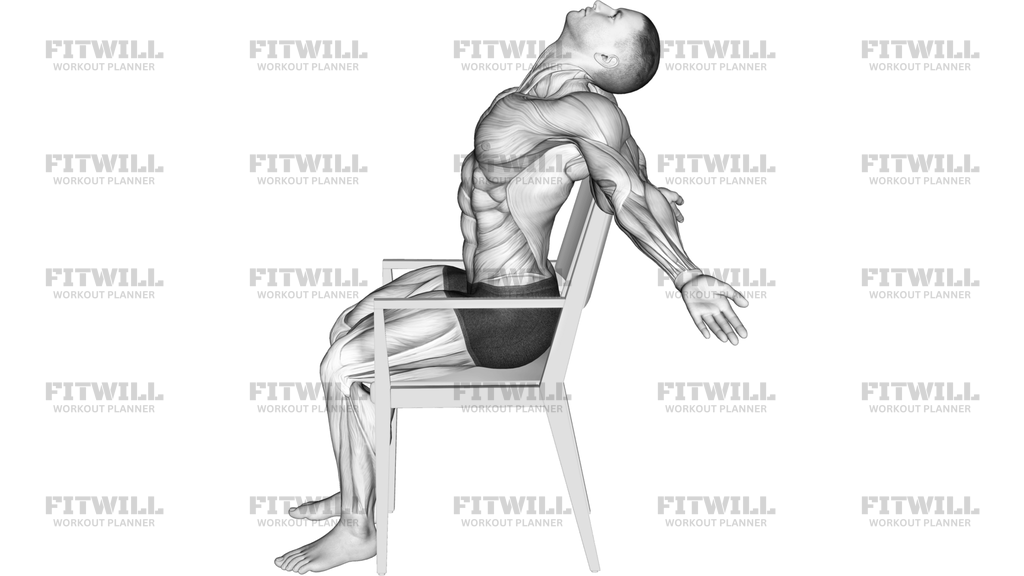
Static Position Seated Back is a seated back-opening stretch done on a chair with the chest lifted, the spine extended, and the arms reaching back to create a controlled opening through the front of the shoulders and torso. The exercise is not about moving through a large dynamic range. Its value comes from finding a stable seated position and holding a strong posture long enough for the upper back, trunk, and shoulder girdle to relax into the stretch.
The chair gives you a simple base of support, which makes it easier to focus on the shape of the torso instead of balancing. Sit with both feet planted, then lengthen through the spine and let the sternum travel upward as the shoulders move back and down. When the setup is right, the stretch should feel organized through the chest, front shoulders, and the line of the upper back rather than compressed in the neck or lower back.
This movement is useful when the body has spent time in a rounded seated posture, when the thoracic spine feels stiff, or when you want a low-load reset between more demanding exercises. Because the position is static, the goal is steady breathing and clean alignment, not forcing the range. Keep the ribs from flaring aggressively and do not throw the head back to fake more extension.
A good repetition feels calm and deliberate. Settle into the position, breathe into the open chest, and keep the pelvis heavy on the chair while the torso lifts. The arms should help create the opening, but the position should still feel controlled through the mid-back and shoulder blades. If the shoulders pinch or the low back takes over, reduce the stretch and rebuild the posture from the seat upward.
Use Static Position Seated Back as a mobility or recovery drill, as part of a warm-up, or after pressing and desk-heavy work when the front of the body feels tight. It is beginner-friendly because the chair reduces balance demands, but it still rewards precise setup. The best result comes from a quiet, repeatable hold that opens the chest without losing spinal control.
Fitwill
Log Workouts, Track Progress & Build Strength.
Achieve more with Fitwill: explore over 9600 exercises with images and videos, access built-in and custom workouts, perfect for both gym and home sessions, and see real results.
Start your journey. Download today!




Instructions
- Sit on the chair with both feet flat on the floor and your hips centered on the seat.
- Plant your hands beside or slightly behind your hips on the chair so you have a stable base.
- Lift your chest and lengthen your spine before you lean or arch back.
- Draw your shoulders down and back so the neck stays long instead of jammed.
- Open through the front of the chest and let the upper back extend over the support.
- Keep the pelvis heavy on the seat as you hold the stretched position.
- Breathe slowly into the chest and upper ribs without losing the posture.
- Ease out of the hold by bringing the torso back to a tall seated position under control.
Tips & Tricks
- Think about lifting the sternum, not throwing the head backward.
- Keep the chin slightly tucked so the stretch stays in the thoracic spine instead of the neck.
- If the low back feels pinched, reduce the arch and keep more length through the ribs.
- Let the shoulder blades slide back and down rather than shrugging toward the ears.
- Press the feet into the floor to keep the seated base steady while you hold the position.
- Use slow nasal inhales and longer exhales to help the rib cage soften into the stretch.
- Keep the hands anchored lightly; do not dump all your weight into the wrists or elbows.
- Stop short of any sharp pain in the shoulders, lumbar spine, or neck.
Frequently Asked Questions
What is Static Position Seated Back meant to stretch?
It primarily opens the chest, front shoulders, and upper back while you hold a supported seated extension.
Do I need special equipment for this movement?
No. A sturdy chair or bench is enough as long as it gives you a stable seat and hand support.
Where should I feel the stretch most?
You should feel it through the front of the shoulders, chest, and the upper back as the torso opens.
What is a common mistake in the seated back position?
The biggest mistake is dumping the stretch into the lower back or neck instead of keeping the lift through the chest and mid-back.
Is this exercise safe if I have tight shoulders?
Usually yes, but keep the range modest and avoid forcing the arms or elbows farther back than the shoulders can tolerate.
Can beginners use Static Position Seated Back?
Yes. It is beginner-friendly because the chair provides support and makes the posture easy to control.
How long should I hold the position?
Hold long enough to breathe calmly and feel the chest open, usually for a short, controlled stretch rather than a hard strain.
Should my low back arch hard during the hold?
No. A small natural extension is fine, but the emphasis should stay on the upper back and chest, not a big lumbar arch.