Standing Pose WRONG-RIGHT Front POV
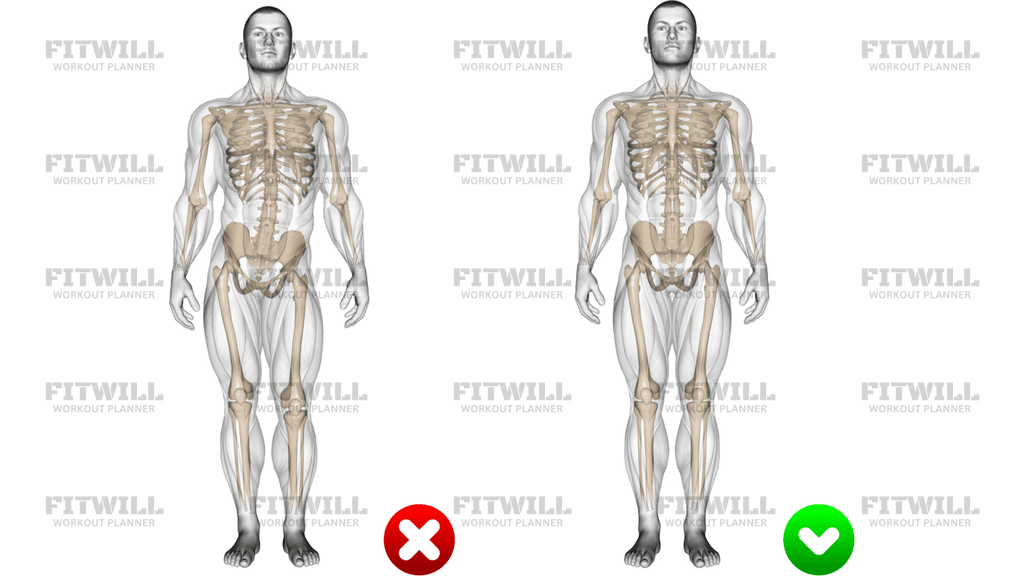
Standing Pose WRONG-RIGHT Front POV is a front-view posture reference that shows the difference between a collapsed standing position and a stacked, neutral stance. It is less about producing force and more about learning how to stand so the feet, knees, hips, ribcage, shoulders, and head line up cleanly from the front.
The image is useful because front view exposes asymmetries that are easy to miss from the side: uneven weight shift, one shoulder dropping, a hip hiking up, toes turning out, knees collapsing inward, or a ribcage drifting off center. The corrected version shows a tall stance with the pelvis and ribcage stacked, the shoulders level, the chin neutral, and the arms relaxed at the sides.
Use this pose as a reset before training, a coaching cue between sets, or a simple standing check for everyday posture. It helps reinforce the difference between standing tall and standing stiff. Good posture should feel organized and alert, not forced, with the body supported by light tension rather than a hard arch in the lower back or a locked-out knee position.
To hold the right version well, set your feet under your hips, spread your weight across the whole foot, soften the knees slightly, and let the pelvis sit under the ribcage. Keep the chest open without flaring the ribs, let the shoulders settle instead of pinching back, and keep the head stacked over the sternum rather than jutting forward.
This is a low-load drill, so the quality target is symmetry and repeatability. The main faults are overcorrecting into a military stance, pushing the hips forward, shrugging the shoulders, or craning the neck. If the standing shape starts to drift, reset the feet first, then rebuild the stack from the ground up.
[ Workout Log & Planner ]
Put your next workout in Fitwill
Keep your plan and training log ready when you are.


Instructions
- Stand facing forward with your feet about hip-width apart and your toes pointing mostly straight ahead.
- Spread your weight evenly across the heels, big toes, and little toes so neither foot collapses inward or rolls to the outside.
- Unlock the knees slightly and keep the thighs active without locking the legs straight.
- Stack the pelvis under the ribcage instead of pushing the hips forward or arching the low back.
- Let the arms hang naturally at your sides with the shoulders level and relaxed.
- Lift through the crown of the head while keeping the chin level and the neck long.
- Take slow breaths and let the ribs expand without losing the stacked position.
- Check that both sides look even from the front, then hold or reset for the next repetition.
Tips & Tricks
- Think 'tall and wide' rather than 'chest up'; the goal is a stacked ribcage, not a hard back arch.
- If one shoulder sits lower than the other, relax the arms and recheck whether one side of the pelvis is shifting out of line.
- Keep the toes mostly forward so you can spot ankle collapse or hip rotation more easily from the front.
- A slight bend in the knees usually looks and feels better than fully locked legs.
- Do not squeeze the glutes hard; enough tone to organize the pelvis is usually enough.
- Exhale gently if the ribs flare, then settle them back over the pelvis before holding the stance again.
- Use the mirror or camera to compare left and right sides instead of guessing by feel alone.
- If the neck tightens, lower the chin a little and lengthen the back of the head upward.
Frequently Asked Questions
What is Standing Pose WRONG-RIGHT Front POV meant to teach?
It teaches the difference between a sloppy standing posture and a stacked, symmetrical front-view stance.
Is this a strength exercise or a posture drill?
It is mainly a posture drill. The focus is alignment, balance, and body awareness rather than force production.
Where should my weight be in the standing position?
Keep it spread across the whole foot so the heel, big toe, and little toe all stay grounded.
What should I watch for from the front view?
Look for uneven shoulders, a shifted hip, knees caving inward, or one foot taking more load than the other.
Should I keep my knees locked straight?
No. A small soft bend usually helps you stay stacked without overextending the knees or lower back.
Can beginners use this pose?
Yes. It is a good beginner posture check because the setup is simple and the corrections are easy to see.
Why does the image show a wrong and right version?
The comparison makes it easier to spot the common standing faults and understand what neutral alignment should look like.
What should I do if my ribs flare or my lower back arches?
Exhale, soften the chest, and bring the ribs back over the pelvis before holding the stance again.