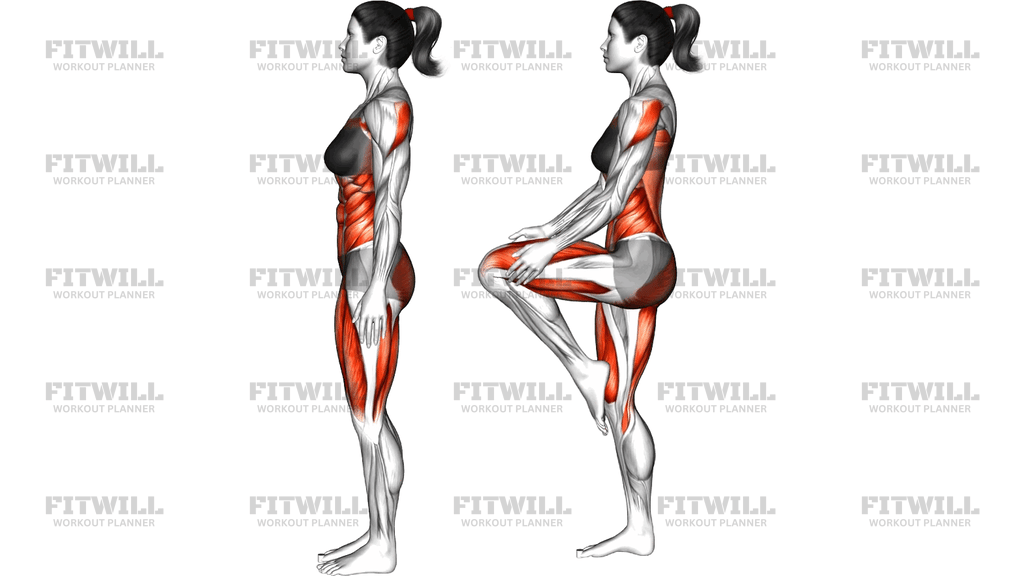
Standing Pose WRONG-RIGHT Side POV
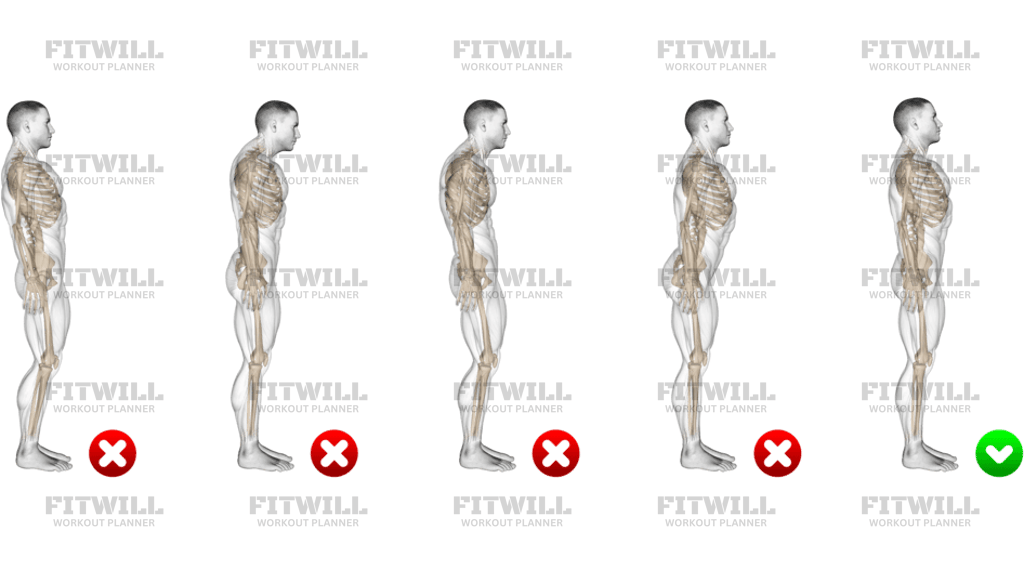
Standing Pose WRONG-RIGHT Side POV is a side-view posture drill that helps you find a stacked standing position from head to foot. It is not a dynamic lift; the value comes from learning how to stand with the ears, shoulders, ribs, pelvis, knees, and ankles organized over one another. That makes it useful as a reset before lifting, a teaching tool for beginners, or a quick check when your posture starts drifting during the day.
The goal is to stand tall without turning the pose into a hard brace, a military stance, or an exaggerated low-back arch. The body should feel balanced over the middle of the foot, with the knees softly unlocked and the rib cage sitting over the pelvis. When that alignment is clean, the core and upper back can do their job without unnecessary tension, and the pose becomes easier to hold with steady breathing.
The side view matters because it reveals the most common posture faults: the head drifting forward, the ribs flaring up, the pelvis tipping too far forward, or the hips hanging back behind the ankles. Standing Pose WRONG-RIGHT Side POV is meant to show the difference between those off-balance positions and a more neutral line. It is especially helpful when you want a simple visual reference for how your standing posture should look before a squat, deadlift, overhead press, or carry.
To perform it well, stand on a flat floor with even pressure through the heel, base of the big toe, and base of the little toe. Let the arms hang naturally, soften the knees, and lengthen the back of the neck so the chin stays level. From there, breathe quietly while you keep the ribs stacked over the pelvis and avoid letting the chest pop forward or the low back take over.
Use this pose as a short hold, a mirror check, or a coaching drill inside warmups and movement prep. It should feel clean, calm, and organized, not strained. If you cannot keep the stack without gripping the lower back or shrugging the shoulders, reduce the effort and reset the stance until the line from ear to ankle looks balanced again.
[ Workout Log & Planner ]
Put your next workout in Fitwill
Keep your plan and training log ready when you are.


Instructions
- Stand on a flat floor in side view with your feet about hip-width apart and your arms relaxed by your sides.
- Spread your weight across the heel, base of the big toe, and base of the little toe on each foot.
- Unlock your knees slightly so you are not locked back or hanging into the joints.
- Stack your ankles, knees, hips, shoulders, and ears as closely as you can without forcing the shape.
- Lengthen the back of your neck and keep your chin level instead of jutting it forward.
- Set your ribs over your pelvis and let your chest stay tall without flaring your lower ribs.
- Lightly engage your glutes and deep core so the standing line feels steady, not rigid.
- Breathe quietly for the planned hold, then step out, reset, and repeat if the posture changes.
Tips & Tricks
- Use a wall or mirror as a side-view checkpoint, but do not press your whole body flat into it.
- If your lower back arches, exhale first and let the ribs settle before you try to stand taller.
- Keep the shoulders relaxed instead of pulling them hard back, which usually overextends the chest.
- Soft knees help you avoid locking into a swayback stance and losing the stacked line.
- Think about standing over the middle of the foot, not leaning into the toes or sitting back into the heels.
- A small chin tuck is better than a forward head, but do not jam the neck down aggressively.
- Short holds of 10-20 seconds are enough if the alignment stays clean the entire time.
- If you cannot keep the same posture while breathing, lower the effort until the breath stays easy.
Frequently Asked Questions
What is Standing Pose WRONG-RIGHT Side POV trying to teach?
It teaches a neutral stacked stance from the side so you can see whether the head, rib cage, pelvis, knees, and ankles line up cleanly.
Is Standing Pose WRONG-RIGHT Side POV a strength exercise?
Not really. It is more of a posture drill and isometric reset that helps you organize your alignment before or between other exercises.
What should I line up from the side?
Aim for the ear over the shoulder, shoulder over the hip, hip over the knee, and knee over the ankle without forcing the pose.
Do I need to squeeze my glutes hard?
No. A light glute engagement is enough; hard squeezing usually tips the pelvis and makes the low back do extra work.
Why is the side view important in Standing Pose WRONG-RIGHT Side POV?
The side view makes it easier to spot forward head posture, rib flare, and low-back arching, which are harder to judge from the front.
Can beginners use Standing Pose WRONG-RIGHT Side POV?
Yes. It is beginner-friendly because the main challenge is learning body position and breath control, not handling load.
How long should I hold Standing Pose WRONG-RIGHT Side POV?
Usually 10-30 seconds is enough. Stop the set if you lose the stacked posture or have to hold your breath to stay upright.
What if I feel it mostly in my lower back or neck?
Reduce the arch, soften the knees, and let the chin and ribs settle. The effort should feel balanced through the trunk, not jammed into one area.