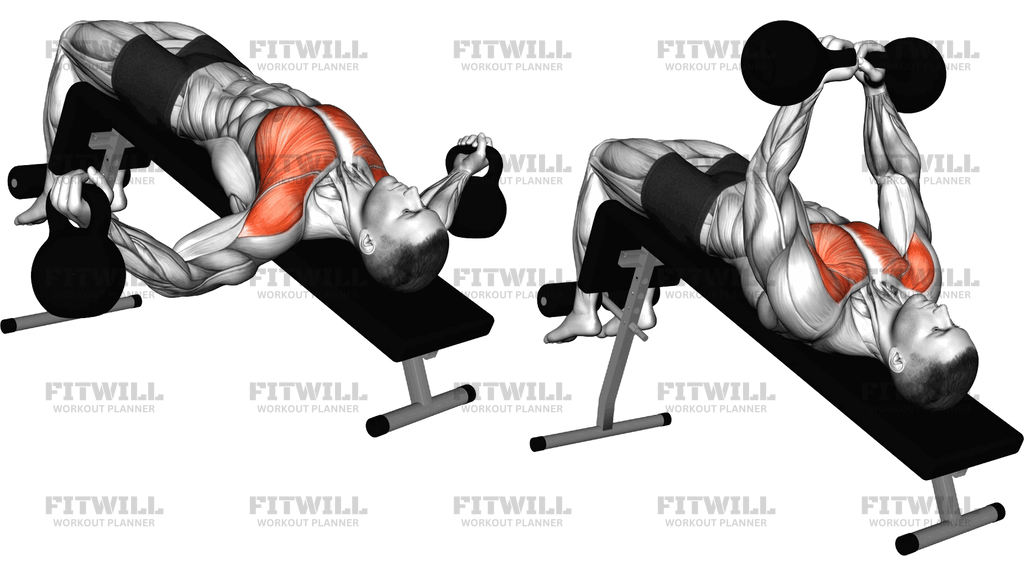
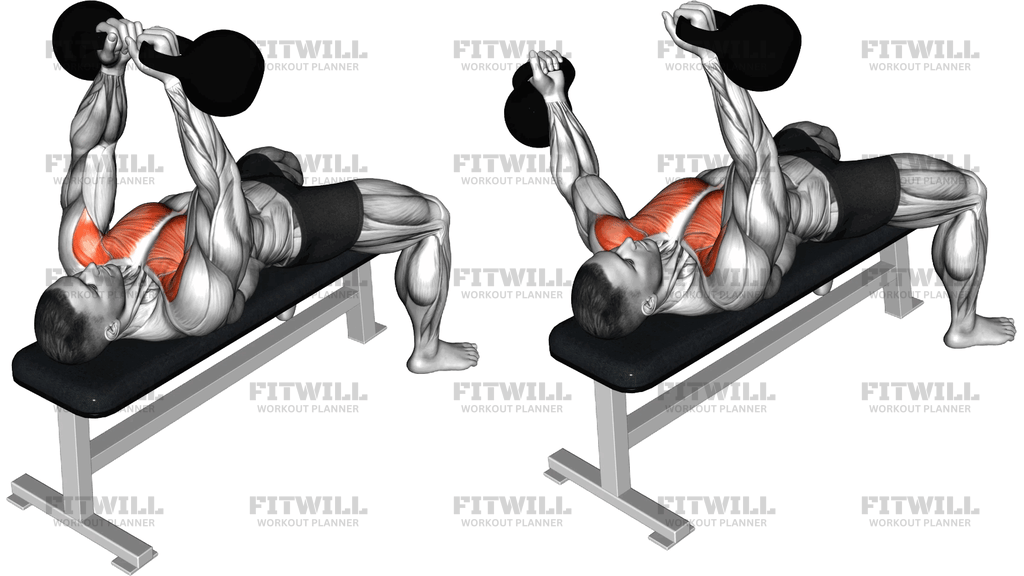
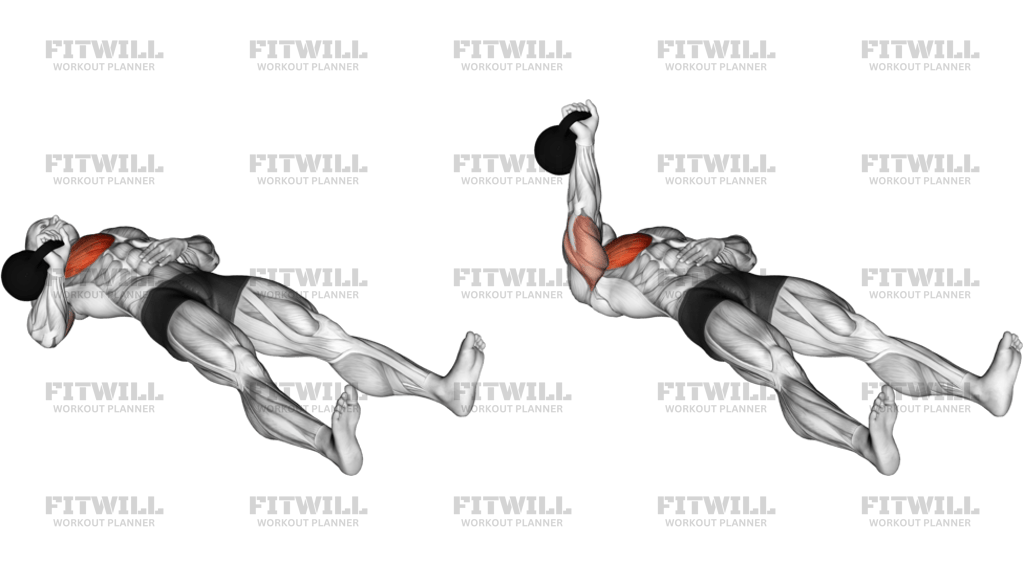
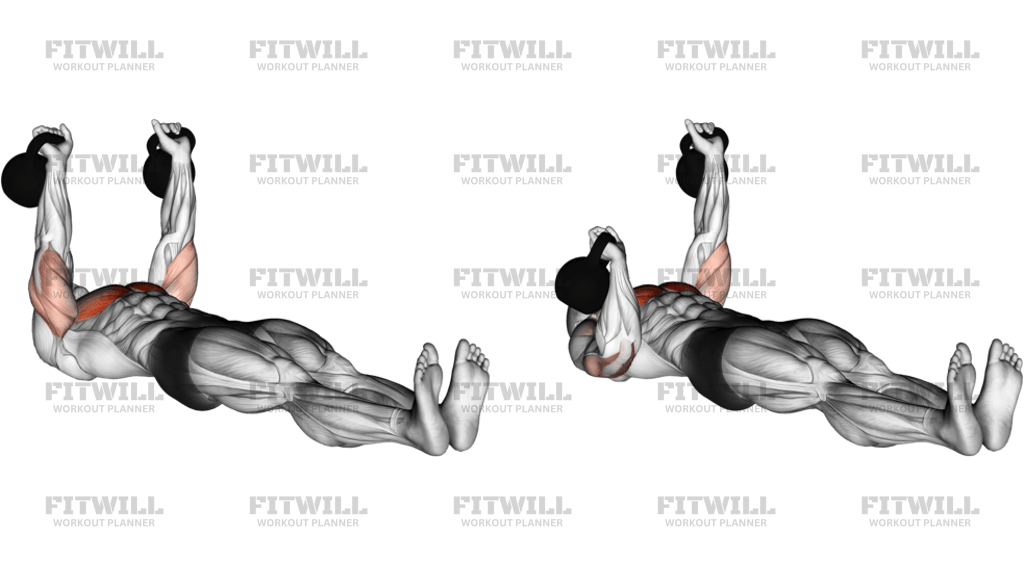
Kettlebell One-Arm Bench Press
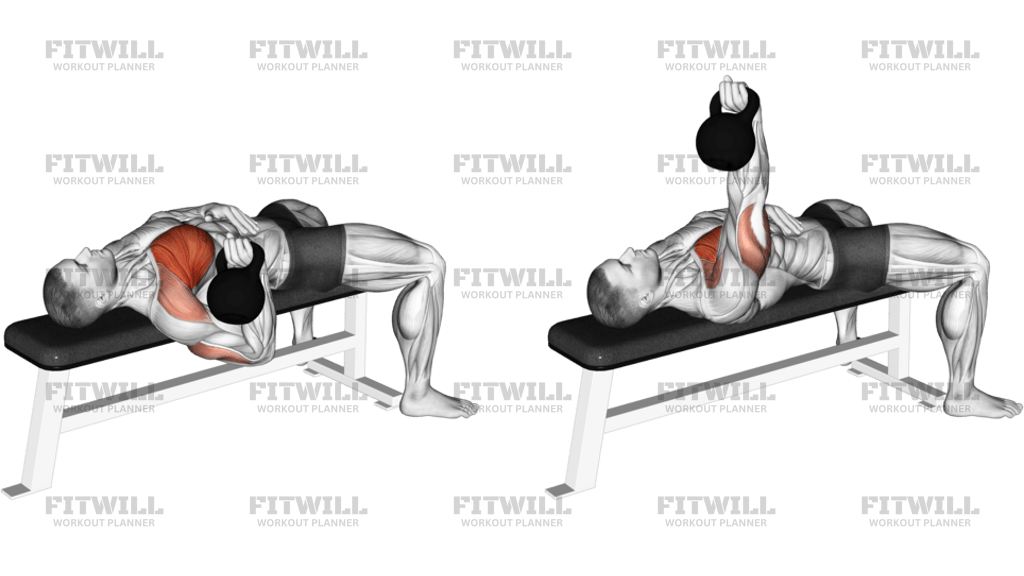
Kettlebell One-Arm Bench Press is a single-side pressing exercise performed on a flat bench with one kettlebell. It places the main demand on the chest while the front shoulder and triceps help finish the press and the torso works to keep the rib cage and hips steady. The offset load makes it useful for building pressing strength without letting both sides of the body hide weak control.
The setup matters because the kettlebell sits farther from the center of the hand than a dumbbell, so the wrist, elbow, and shoulder must stay stacked from the first rep. Lie on a flat bench with the head, upper back, and glutes supported, plant the feet firmly, and keep the shoulder blades set before the bell moves. A solid bench position reduces twisting and lets the pressing side produce force without the torso rolling toward the weight.
In the lowering phase, the kettlebell should travel under control toward the lower chest or upper rib line while the elbow stays slightly tucked rather than flaring hard out to the side. The forearm should stay close to vertical underneath the bell as you lower, then press back up in a smooth line until the arm is straight without shrugging the shoulder forward. Because the load is one-sided, the free hand and the legs help stabilize the body while the pressing arm does the work.
This exercise is a good choice for accessory chest work, unilateral strength training, or a pressing variation when you want more control than a barbell bench press and a different stability challenge than a dumbbell press. It can also expose side-to-side differences in shoulder control, wrist stacking, and rib-cage position. The goal is not to bounce the kettlebell or chase a huge range of motion; it is to keep the press clean, repeatable, and centered over the working side.
Use a load that lets you keep the bell steady in the rack position, lower under control, and press without twisting off the bench. If the shoulder starts to shrug, the wrist bends back, or the torso rotates to help the rep, the set is too heavy or the setup has drifted. For most lifters, this is best done as a controlled strength or accessory movement rather than a fast, loose repetition drill.
[ Workout Log & Planner ]
Put your next workout in Fitwill
Keep your plan and training log ready when you are.


Instructions
- Lie lengthwise on a flat bench with your head, upper back, and glutes supported, and plant both feet firmly on the floor.
- Hold one kettlebell in the working hand with the handle deep in the palm and the wrist stacked over the elbow.
- Set your shoulder blade down and back on the bench, and keep the chest lifted without over-arching the low back.
- Start with the kettlebell over the lower chest or upper rib line and the elbow tucked slightly below shoulder height.
- Brace the torso and lower the bell slowly until the elbow reaches a controlled bottom position beside the chest.
- Press the kettlebell upward in a smooth line until the arm is straight and the bell is stacked over the shoulder.
- Keep the shoulder from rolling forward or shrugging as you finish the rep.
- Lower the kettlebell back to the starting position with control and repeat for the planned reps before switching sides.
Tips & Tricks
- Keep the kettlebell handle deep in the palm so the wrist stays straight instead of folding back under load.
- Use a slight elbow tuck on the way down; letting the elbow flare hard turns the shoulder into the weak link.
- Press with a stacked forearm so the bell stays over the wrist instead of drifting toward the face or the midline.
- If the bell feels unstable in the bottom position, lighten the load and tighten the upper back before adding weight.
- Keep both feet planted and use leg drive only for stability, not to bridge the hips higher every rep.
- Exhale as you press the bell up, then take a controlled breath before the next descent.
- Stop the set if the torso starts rotating toward the working side or the opposite shoulder lifts off the bench.
- Use a slower lowering phase than the press if you want more chest tension and better control at the shoulder.
Frequently Asked Questions
What muscle does Kettlebell One Arm Bench Press target most?
The chest does most of the work, especially the pectorals, with the front shoulder and triceps assisting.
Can beginners perform this exercise?
Yes, as long as the kettlebell is light enough to keep the wrist stacked and the bench position stable.
Where should the kettlebell touch or lower to during the rep?
Lower it toward the lower chest or upper rib line with the elbow tucked slightly, not flared straight out.
Should my wrist bend back when I press the kettlebell?
No. Keep the wrist stacked over the elbow and the bell deep in the palm so the press stays stable.
Why use a kettlebell instead of a dumbbell for this bench press?
The kettlebell’s offset center of mass challenges wrist, elbow, and shoulder stability more than a standard dumbbell.
Do I need to keep my hips glued to the bench?
Keep your glutes and upper back anchored, but a small natural arch in the lower back is normal as long as you do not twist.
What is the biggest form mistake on this exercise?
Letting the torso rotate or the shoulder shrug up toward the ear usually means the load is too heavy.
How can I make the exercise harder without adding weight?
Use a slower lowering phase, pause briefly at the bottom, or keep the off-side hand and torso completely quiet.