Kettlebell Floor Fly
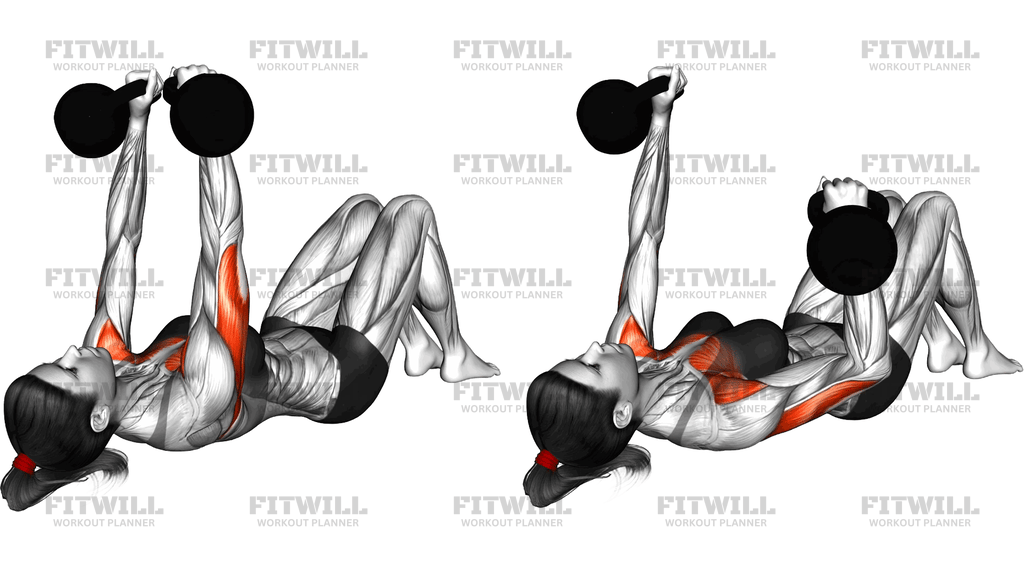
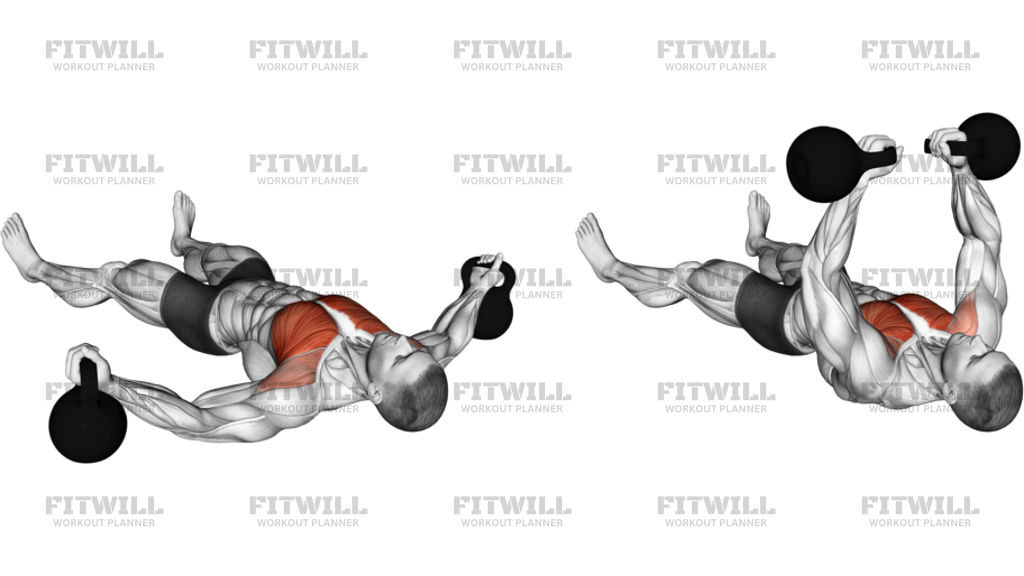
Kettlebell Floor Fly is a floor-based chest isolation exercise that opens the arms in a wide arc and brings them back together over the chest. The floor shortens the bottom position, which makes the movement more shoulder-friendly than a deep bench fly while still giving the pecs a strong stretch and squeeze. The kettlebell format adds extra demand on wrist and forearm control because the weight hangs below the handle instead of sitting in line with the hand.
This exercise is mainly a chest builder, with the front shoulders, triceps, and shoulder stabilizers helping to control the path. It works well as accessory work after pressing, as a lighter hypertrophy movement, or as a technical chest drill when you want to train horizontal adduction without loading a full bench range. The floor also gives each repetition a clear stopping point, so the rep should look smooth and repeatable rather than oversized.
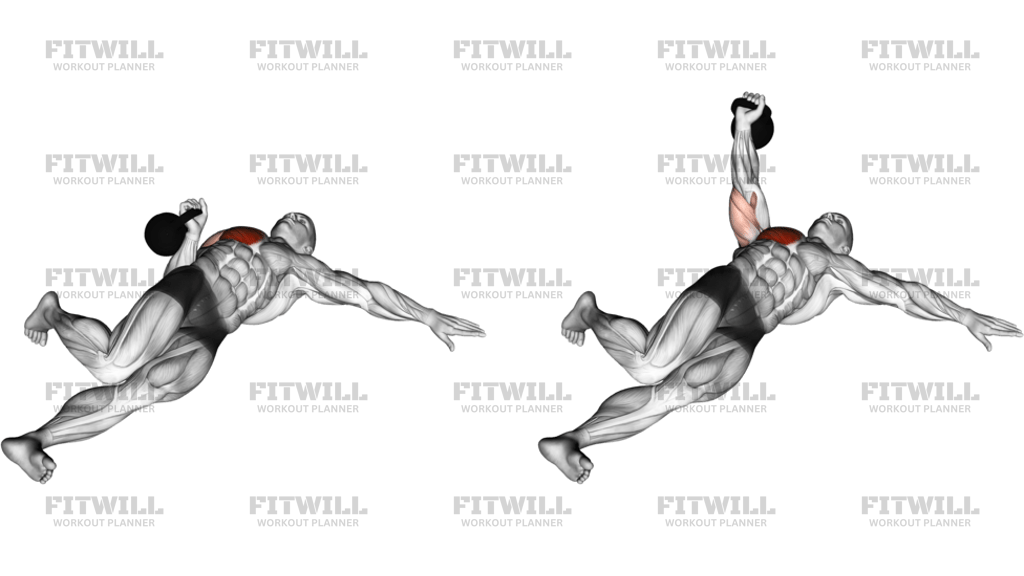
Set up by lying on your back with your upper back and glutes anchored to the floor, then hold the kettlebells above the chest with your palms facing each other and your elbows softly bent. Keep your ribs down and your shoulders away from your ears before you start the descent. From there, lower the arms in a controlled arc until the upper arms meet the floor or you reach the deepest range you can own without the shoulders rolling forward.
On the way back up, sweep the bells back together over the mid-chest with steady tension instead of turning the movement into a press. The chest should do most of the work while the shoulders stay stacked and the wrists stay neutral. Use a load that lets you control the bottom position, pause briefly when the arms are open, and stop the set if the bells start to wobble or the elbows drift into a pressing pattern.
[ Workout Log & Planner ]
Put your next workout in Fitwill
Keep your plan and training log ready when you are.


Instructions
- Lie on your back on the floor and hold a kettlebell in each hand above the chest with your palms facing each other and your elbows slightly bent.
- Set your upper back and glutes on the floor, and place your feet in a stable position that keeps your ribs down and your low back from arching.
- Pack your shoulders gently down and back before the first rep so the upper arms can open without shrugging.
- Inhale and lower both arms out to the sides in a wide arc, keeping the wrists straight and the elbow bend almost fixed.
- Continue lowering until the upper arms touch the floor or you reach the deepest range you can control without the shoulders rolling forward.
- Pause briefly at the bottom to keep tension in the chest instead of bouncing off the floor.
- Exhale and sweep the kettlebells back together over the middle of the chest, finishing with the bells close but not crashing together.
- Reset the shoulders before each rep and keep the same smooth path for the full set.
Tips & Tricks
- Let the floor define the bottom range; do not chase a deeper stretch if the shoulders start to tip forward.
- Keep a soft bend in the elbows the entire time so the movement stays a fly instead of turning into a press.
- Use a lighter kettlebell than you would for pressing, because the long lever makes the bottom position much harder to control.
- Think about hugging a wide barrel as the arms come back together, which helps the chest stay active through the top half.
- Keep the wrists stacked over the handles so the bells do not wobble or twist as they move.
- If the lower back starts arching, plant the feet more firmly and reduce the load before the next set.
- Lower slowly enough that you can feel the chest lengthen for the full descent instead of dropping into the floor.
- Stop the set when the bells begin to touch down heavily or the elbows turn into a pressing motion.
Frequently Asked Questions
What muscles do Kettlebell Floor Flys train?
The chest is the main target, with the front shoulders, triceps, and shoulder stabilizers helping control the arc.
Why do this on the floor instead of a bench?
The floor shortens the bottom range, which usually makes the fly easier on the shoulders while still loading the pecs well.
Should my elbows stay bent?
Yes. Keep a small, fixed bend in the elbows so the rep stays a fly and does not become a pressing movement.
How low should I lower the kettlebells?
Lower until the upper arms touch the floor or just before that if your shoulders start to roll forward.
Can beginners use this exercise?
Yes, but start very light and keep the range short until you can control the bottom position without wobbling.
What is the most common mistake?
People usually lower too far, lose shoulder position, or start pressing the bells back up instead of sweeping them together.
Do the kettlebells have to touch at the top?
They can meet gently over the chest, but do not slam them together or lose tension to make contact.
What if the shoulder feels pinchy?
Shorten the range, reduce the load, and keep the shoulder blades set; if the pinch remains, choose a different chest exercise.