Kettlebell Bottom Up One-Arm Bench Press
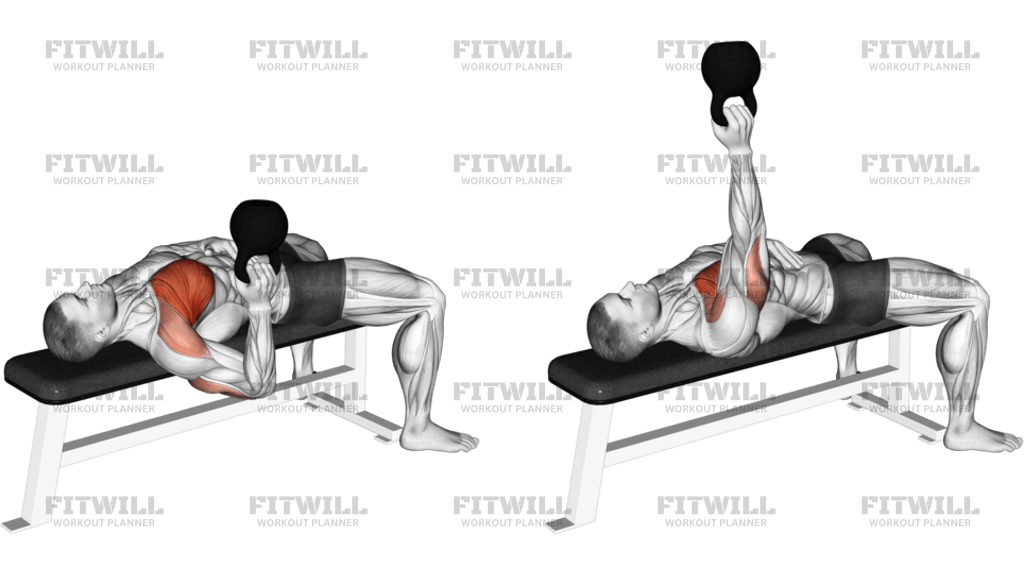
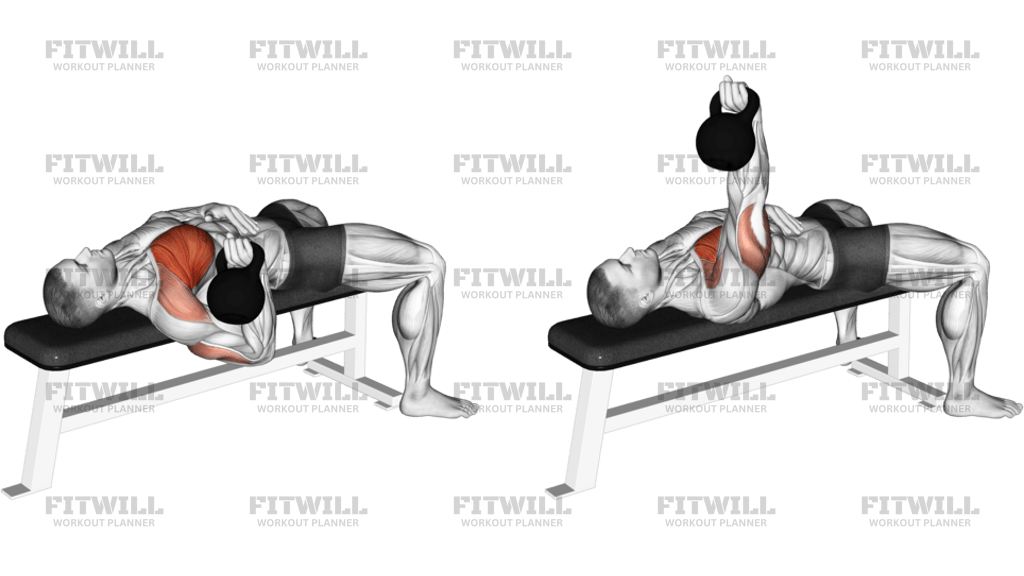
Kettlebell Bottom Up One-Arm Bench Press is a single-arm pressing variation done lying on a flat bench with the kettlebell held upside down. The bell sits above the hand and the handle points down toward the floor, so every rep asks you to keep the wrist stacked and the implement steady while the chest presses the arm to full extension. That bottom-up position makes the exercise far less forgiving than a normal kettlebell press, which is exactly why it is useful for teaching control.
The main training effect is chest work with a strong demand on the front shoulder, triceps, and trunk. Because the load is unstable, the press becomes a test of alignment as much as strength: the forearm must stay vertical, the shoulder must stay packed against the bench, and the torso must resist twisting toward the working side. The instability also makes the lighter bell feel heavier than a standard bench press, so the exercise is best treated as a precision movement rather than a max-effort lift.
Setup matters more here than in a regular one-arm bench press. Lie flat with both feet planted, set the shoulder blades back and down into the bench, and start with the elbow tucked slightly below the shoulder line. The kettlebell should rest in a secure bottoms-up position above the wrist before you press, not wobble freely while you search for balance. If the bell is drifting or the wrist is bent back, the load is already too heavy or the rack position is off.
Press the kettlebell straight up until the elbow locks out without letting the shoulder roll forward, then lower it under control to the same stacked position every rep. The path should be smooth and vertical, not a shrugging arc toward the face or a drifting press across the body. Breathing should stay calm and deliberate, with a brace before the press and a controlled exhale as you drive upward. If the bell starts to tilt, shorten the set and reset rather than forcing another rep.
Kettlebell Bottom Up One-Arm Bench Press is a good accessory choice when you want chest pressing volume with extra shoulder stability and grip demand, especially during technique blocks, warm-ups, or lower-load strength work. It can also expose side-to-side differences because one arm is working independently while the torso resists rotation. Use it when you want clean repetitions, not when you are chasing load; the best set is the one where the bell stays quiet, the wrist stays stacked, and every rep looks the same.
Fitwill
Log Workouts, Track Progress & Build Strength.
Achieve more with Fitwill: explore over 9600 exercises with images and videos, access built-in and custom workouts, perfect for both gym and home sessions, and see real results.
Start your journey. Download today!




Instructions
- Lie on a flat bench with both feet planted and your free arm relaxed out of the way.
- Pin your shoulder blades lightly back and down on the bench before you touch the kettlebell.
- Hold the kettlebell in one hand with the bell above the handle, wrist stacked under the weight, and elbow bent near 90 degrees.
- Keep the working elbow slightly below shoulder height and let the forearm sit close to vertical before the press starts.
- Brace your torso, then press the kettlebell straight up until the elbow reaches full extension without letting the bell tip.
- Pause briefly at the top with the bell balanced overhead and the wrist still straight.
- Lower the kettlebell slowly back to the same rack position, keeping the forearm vertical and the shoulder anchored to the bench.
- Reset the bell if it wobbles, then repeat for the planned reps before carefully returning it to the starting position.
Tips & Tricks
- Choose a much lighter kettlebell than you would for a normal one-arm bench press; the inverted bell makes instability the limiting factor.
- If the bell starts to tilt toward the thumb or pinky side, stop the set and reset the rack position instead of forcing another rep.
- Keep the wrist straight under the handle so the load sits over the forearm, not behind it.
- Press in a vertical line over the shoulder; if the bell drifts toward your face, the shoulder will usually shrug and lose tension.
- Do not let the working shoulder peel off the bench at the bottom; that usually means the range is too deep or the load is too heavy.
- Keep the free hand relaxed and the ribcage from flaring hard, especially on the press side where rotation is easiest to cheat in.
- Use a slow lower so the kettlebell has time to settle back into the bottom-up rack without bouncing or twisting.
- If your grip fatigues before your chest does, shorten the set and keep the rep quality high instead of chasing more reps.
Frequently Asked Questions
What muscles does Kettlebell Bottom Up One-Arm Bench Press work?
It primarily trains the chest, with the front shoulder and triceps doing a lot of the pressing work. The inverted kettlebell also challenges the forearm, wrist, and trunk to keep the bell from wobbling.
Why use the kettlebell upside down in Kettlebell Bottom Up One-Arm Bench Press?
The bottoms-up hold makes the press much less stable, so you have to control the wrist, forearm, and shoulder position carefully. That turns a basic bench press into a control and stability drill.
Can beginners do Kettlebell Bottom Up One-Arm Bench Press?
Yes, if they start very light and keep the bell balanced before pressing. Beginners usually need more time in the rack position and fewer reps per set to keep the bell from tipping.
How should the kettlebell sit in the hand during the press?
The handle should sit deep enough that the bell stays above the hand and the wrist stays stacked under the load. If the wrist bends back or the bell drifts, the kettlebell is probably too heavy.
Should my elbow flare out on Kettlebell Bottom Up One-Arm Bench Press?
No, keep it slightly tucked so the forearm can stay close to vertical and the shoulder stays more secure on the bench. Too much flare usually makes the bell wobble and shifts tension away from the chest.
How heavy should I go on this exercise?
Pick the lightest kettlebell that lets you keep the bell stable for every rep. If you have to fight the wobble instead of pressing smoothly, the load is too high.
Is Kettlebell Bottom Up One-Arm Bench Press good for shoulder stability?
Yes, because the inverted kettlebell forces the shoulder to stay centered while the arm presses. It is useful when you want chest work with extra control demands, not when you want to max out load.
What is the biggest mistake in Kettlebell Bottom Up One-Arm Bench Press?
The most common mistake is rushing the rep and letting the bell tip as the wrist loses alignment. The fix is to slow the lower, reset the rack, and press straight up with a stacked wrist.