Assisted Pistol Squat With Bed Sheet
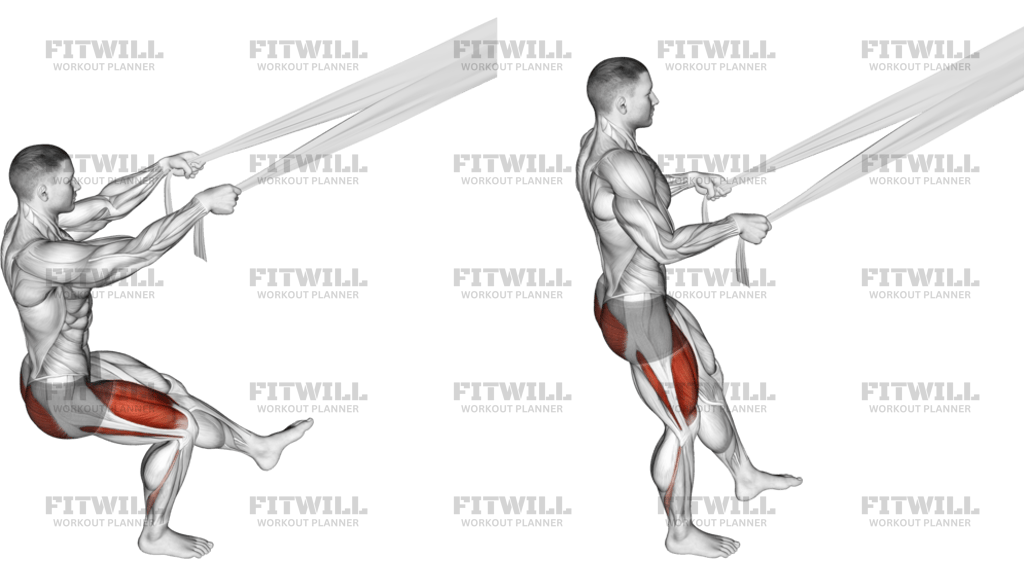
Assisted Pistol Squat With Bed Sheet is a bodyweight single-leg squat that uses a sheet loop or strap for balance and just enough help to keep the rep smooth. The setup lets you practice the pistol squat pattern without collapsing into the bottom, which makes it useful for building leg strength, ankle control, hip stability, and confidence in a deep single-leg position.
The working leg has to do the real work. Even with the hands on the sheet, the squat should feel like a controlled descent and a strong drive back to standing, not a pull-yourself-up movement. The glutes, quadriceps, hamstrings, and calves all contribute, while the sheet helps you stay centered and keeps the torso from tipping too far forward. In anatomy terms, the main emphasis stays on the Gluteus maximus, with support from the hamstrings, rectus abdominis, and erector spinae.
Setup matters more here than on a normal squat. Anchor the bed sheet securely, hold both ends with straight arms, and step back until there is gentle tension before you start the first rep. From that position, keep the standing foot planted, the free leg lifted in front, and the chest tall enough that the pelvis can drop straight down instead of twisting open. The sheet should guide your balance, not yank you forward.
Lower yourself under control until the standing thigh approaches the calf or until your range starts to break down. Keep the knee tracking in line with the toes, the heel down, and the non-working leg extended without touching the floor. At the bottom, use the sheet lightly for assistance only if needed, then drive through the midfoot and heel to stand. Breathe in on the way down and exhale as you rise.
This exercise is a good choice when you want to build toward a full pistol squat, improve unilateral leg strength, or add a demanding accessory movement without loading the spine. It also works well as a technique drill because the sheet gives immediate feedback: if you pull too hard, lean too far, or lose tension, the rep feels sloppy right away. Keep the motion clean, keep the anchor secure, and stop the set before the working leg starts to wobble or the free leg has to touch down.
[ Workout Log & Planner ]
Put your next workout in Fitwill
Keep your plan and training log ready when you are.


Instructions
- Anchor the bed sheet securely to a sturdy point and hold both ends with straight arms at about chest height.
- Step back until the sheet has gentle tension, then stand on one leg with the other leg lifted slightly in front of you.
- Keep the working foot flat, brace your trunk, and set your gaze forward before you start the rep.
- Sit your hips down and back under control while keeping the free leg off the floor.
- Let the knee of the working leg travel in line with the toes instead of collapsing inward.
- Descend as low as you can without losing heel contact, torso position, or balance.
- Use the sheet only as light assistance if needed, then drive through the heel and midfoot to stand back up.
- Exhale as you rise, fully extend the hip and knee at the top, and reset before the next rep.
- Switch sides after the planned reps or if the standing leg starts to twist, wobble, or shorten the range.
Tips & Tricks
- Keep the sheet under light tension the whole time; if it goes slack, you are probably leaning too far or losing balance.
- The sheet is for balance and a small assist, not for pulling yourself out of the squat.
- A secure anchor matters here more than load. Recheck the knot, loop, or doorway setup before each set.
- If the bottom position is too deep, reduce the range first and earn depth gradually instead of collapsing into it.
- Let the free leg stay long and lifted in front rather than tucking it behind you or touching the floor for help.
- Keep the standing heel glued down so the quad and glute on that side do the work instead of the toes doing the lifting.
- Use a slow lower and a firm drive up. Fast drops make it hard to control the knee and pelvis.
- If one side feels much harder, shorten the range and keep the torso more upright before adding depth.
- Stop the set when the working knee caves inward, the pelvis opens up, or you need a hard yank on the sheet to finish the rep.
Frequently Asked Questions
What muscles work most during an Assisted Pistol Squat With Bed Sheet?
The standing leg does most of the work, especially the glutes and quadriceps, with the hamstrings, calves, and trunk helping you stay stable.
How does the bed sheet help in this exercise?
The sheet gives you a stable handhold so you can balance, control the descent, and use only a small amount of assistance coming out of the bottom.
Can I use a towel or strap instead of a bed sheet?
Yes, any strong, secure loop that gives you a firm handhold can work as long as the anchor is solid and the grip feels safe.
How low should I squat on the assisted pistol?
Go as deep as you can while keeping the heel down, the knee tracking over the toes, and the free leg off the floor.
What is the most common form mistake?
People usually pull too hard on the sheet, which turns the movement into a balance drill instead of a single-leg strength exercise.
Is this a good beginner variation for pistol squats?
Yes. The sheet reduces the balance demand and gives you a safer way to build toward a true pistol squat.
How can I make this movement easier?
Step a little closer to the anchor, reduce the squat depth, and use the sheet for a more noticeable balance assist.
How do I make it harder over time?
Use less help from the sheet, slow the lowering phase, and work toward deeper reps with a cleaner single-leg line.