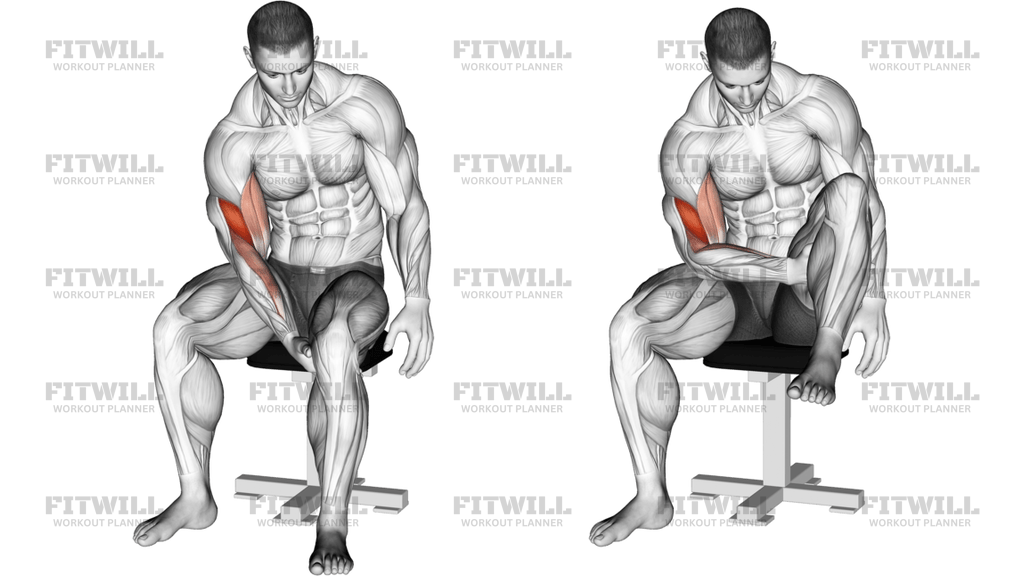
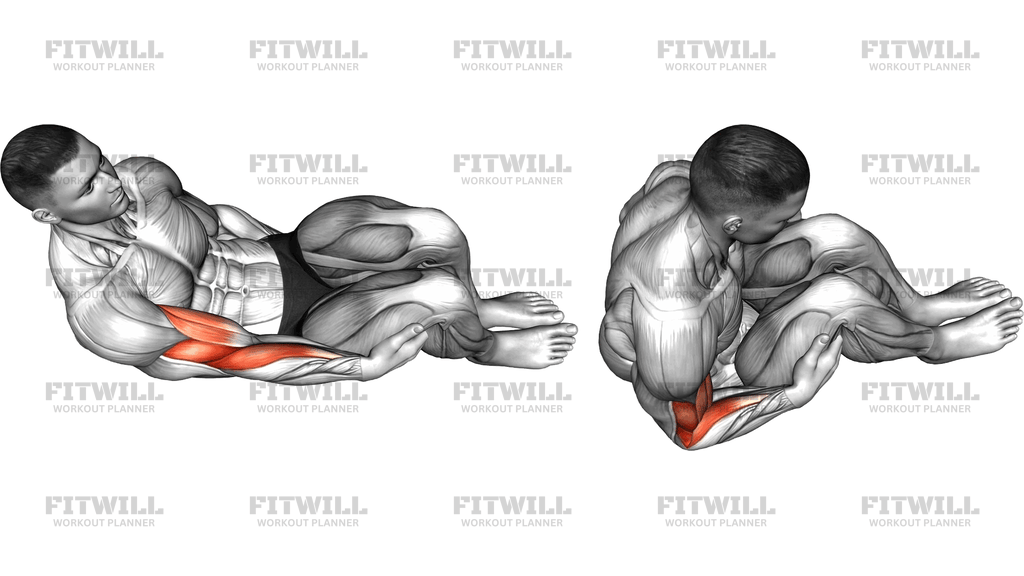
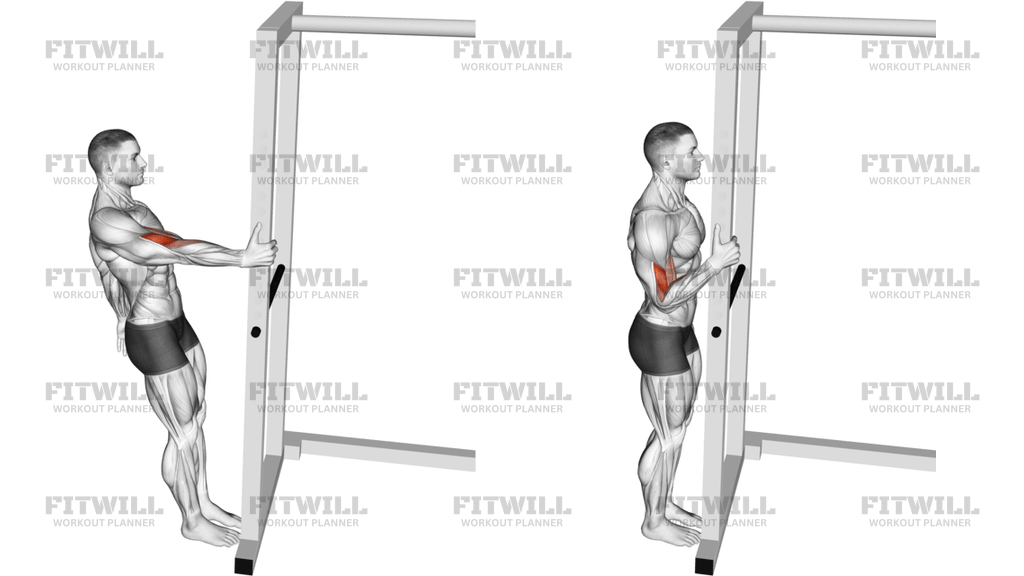
Biceps Curl With Bed Sheet
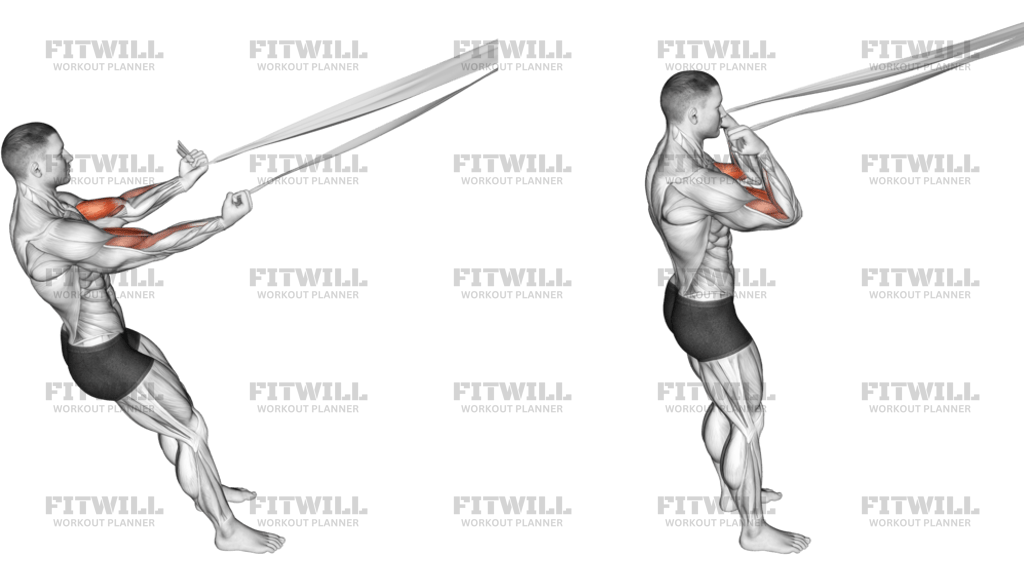
Biceps Curl With Bed Sheet is a suspended curl variation that uses an overhead sheet or strap anchor and your own body angle to create resistance for the biceps. In the image, the lifter leans back from the anchor with straight arms at the start, then curls the hands toward the face while keeping the torso rigid. That setup makes the angle of your body part of the load, so small changes in foot position and lean have a big effect on how hard the set feels.
This movement primarily targets the biceps brachii, with brachialis, brachioradialis, and the forearm flexors helping control the handle position and stabilize the wrists. Because the resistance comes from an anchored sheet, the exercise also asks the shoulders and upper back to keep the arms in line instead of drifting forward. That makes the setup more important than in a typical dumbbell curl: if the anchor is too low, the sheet is uneven, or the body leans too far, the curl becomes sloppy and the elbows start doing too much work.
The best repetitions start from a long-arm position with tension already present in the sheet. Keep the rib cage down, squeeze the legs, and lean back just enough to feel the resistance without losing a straight line from head to heels. As you curl, bend the elbows and bring the fists toward the temples or upper face while keeping the upper arms mostly fixed. The return should be slow and deliberate so the biceps stay loaded through the whole lowering phase instead of snapping back to the start.
This is a useful bodyweight or improvised home-training option when you want direct arm work without dumbbells or a cable station. It fits best as accessory volume, a home workout substitute, or a light-to-moderate strength block where strict control matters more than absolute load. Because the anchor is improvised, the exercise should be treated with care: the sheet or strap must be securely fastened, the grip must feel stable, and the anchor point must not shift under tension.
For most people, the limiting factor is not the biceps but body position. If your hips sag, your shoulders shrug, or your elbows drift behind the torso, the curl stops feeling clean. Keep the reps smooth, stop before the grip or anchor gets sketchy, and choose a lean angle that lets you own the full range. Done well, this becomes a simple but effective way to train elbow flexion with a strong isometric core and shoulder stabilization requirement.
[ Workout Log & Planner ]
Put your next workout in Fitwill
Keep your plan and training log ready when you are.


Instructions
- Anchor a sturdy bed sheet or strap overhead and hold one end in each hand with an underhand grip.
- Walk your feet forward and lean back until your arms are straight and the sheet is under tension.
- Set your feet about hip-width apart and keep your body in a straight line from head to heels.
- Pull your shoulders down away from your ears and keep your elbows slightly in front of your ribs.
- Start the curl by bending the elbows and bringing your hands toward your temples or upper face.
- Keep your upper arms steady while the forearms travel and the biceps do the work.
- Pause briefly when the elbows are fully bent and the handles are close to your face.
- Lower yourself in a slow, controlled line until the arms are long again and the sheet is taut.
- Reset your body angle between reps if needed, then repeat for the planned set.
Tips & Tricks
- Use the lean angle to scale difficulty: a more upright body makes the curl easier, while a farther step forward increases tension quickly.
- Keep the sheet evenly loaded in both hands so one side does not pull your shoulders out of line.
- If your elbows drift behind your torso, shorten the range slightly and keep them a little in front of the ribs.
- Do not shrug as you curl; keep the neck long and the shoulder blades gently pulled down.
- A smooth lowering phase matters here because the sheet setup can snap you back to the start if you relax too fast.
- Hold the handles or sheet ends firmly but avoid death-gripping them, which can make the forearms fail before the biceps.
- Exhale as you curl up and inhale as you lower back out to help keep the torso braced.
- Stop the set if the anchor shifts, the sheet twists, or the grip starts to feel unstable.
- This works best as a strict arm accessory, not a full-body swing, so keep the torso quiet throughout the set.
Frequently Asked Questions
What does Biceps Curl With Bed Sheet train most?
It mainly trains elbow flexion for the biceps, with the brachialis, brachioradialis, and forearms helping stabilize the curl.
How do I set up the sheet for this exercise?
Anchor it securely overhead, hold one end in each hand, and step back until the sheet is already tensioned before you start curling.
Where should my elbows be during the curl?
Keep them mostly fixed and slightly in front of the ribs so the curl stays strict instead of turning into a shoulder-dominant pull.
How far back should I lean?
Lean back only enough to feel constant resistance through the rep; if your hips or shoulders lose alignment, you are too far back.
Can beginners use this bed sheet curl?
Yes, if the anchor is secure and the body angle is kept conservative so the resistance stays manageable.
What is the most common mistake with this movement?
The usual problem is letting the torso sag or the shoulders shrug, which turns a strict curl into a loose bodyweight row.
How should the lowering phase feel?
The return should feel slow and controlled, with the biceps resisting the body angle instead of dropping back quickly.
Is this a good substitute for dumbbell curls?
It can be a useful home substitute when you do not have weights, but the load is controlled by body angle rather than plate or dumbbell weight.