Weighted Decline Sit-Up
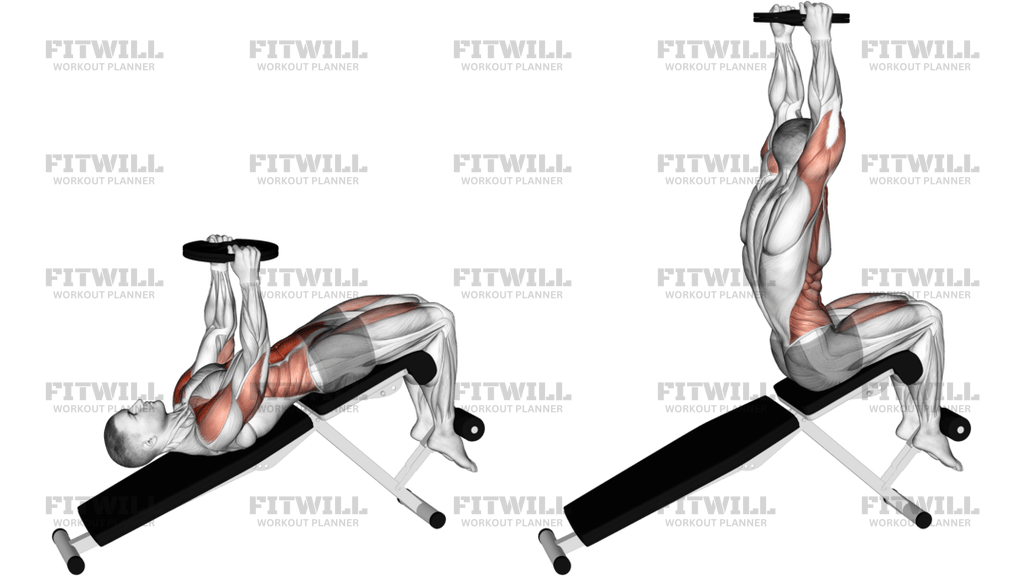
Weighted Decline Sit-Up is a decline-bench core exercise that combines trunk flexion with an overhead load to make each rep harder than a bodyweight sit-up. The decline angle increases the leverage on the abdominals, so the movement is useful when you want direct work for the rectus abdominis, with the hip flexors and obliques helping to control the ascent and descent.
The bench angle and foot lock matter because they set the whole pattern. If the hips slide, the low back arches, or the feet are not secured, the rep turns into a pull from momentum instead of a controlled sit-up. A stable setup lets you keep tension through the midsection while the plate or dumbbell stays centered above the chest and face.
At the top, the goal is not to yank your torso upright. Curl the ribs toward the pelvis, keep the load stacked over the shoulders, and finish with the abs doing the last part of the work. On the way down, resist the bench rather than dropping back quickly; that eccentric control is where the exercise becomes most valuable and where people often lose position.
This movement is a good option for abdominal strength blocks, weighted core work, or accessory training when bodyweight sit-ups are no longer challenging enough. Because the load is held overhead, the exercise also demands shoulder stability and upper-back position, but the main objective is still a clean trunk-driven sit-up with no swinging or jerking.
Use a load and bench angle that let you keep the rep smooth from start to finish. If your neck tenses, your feet lift, or your low back takes over, the set is too heavy or the range is too aggressive. A well-performed weighted decline sit-up should feel controlled, repeatable, and strict.
[ Workout Log & Planner ]
Put your next workout in Fitwill
Keep your plan and training log ready when you are.


Instructions
- Set the decline bench to a moderate angle and secure your feet under the pads with your hips and lower back resting fully on the bench.
- Lie back with your head lower than your hips and hold a plate or dumbbell straight above your chest with both arms extended.
- Tighten your midsection before you start so your ribs stay down and your lower back does not overarch.
- Exhale and curl your torso up by driving your ribs toward your pelvis, keeping the weight stacked over your shoulders.
- Sit up until your trunk is tall and your abs are fully shortened, without swinging the arms or jerking the torso.
- Pause briefly at the top to control the position and avoid leaning back into the load.
- Lower yourself slowly until your shoulder blades and upper back return to the bench.
- Keep the movement smooth on every rep and reset your brace before the next sit-up.
Tips & Tricks
- Choose a decline angle that lets you sit up without losing control; a steeper bench makes the load feel much heavier.
- Keep the plate or dumbbell directly above the chest instead of drifting behind the head, which can pull the neck and shoulders out of position.
- Think of curling the sternum toward the pelvis instead of simply hinging at the hips.
- Do not let your feet rise off the pads; if they do, the set is probably too heavy or too fast.
- Lower yourself with a 2-3 second descent so the abs stay under tension the whole rep.
- Keep the chin lightly tucked and the neck long so you do not lead the movement with the head.
- Use a weight that allows you to finish every rep without rocking backward off the bench.
- Stop the set if your lower back starts to arch hard at the bottom or if the plate begins to wobble overhead.
Frequently Asked Questions
What muscles do weighted decline sit-ups work?
They primarily train the rectus abdominis, with the obliques and hip flexors helping through the lift and lower phases.
Do I need a decline bench for this exercise?
Yes, the decline angle is what makes the movement more demanding than a flat sit-up. It also changes the leverage on your abs and makes setup more important.
Should the weight stay above my chest or behind my head?
Keep it above the chest or slightly above the shoulders. Letting the load drift behind the head usually tugs the neck and makes the rep less controlled.
How do I keep from using momentum on the way up?
Start each rep from a fully braced position, keep the feet anchored, and curl up under control instead of swinging your torso.
Can beginners do weighted decline sit-ups?
Yes, but only with a very light load and a mild decline. Beginners should first be able to control unweighted sit-ups on the bench.
Why do my hip flexors feel this exercise?
They help lift the torso and stabilize the pelvis, especially if you sit up high or use a steep decline. A controlled tempo usually keeps them from taking over.
What is a common mistake with the decline bench setup?
Feet that are not locked in securely or a bench that is too steep can make the movement sloppy and put stress on the low back.
How should I breathe during the rep?
Exhale as you curl up, then inhale as you lower back to the bench. Keeping that pattern helps you brace without holding your breath too long.