Bodyweight Standing Military Press Wall Supported
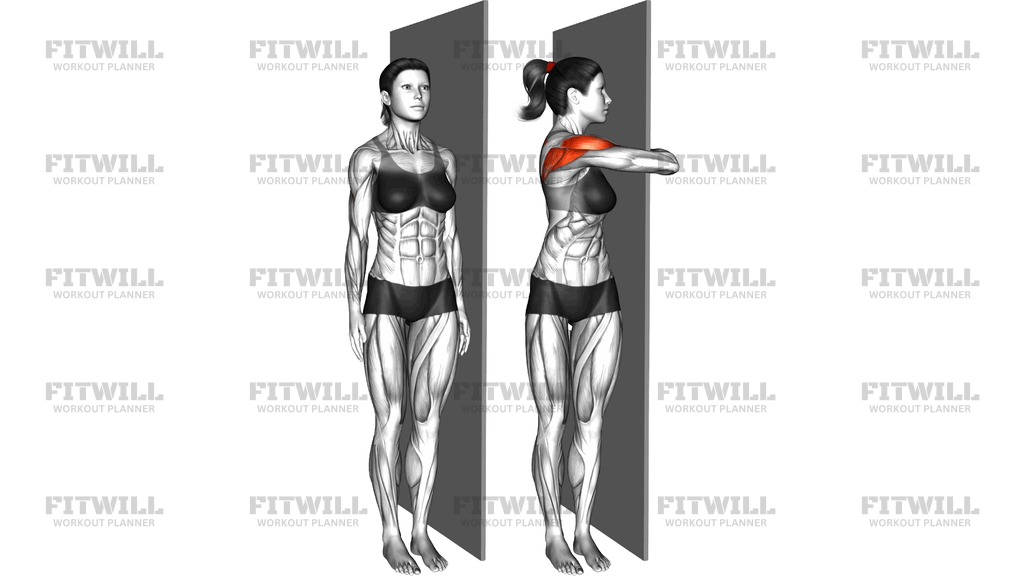
Bodyweight Standing Military Press Wall Supported is a standing overhead press pattern that uses the wall as a posture check while you train the shoulders through a clean, upright line. It is useful when you want to improve pressing mechanics without letting the ribs flare or the lower back turn the rep into a lean-back press. The movement emphasizes the delts, with the upper back and triceps contributing to control and finish.
The wall support matters because it makes compensations obvious. When your back stays lightly connected to the wall and your feet are slightly forward, you have to create the press with the shoulders instead of stealing range from the spine. That makes the exercise valuable for warming up before loaded overhead work, for shoulder endurance, or for any program that needs better torso control under an overhead reach.
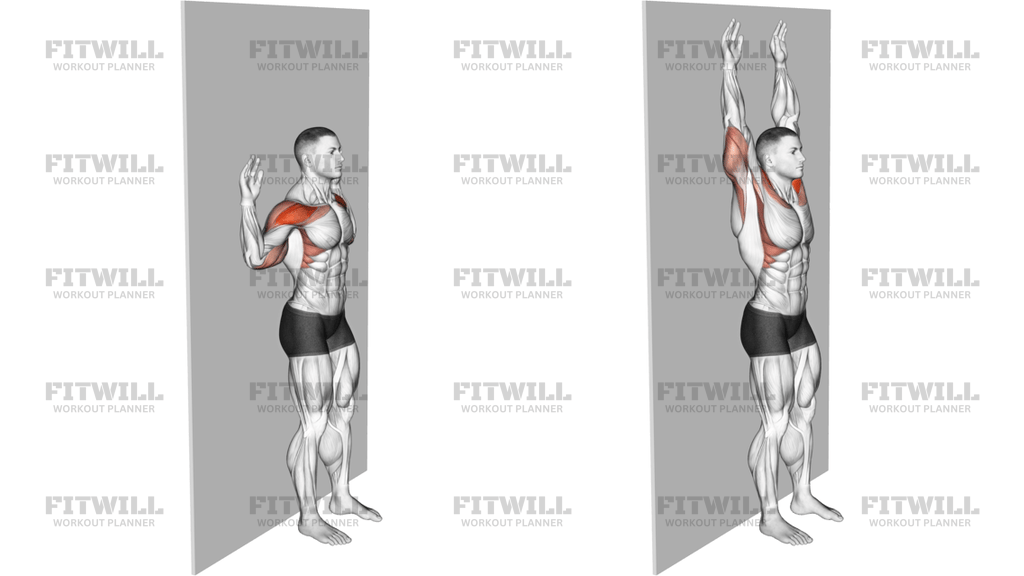
Each repetition begins from a goalpost position with the elbows bent and the upper arms near shoulder height. From there, press the hands upward in a smooth overhead path until the elbows straighten, then lower back to the same starting shape under control. The best reps feel tall, even, and deliberate, with the neck relaxed, the chin slightly tucked, and the shoulders moving freely instead of shrugging hard or drifting forward.
Because this is a bodyweight movement, quality matters more than speed or volume. If the low back arches, the ribcage pops up, or the hands can no longer finish overhead without strain, shorten the range and clean up the position before adding more reps. That keeps the exercise useful for beginners learning overhead alignment and for experienced lifters who want a strict, repeatable shoulder pattern.
Bodyweight Standing Military Press Wall Supported fits well in warm-ups, accessory work, or light technique circuits where you want a controlled press without external loading. It can also expose side-to-side differences in shoulder range and scapular control, which is helpful before barbell or dumbbell pressing. Stop the set when wall contact, posture, or overhead comfort breaks down, because the value of the exercise comes from stacked alignment and smooth motion, not from forcing extra range.
Fitwill
Log Workouts, Track Progress & Build Strength.
Achieve more with Fitwill: explore over 9600 exercises with images and videos, access built-in and custom workouts, perfect for both gym and home sessions, and see real results.
Start your journey. Download today!




Instructions
- Stand with your back lightly against the wall and your feet a short step forward, about hip-width apart.
- Keep your glutes gently squeezed, ribs down, and low back from arching away from the wall.
- Set your upper arms at shoulder height with the elbows bent about 90 degrees and the forearms vertical.
- Press your hands and forearms upward in a smooth overhead path without letting your chest drift forward.
- Reach to straight arms overhead while keeping the neck long and the chin slightly tucked.
- Lower under control until the elbows return to the starting goalpost position.
- Breathe out as you press up and inhale as you lower back down.
- Reset your posture between reps if you lose wall contact or feel the low back take over.
Tips & Tricks
- Keep your feet far enough from the wall that you can reach overhead without turning the press into a back arch.
- If your ribs flare, stop the rep just short of the top and rebuild the stack before the next rep.
- Press slightly in front of your face instead of straight out from your chest to keep the overhead path clean.
- Let the shoulders rotate upward naturally rather than pinning the shoulder blades down and back.
- Slow the lowering phase so the delts and triceps stay under tension instead of dropping out of the rep.
- If one elbow drifts ahead of the other, use the wall as a mirror and match both arms before pressing again.
- A soft glute squeeze helps keep the pelvis and ribcage stacked while the arms finish overhead.
- Shorten the range if your wrists bend back or you feel pinching at the top of the press.
Frequently Asked Questions
What muscles does Bodyweight Standing Military Press Wall Supported work?
It mainly trains the delts, with triceps, traps, and upper-back muscles helping stabilize and finish the overhead reach.
Why use the wall for Bodyweight Standing Military Press Wall Supported?
The wall makes it easier to keep your ribs stacked over your pelvis and stop the lower back from taking over the press.
How far should my feet be from the wall?
Far enough forward that you can press overhead without arching your low back, but not so far that you lose the wall reference.
Should my back stay on the wall the whole time?
Yes, the wall contact is there to keep your torso honest. If you peel away from it, shorten the range and reset the posture.
What is the biggest mistake in Bodyweight Standing Military Press Wall Supported?
The most common mistake is turning the press into a rib flare and low-back arch instead of moving cleanly from the shoulders.
Can beginners do this exercise?
Yes. It is a good beginner drill because the wall limits cheating and makes the overhead path easier to learn.
What should I do if my shoulders feel tight overhead?
Reduce the range, keep the elbows slightly in front of the shoulders, and stop before you chase a painful lockout.
How can I make Bodyweight Standing Military Press Wall Supported harder?
Use slower lowering, pause at the top, or add more clean reps while keeping the wall contact and overhead line strict.