Barbell Front Chest Squat With Resistance Band
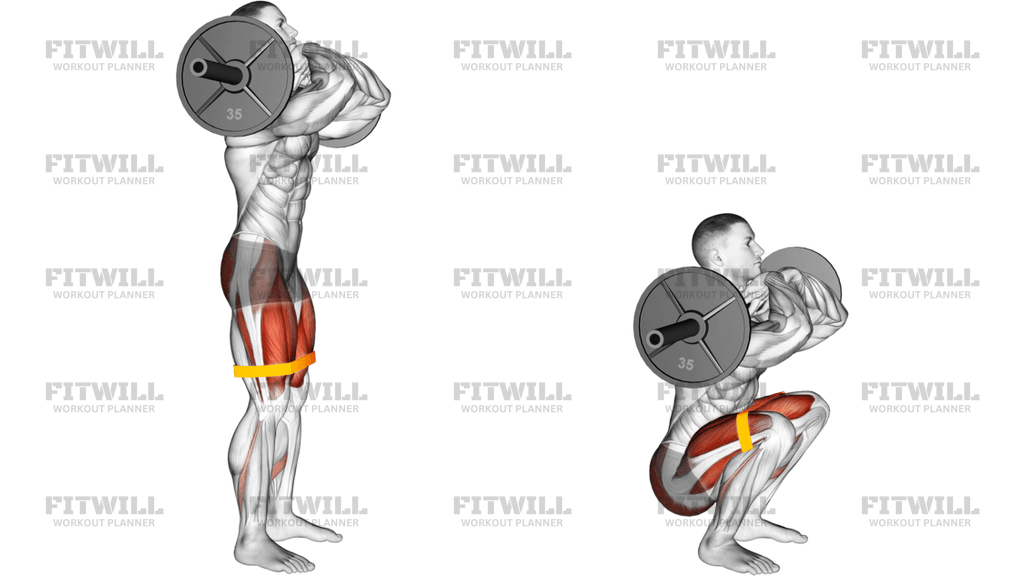
Barbell Front Chest Squat With Resistance Band is a front-rack squat variation that puts the bar across the front of the shoulders while a band around the thighs or just above the knees adds outward pressure. The setup is aimed at keeping the torso upright, the elbows high, and the knees tracking over the toes instead of collapsing inward as you descend.
Because the bar sits in the front rack, the upper back and trunk have to stay organized from the first inch of the rep. The band changes the feel of the squat by asking you to actively press the knees out against tension, which can improve hip position, glute engagement, and knee tracking. That makes this version useful when you want a squat that is still quad-dominant but also teaches cleaner lower-body alignment.
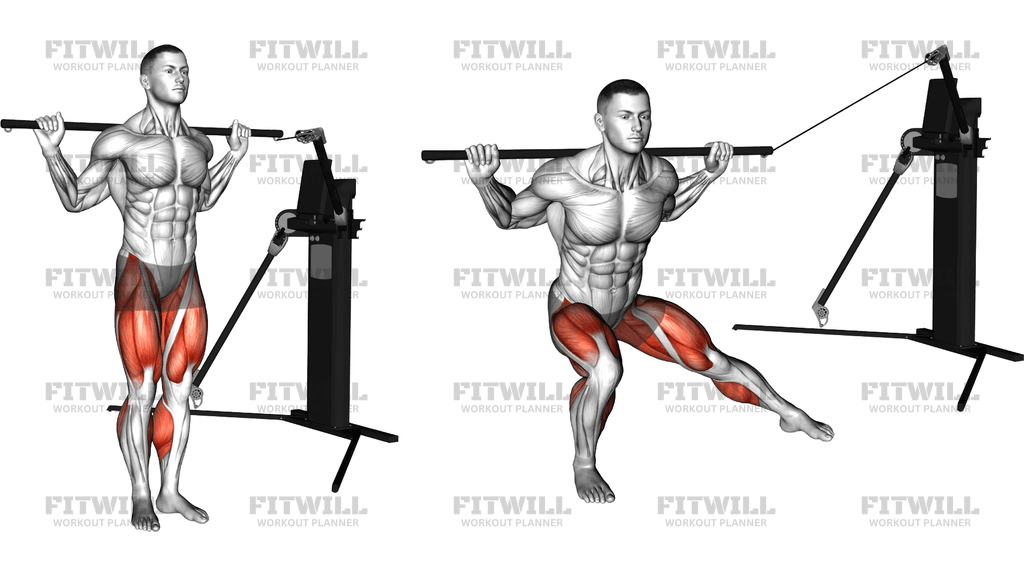
The image shows a full front squat pattern rather than a partial pulse or a leg press style movement. Start tall, brace before you unlock the knees, and sit between the heels while keeping the chest lifted. The bar should travel in a mostly vertical line over the midfoot. On the way down, the knees should follow the toes and maintain pressure into the band; on the way up, drive through the whole foot and keep the elbows from dropping.
This exercise is best used when you want front squat technique work with a little extra hip and knee positioning feedback. It can fit into strength sessions, lower-body accessories, or warm-up sets before heavier squats, but the load should stay light enough that the rack position and knee control remain crisp. If the band makes the bottom position unstable, reduce load or use a lighter band before you chase depth.
A good rep finishes with the hips and knees fully extended, the ribs stacked over the pelvis, and the feet still planted. The goal is not to force a bigger squat by leaning forward or letting the knees cave in to escape the band tension. Clean reps with steady bracing will train the thighs, glutes, and trunk far better than a heavy load you cannot hold in the front rack.
[ Workout Log & Planner ]
Put your next workout in Fitwill
Keep your plan and training log ready when you are.


Instructions
- Set the bar in a front rack across the front of your shoulders, with your elbows lifted and your fingertips under the bar if needed for support.
- Place a light resistance band around your thighs just above the knees and stand with your feet about shoulder width apart, toes slightly turned out.
- Stand tall with your ribs stacked over your pelvis, squeeze your upper back, and take a breath to brace your trunk before you descend.
- Unlock your hips and knees together, then sit down between your heels while keeping your chest lifted and your elbows pointed forward.
- Press your knees outward into the band as you lower, and keep the bar traveling straight over the middle of your feet.
- Reach the bottom only as far as you can hold the front rack, knee tracking, and foot pressure without losing balance.
- Drive up by pushing the floor away, keeping the knees out against the band and the torso as upright as possible.
- Finish the rep by standing fully tall, then reset your breath and posture before starting the next repetition.
Tips & Tricks
- A light band is enough for most lifters; if the knees are fighting the band more than the squat, the setup is too aggressive.
- Keep the elbows high throughout the descent so the bar does not roll forward off the shoulders.
- Think about spreading the floor with your feet, which helps the knees stay out and the arches stay active.
- If the heels lift, shorten the depth or use a slightly wider stance before adding load.
- Let the band cue the knees outward, but do not force an exaggerated bow-leg position at the bottom.
- A controlled lowering phase helps you stay balanced in the front rack and avoids bouncing out of the hole.
- Keep the chin neutral instead of looking up hard; overextending the neck usually makes the ribcage flare and the rack less stable.
- Use the lightest load that lets you keep the bar path vertical and the torso upright on every rep.
Frequently Asked Questions
What muscles do barbell front chest squats with a resistance band work?
They mainly train the thighs, especially the quadriceps, while also loading the glutes, upper back, and trunk to keep the front rack stable.
Where should the resistance band sit?
The band should sit around the thighs just above the knees so it can cue outward knee pressure without slipping into the calves.
How high should my elbows be in the front rack?
Keep the elbows lifted enough that the bar stays supported on the front of the shoulders and the chest stays open through the squat.
Should my knees push out hard against the band?
Yes, but only enough to keep the knees tracking over the toes. The band should reinforce alignment, not force an exaggerated stance.
Can I use this as a warm-up before heavier squats?
Yes, a light set works well as a primer for front-rack position, torso bracing, and knee tracking before heavier work.
What is the most common mistake in this squat variation?
Letting the elbows drop or the knees cave in is the most common problem, because both issues usually pull the torso forward.
How low should I squat?
Go only as low as you can keep the front rack, flat feet, and outward knee pressure. Depth is useful only if you can control it.
Is this more of a quad exercise or a glute exercise?
It is mostly quad-focused because of the front rack, but the band and stance also ask the glutes to stabilize the knees and hips.