Barbell Glute Bridge
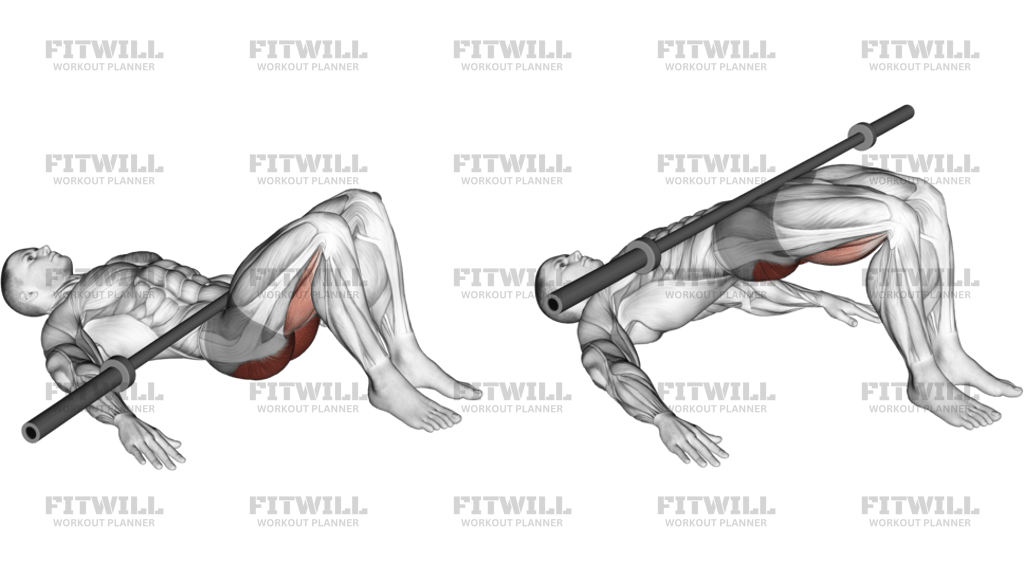
Barbell Glute Bridge is a floor-based hip extension exercise that loads the glutes through a short, controlled range of motion. Because the upper back stays on the floor and the knees stay bent, the movement lets you train the hips hard without the balance demands of a standing lift. That makes Barbell Glute Bridge useful when you want a direct glute builder, a lower-back-friendly accessory, or a way to reinforce lockout strength for other lower-body lifts.
The main driver should be the gluteus maximus, with the hamstrings helping at the back of the thigh and the core and spinal erectors keeping the torso from over-arching. In practical terms, Barbell Glute Bridge works best when the pelvis rises because the hips extend, not because you throw the ribs up or crank the low back. A good rep feels centered through the hips, with tension staying on the glutes from the first inch off the floor to the top.
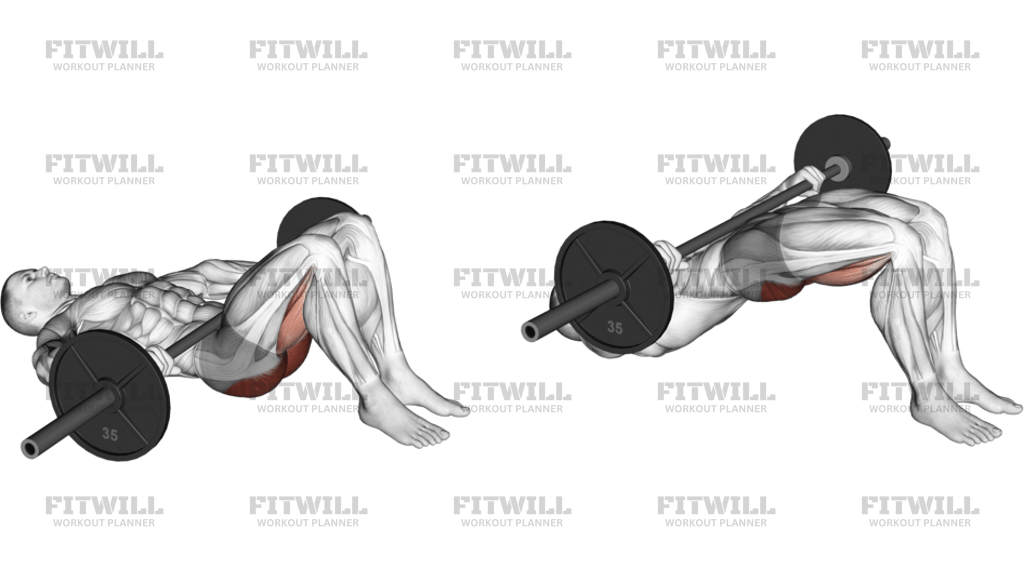
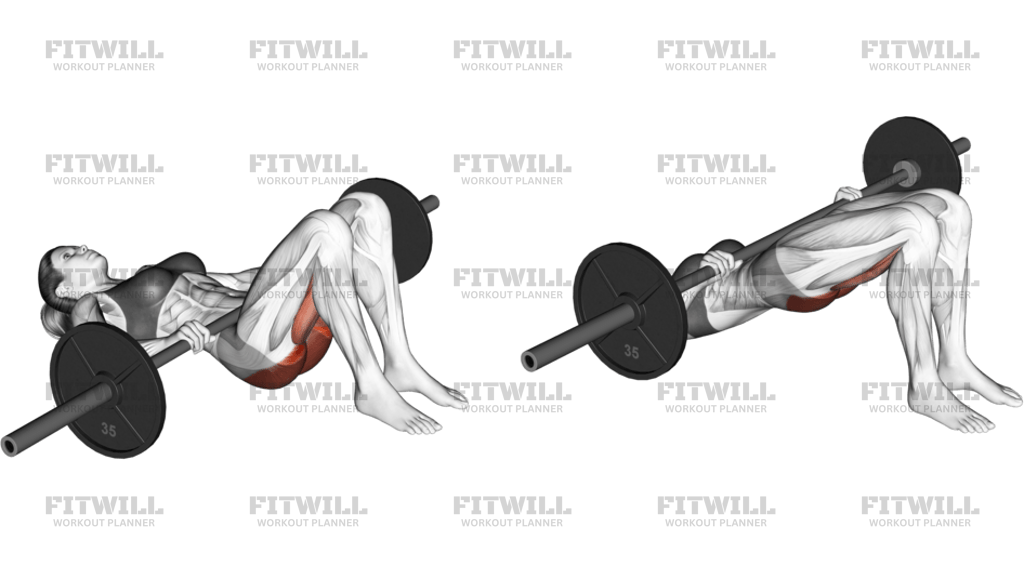
Setup matters more here than in many other lifts. Place a loaded barbell across the crease of the hips, ideally with a pad or folded towel if the bar feels sharp. Lie back so your shoulder blades and upper back are on the floor, bend the knees, and plant the feet about hip-width apart. At the top of Barbell Glute Bridge, the shins should be close to vertical and the knees should track over the toes without collapsing inward.
To start each rep, brace the ribs down, tuck the chin slightly, and squeeze the glutes to drive the hips upward. Keep the bar level, press through the heels, and lift until the torso and thighs form a straight line without turning the movement into a low-back arch. Pause for a beat at the top, then lower under control until the glutes touch down lightly or hover just above the floor if you want to keep tension on the hips.
Barbell Glute Bridge is a strong accessory for glute growth, posterior-chain strength, and warm-ups before squats, deadlifts, or sprint work. It also fits well in higher-rep hypertrophy work because the fixed floor setup makes it easy to repeat clean reps. Use a load you can stabilize on the pelvis, stop if the bar shifts or your lower back starts doing the work, and keep every rep deliberate so the glutes stay responsible for the lift. If the bar digs into the hips or you lose position at the top, simplify the load and tighten the setup before adding weight again.
[ Workout Log & Planner ]
Put your next workout in Fitwill
Keep your plan and training log ready when you are.


Instructions
- Sit on the floor with the loaded barbell resting across the crease of your hips, and place a pad or folded towel under the bar if it digs in.
- Lean back so your shoulder blades and upper back are on the floor, bend your knees, and plant your feet about hip-width apart.
- Hold the bar with both hands to keep it centered, then walk your heels until your shins are nearly vertical at the top of the rep.
- Tuck your chin slightly and pull your ribs down so your lower back stays neutral before you start the lift.
- Exhale, brace your torso, and drive through your heels to raise your hips toward the ceiling.
- Squeeze your glutes to bring your torso and thighs into a straight line, but stop before your lower back arches.
- Pause briefly at the top with the bar level and your knees tracking over your toes.
- Inhale as you lower under control until your glutes touch down lightly, reset tension, and repeat for the planned reps.
Tips & Tricks
- If the barbell feels sharp on your hips, use a thick pad or folded towel so you can keep the setup stable without bracing against pain.
- Set your feet so your shins are close to vertical at lockout; if your feet are too far away, the hamstrings usually take over too much.
- Press both hands into the bar to stop it from rolling toward one hip as you lift.
- Keep your ribs down at the top; if your chest flares up, the lift turns into a low-back arch instead of a glute bridge.
- A one-second pause at the top makes the glutes do the work instead of bouncing through the bottom.
- Lower slowly enough that the bar never slams into the floor position or shifts across your pelvis.
- If your hamstrings cramp, bring your feet slightly closer and shorten the range until the glutes are doing more of the drive.
- Stop the set when the bar starts sliding or your pelvis tilts, because those are signs the load is too heavy for this setup.
Frequently Asked Questions
What does Barbell Glute Bridge work most?
Barbell Glute Bridge primarily targets the glutes, especially the gluteus maximus. The hamstrings and core help stabilize the pelvis and keep the torso from over-arching.
How is Barbell Glute Bridge different from a barbell hip thrust?
Barbell Glute Bridge is done with your upper back on the floor, so the range of motion is shorter than a hip thrust. That usually makes it simpler to set up and easier to control for beginners.
Where should the bar sit during Barbell Glute Bridge?
The bar should rest across the crease of the hips, not up on the stomach or too low on the thighs. A pad or folded towel helps if the bar pressure is uncomfortable.
How far should my feet be from my hips?
Set your feet so your shins are close to vertical when your hips are fully raised. That position usually keeps the glutes working better and prevents the hamstrings from taking over.
Why do I feel Barbell Glute Bridge in my lower back?
That usually means your ribs are flaring or you are lifting too high. Keep your ribs down, squeeze the glutes first, and stop the rep when your torso and thighs line up.
Can beginners do Barbell Glute Bridge?
Yes. Start with a light barbell or even bodyweight first so you can learn the floor setup, foot position, and top lockout without losing control.
Do I need a pad under the barbell?
A pad is not mandatory, but it helps a lot if the bar digs into the hip crease. If the setup hurts, your positioning will usually suffer before the glutes do.
Can I use Barbell Glute Bridge instead of squats or deadlifts?
It is a useful accessory, but it does not replace squat or deadlift patterns. Barbell Glute Bridge is best for extra glute volume and hip extension work alongside those lifts.