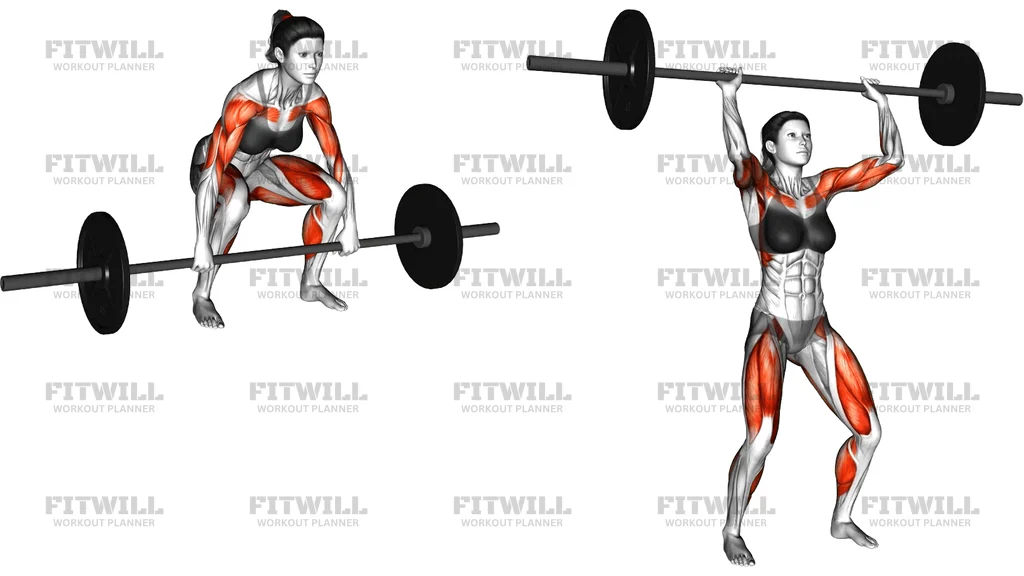
Barbell Hook-Grip Deadlift
Barbell Hook Grip Deadlift is a barbell pull from the floor that uses a hook grip to help you hold heavier loads with both hands in an overhand position. The thumb is wrapped around the bar first, then trapped by the fingers, which makes the grip feel secure without changing the basic deadlift pattern. That setup is useful when you want a strong, symmetrical pull and you do not want to rely on a mixed grip.
This lift trains the posterior chain hard: glutes, hamstrings, spinal erectors, upper back, lats, and grip all have to stay organized while the bar leaves the floor and reaches lockout. The hook grip does not change the pull path, but it changes how stable the bar feels in your hands. If the grip is loose or the bar drifts away from the body, the lift gets harder fast, so the setup matters more than with many other barbell exercises.
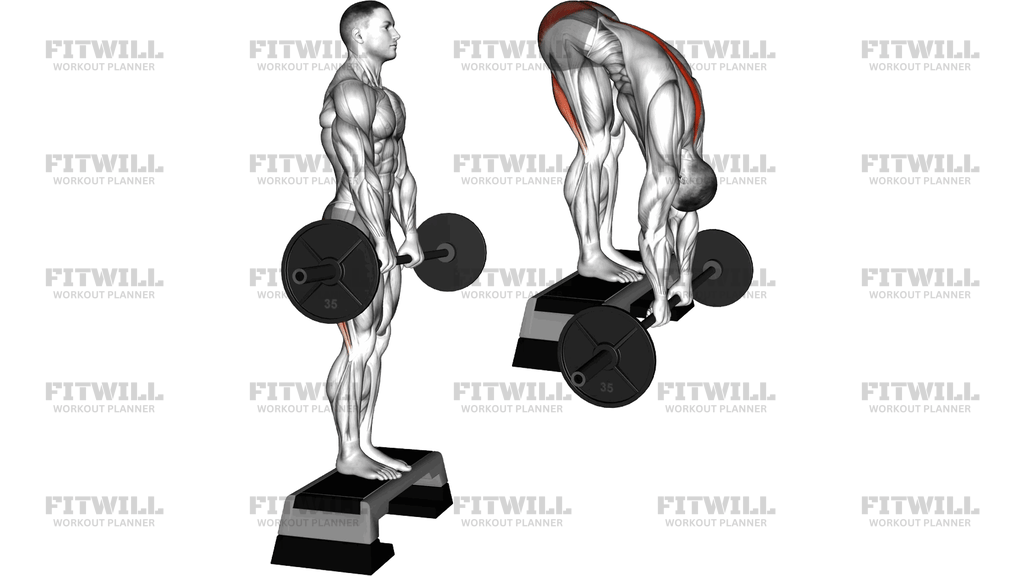
Start with the bar over the midfoot, feet about hip width, and shins close enough that you can reach the bar without rounding forward. Build the hook grip before the pull, flatten the back, brace the torso, and set the shoulders slightly in front of the bar. From there, drive the floor away, keep the bar brushing close to the legs, and let the hips and knees extend together until you stand tall with the glutes finished and the ribs stacked.
Lowering is just as important as the pull. Send the hips back first, then bend the knees once the bar clears them, and return the plates to the floor under control so you can reset the grip and brace for the next rep. This is a useful deadlift variation for strength blocks, pulling sessions, and accessory work when you want a solid hinge pattern with a secure overhand hold. Beginners can learn it with light loads, but the hook grip may need a gradual buildup because the thumb and fingers need time to adapt.
Fitwill
Log Workouts, Track Progress & Build Strength.
Achieve more with Fitwill: explore over 9600 exercises with images and videos, access built-in and custom workouts, perfect for both gym and home sessions, and see real results.
Start your journey. Download today!




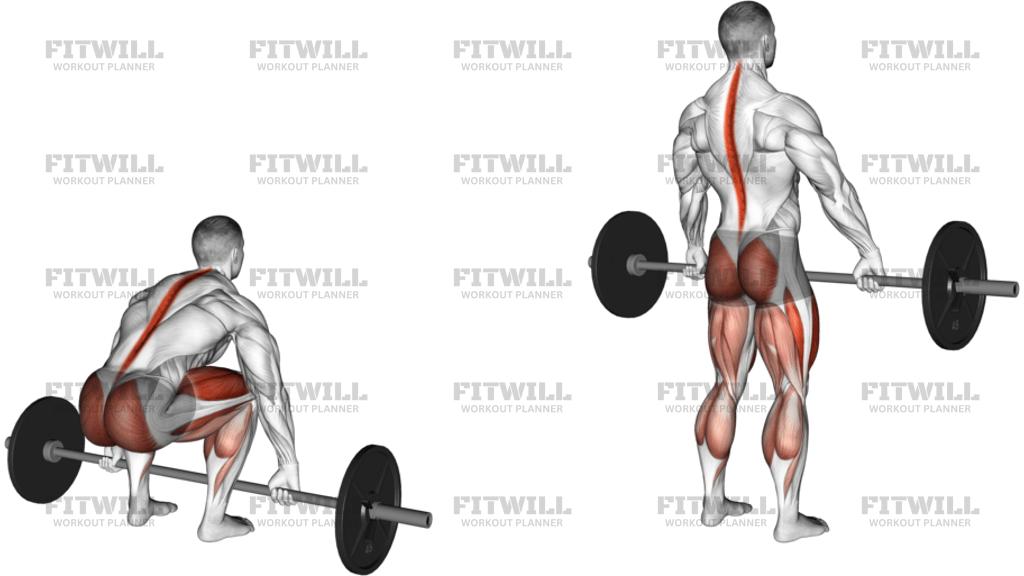
Instructions
- Stand with the bar over your midfoot, feet about hip width, and shins close to the bar.
- Wrap your thumbs around the bar first, then trap each thumb with the fingers to form a firm hook grip.
- Hinge down, bend the knees enough to reach the bar, and keep your back flat with the shoulders slightly in front of the bar.
- Take a breath and brace your torso before the bar leaves the floor.
- Push the floor away and keep the bar traveling close to your shins as it rises.
- Let the hips and knees extend together until you finish tall with the glutes tight and the bar against the thighs.
- Lower the bar by sending the hips back first, then bending the knees once the bar passes them.
- Reset the bar on the floor, rebuild the hook grip, and repeat for the planned reps.
Tips & Tricks
- Chalk helps a hook grip stay locked in, especially when the set gets heavy or your hands start to sweat.
- If the thumb is not fully trapped, the bar can roll, so build the grip before you pull the slack out of the bar.
- Keep the bar over the midfoot at the start; if it begins too far forward, the bar will feel heavier and pull you out of position.
- Think about pushing the floor away instead of yanking with the arms, which helps keep the bar path vertical and close.
- If your hips rise faster than your shoulders, lower the load and practice starting with more tension through the legs and lats.
- A slight shin brush on the way up is normal, but the bar should not swing away from the body.
- Lower each rep under control instead of bouncing the plates, because a dead stop makes it easier to reset your brace and grip.
- Stop the set when the hook grip slips or the back starts to round, even if your legs still have gas left.
Frequently Asked Questions
What muscles does Barbell Hook Grip Deadlift train?
It mainly trains the glutes, hamstrings, spinal erectors, lats, and grip, with the upper back working hard to keep the bar close.
How is the hook grip different from a regular overhand deadlift grip?
Your thumbs stay wrapped around the bar and are pinned by the fingers, which makes the hold more secure than a plain double-overhand grip.
Should the bar start on the floor or from blocks?
This variation is shown and typically performed from the floor, with the bar starting over the midfoot and the shins close to the bar.
Why does the hook grip hurt my thumbs?
Some thumb pressure is normal at first because the fingers are trapping the thumb against the bar. Use lighter loads and more gradual exposure until it feels manageable.
Can I use mixed grip instead?
You can for another deadlift variation, but mixed grip changes the lift. If you are doing a hook-grip deadlift, keep both hands in the overhand hook position.
What is the most common mistake in this lift?
Letting the bar drift away from the legs or letting the hips shoot up faster than the shoulders usually makes the pull harder and less stable.
Is this a good deadlift variation for beginners?
Yes, if you start light and keep the setup clean. The hook grip itself may take some practice, but the pull pattern is still a basic deadlift hinge.
When should I exhale during the rep?
Take a breath and brace before the bar leaves the floor, then exhale after you pass the hardest part of the lift or once you reach the top.