Dumbbell Complex Push-Up Row Clean And Press
Dumbbell Complex Push-Up Row Clean And Press is a full-body dumbbell complex that links a plank push-up, a row, a clean, and an overhead press in one continuous rep. The image shows a floor-based sequence that begins in a strong high plank with the dumbbells under the shoulders, then moves from horizontal pressing and pulling to standing power work above the head. It is best viewed as a coordination and strength drill rather than a pure isolation exercise.
Because the movement chains several patterns together, it asks a lot from the chest, triceps, shoulders, upper back, core, glutes, and grip at the same time. The push-up and row sections challenge trunk stability while the clean and press finish the rep with leg drive and overhead control. That makes Dumbbell Complex Push-Up Row Clean And Press useful for athletes and lifters who want one exercise to train force transfer from the floor to standing.
The setup matters more here than in a simple press or row. Start with two dumbbells on the floor, hands wrapped around the handles, feet set wide enough to keep the hips level, and ribs pulled down so the low back does not sag. The plank should feel solid before the first push-up begins, because any twist, soft midsection, or shaky shoulder position will show up immediately once you start rowing the bells.
From there, keep each part of the rep distinct. Lower the chest with control, press back up, row one dumbbell without letting the torso rotate, then repeat on the other side before stepping or walking the feet forward for the clean. Catch the dumbbells close to the shoulders, stand with the legs, and press overhead without leaning back. The clean should be crisp, not sloppy, and the press should finish with stacked wrists, elbows, and shoulders.
This is a demanding complex, so the best results usually come from moderate loads and clean transitions. It fits well in conditioning-strength circuits, total-body sessions, or accessory work when you want a hard rep that combines upper-body strength, trunk control, and power output. Keep the movement smooth, stop the set when the row starts twisting the body or the press turns into a back arch, and use a spotter or open space if you are working heavier dumbbells overhead.
Fitwill
Log Workouts, Track Progress & Build Strength.
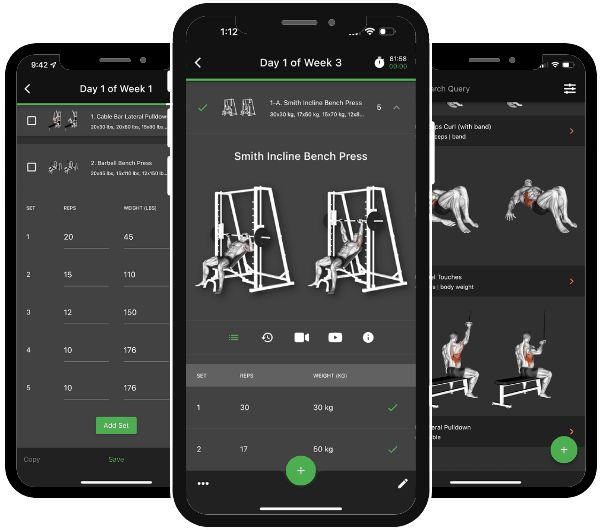
Achieve more with Fitwill: explore over 5000 exercises with images and videos, access built-in and custom workouts, perfect for both gym and home sessions, and see real results.
Start your journey. Download today!


Instructions
- Place two dumbbells on the floor and start in a high plank with your hands on the handles, shoulders over wrists, feet set wide enough to stay stable, and glutes braced.
- Lower into a push-up under control, keeping your chest between the dumbbells and your elbows about 45 degrees from your torso.
- Press back to the top of the push-up without letting your hips sag or your lower back dip.
- Shift your weight onto one hand and row the opposite dumbbell toward your lower ribs while keeping your shoulders square to the floor.
- Lower that dumbbell with control, then row the other side so both sides work without letting the torso twist hard.
- Step or walk your feet forward toward the bells, hinge at the hips, and bring the dumbbells into the front rack at shoulder height with a clean.
- Stand up by driving through the legs, then press the dumbbells overhead until your elbows lock out and your biceps finish near your ears.
- Lower the dumbbells back to the shoulders, bring them to the floor with control, reset your plank, and repeat for the planned number of reps.
Tips & Tricks
- Use a lighter pair of dumbbells than you would for a normal clean and press, because the plank and row sections add a lot of instability.
- Keep your feet wider during the push-up and row portions if your hips want to roll from side to side.
- Row the dumbbell toward the lower ribs, not straight out to the side, so the shoulder stays packed and the lat does more of the work.
- Treat the push-up as a strict rep and avoid letting your chest bounce off the floor or the handles.
- Keep your chin slightly tucked and your neck long when you are in the plank; looking forward usually breaks the line from head to heel.
- When you clean the dumbbells, drive the bells close to the body instead of curling them away from you.
- Finish the press with the ribs down and the glutes tight so the weight does not turn into a standing backbend.
- Stop the set when the row starts spinning your torso or when the overhead press becomes a push through a loose lower back.
Frequently Asked Questions
What muscles does Dumbbell Complex Push-Up Row Clean And Press work?
It is a full-body complex that heavily involves the chest, triceps, shoulders, upper back, core, glutes, and grip.
Is Dumbbell Complex Push-Up Row Clean And Press more of a strength exercise or a conditioning exercise?
It can do both, but most people use it as a strength-conditioning drill because the push-up, row, clean, and press keep the heart rate high.
Do I start Dumbbell Complex Push-Up Row Clean And Press in a plank or standing position?
The sequence shown starts from a high plank with the hands on the dumbbells, then flows into the standing clean and press finish.
How strict should the row be in Dumbbell Complex Push-Up Row Clean And Press?
Very strict. The dumbbell should move to the ribs without the hips swinging open or the shoulders stacking unevenly.
Can beginners do Dumbbell Complex Push-Up Row Clean And Press?
Yes, but only with light dumbbells and short sets. Beginners should be able to own a push-up plank, a stable one-arm row, and a clean and press separately first.
Should Dumbbell Complex Push-Up Row Clean And Press be done with one dumbbell or two?
Use two dumbbells so you can complete the push-up, the alternating row, and the clean into the overhead press without changing implements.
What is the biggest mistake with the clean and press part?
The most common error is letting the clean get sloppy and then leaning back hard to finish the press.
How can I make Dumbbell Complex Push-Up Row Clean And Press easier?
Use lighter dumbbells, widen your feet in the plank, and shorten the press until you can keep the ribs down and the torso steady.