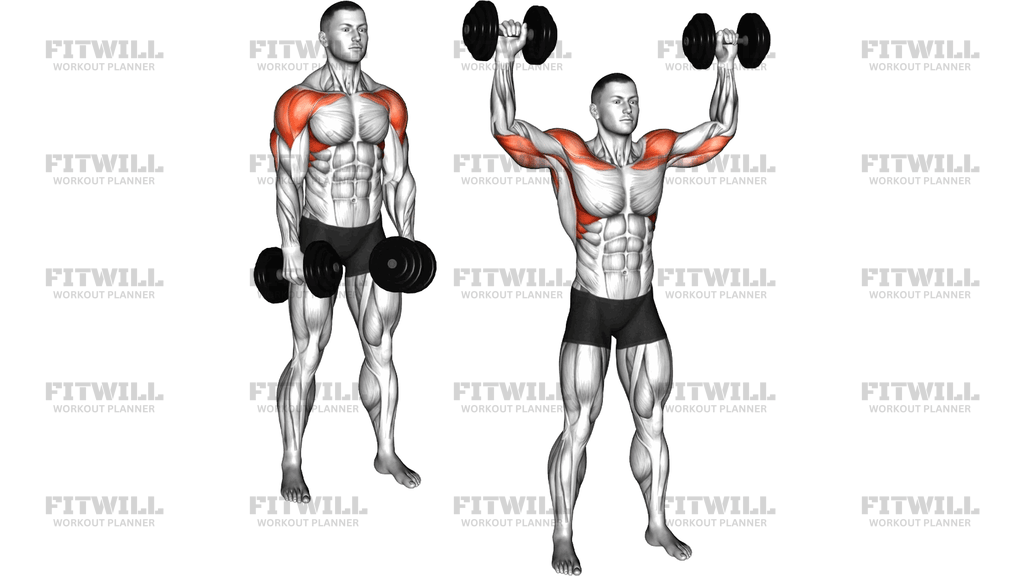
Dumbbell Seated Alternate Shoulder Press
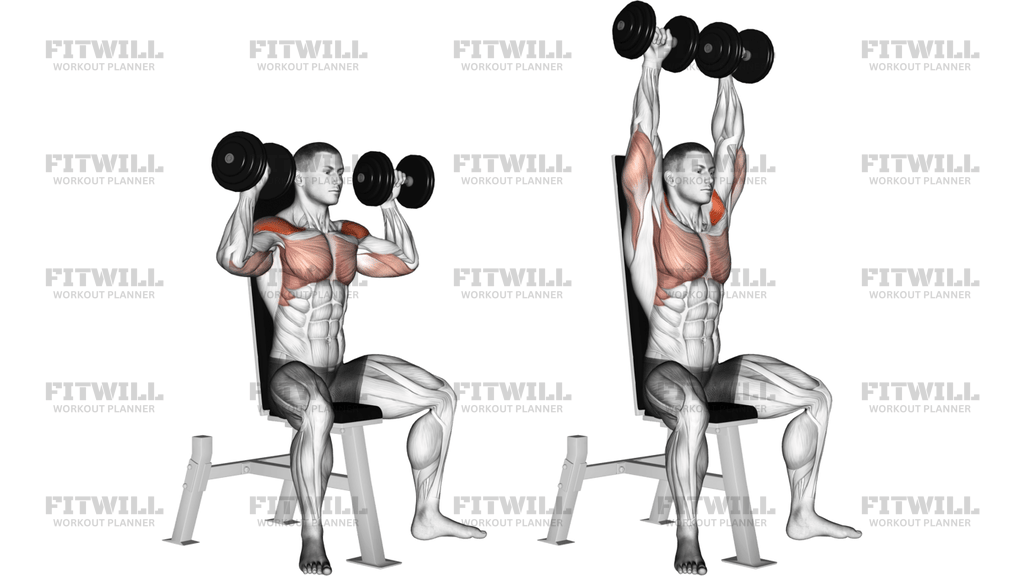
Dumbbell Seated Alternate Shoulder Press is a seated overhead press built around alternating one arm at a time while the other dumbbell stays parked at shoulder height. It is a straightforward strength movement for the deltoids, with the triceps and upper back helping stabilize the load and keep the torso quiet. The seated position removes a lot of lower-body cheating, so the quality of the rep depends on how well you can stay tall, brace, and control each dumbbell through the press.
The setup matters more here than in many standing presses because the body wants to lean, twist, or shrug as soon as one arm starts working. Sit with both feet planted, the ribcage stacked over the pelvis, and each dumbbell in the rack position just outside the shoulders. From there, one arm presses overhead while the opposite arm stays controlled at shoulder level, which makes the movement useful for building unilateral shoulder strength and spotting side-to-side differences.
The pressing path should travel in a slight arc so the dumbbell finishes over the shoulder, not drifting forward in front of the face. At the top, the elbow should finish close to full extension without locking out hard or losing shoulder position. Lower the dumbbell back to shoulder height under control before switching sides, and keep the non-working arm quiet instead of letting it bounce, rest on the thigh, or wander out of position.
Because each arm is taking turns, this exercise is often better for lifters who want more control than a simultaneous two-dumbbell press. It is also a practical accessory after heavy barbell or machine pressing, since the alternating pattern lets you keep tension on the shoulders while using a moderate load. If the torso starts rocking, the weight is too heavy or the bench setup is too loose.
For safety, keep the dumbbells close enough to the body that the shoulders can stay packed and the wrists remain stacked over the elbows. If you have limited overhead mobility, press only as high as you can while keeping the ribs down and the neck relaxed. Clean reps matter more than chasing height or speed, and the best sets look smooth from the first shoulder-height hold to the final controlled return.
[ Workout Log & Planner ]
Put your next workout in Fitwill
Keep your plan and training log ready when you are.


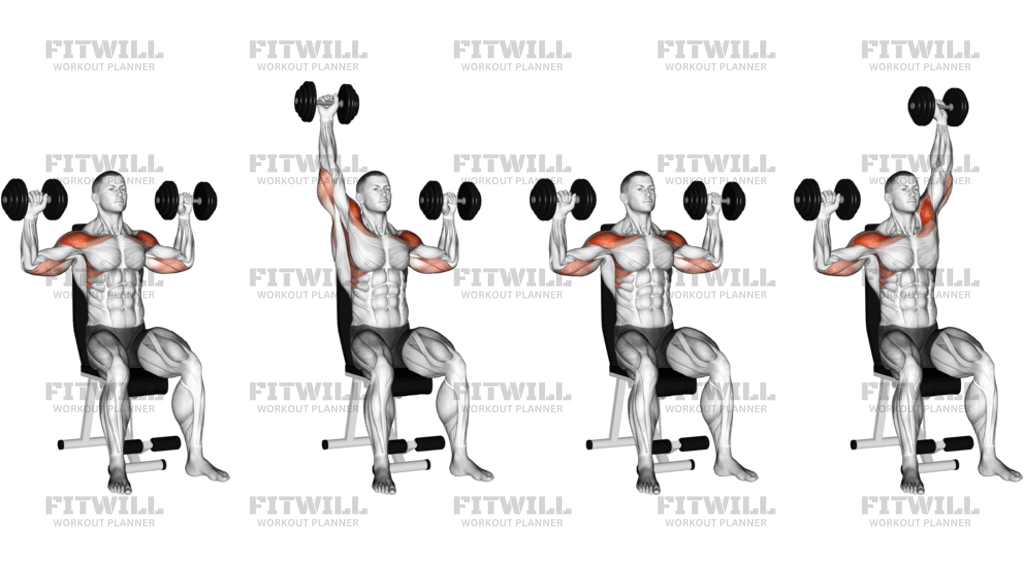
Instructions
- Sit tall on a bench with back support if available, plant both feet flat, and hold a dumbbell in each hand at shoulder height with your elbows slightly in front of your torso.
- Set your wrists over your elbows, keep your chest lifted without over-arching your lower back, and brace before the first press.
- Press one dumbbell upward in a smooth line so it finishes over the shoulder, while the other dumbbell stays parked at shoulder height.
- Exhale as the working arm rises and keep your torso from leaning toward the pressing side.
- At the top, reach tall without shrugging hard or bouncing the weight into lockout.
- Lower the dumbbell back to shoulder height under control until the elbow is again under the wrist.
- Switch arms and press the opposite dumbbell overhead while the first arm holds the rack position steady.
- Keep alternating sides for the planned repetitions, matching the same path and speed on each rep.
- When the set is finished, bring both dumbbells back to the shoulders, then lower them to your thighs before standing up.
Tips & Tricks
- If one side keeps drifting forward, bring the dumbbell slightly closer to the shoulder before you press.
- Keep the non-working arm active instead of dead-hanging; that rack position helps stop torso rotation.
- Stop the rep before the dumbbell travels behind your head, which usually means the shoulder is opening too far and the ribs are flaring.
- A small backrest or upright bench angle can help you keep the torso from swaying while still allowing a clean press.
- Use a load that lets you alternate sides without re-setting your posture after every rep.
- Do not shrug at the top to finish the rep; the shoulder should press up, not hitch the trap first.
- If your lower back arches as the arm rises, reduce the weight and keep the ribs stacked over the pelvis.
- Lower each dumbbell slowly enough that the shoulder stays loaded, but not so slowly that the opposite arm loses its rack position.
- Keep the wrists vertical over the elbows so the dumbbells do not collapse backward toward the face.
Frequently Asked Questions
What muscles does Dumbbell Seated Alternate Shoulder Press train most?
It mainly trains the deltoids, especially the front and middle portions, with the triceps helping each lockout and the upper back stabilizing the seated position.
Why do the dumbbells alternate instead of pressing together?
Alternating keeps one shoulder under load while the other stays in the rack position, which makes it easier to control the torso and notice side-to-side strength differences.
How high should I press the dumbbell in Dumbbell Seated Alternate Shoulder Press?
Press until the arm is overhead and the dumbbell stacks above the shoulder, but stop before your ribs flare or the weight drifts forward in front of your head.
Can beginners use Dumbbell Seated Alternate Shoulder Press?
Yes, but start light enough to keep the torso still and the non-working arm parked at shoulder height while you alternate.
What is the biggest form mistake on this exercise?
Leaning and twisting toward the pressing side is the most common issue. Keep both sit bones heavy on the bench and let the arm move without the torso chasing it.
Do I need a bench with a backrest for Dumbbell Seated Alternate Shoulder Press?
A backrest helps, especially if you tend to arch or sway, but a tall upright bench can still work if you can keep the ribs down and the shoulders organized.
What should the free arm do while the other side presses?
It should stay fixed at shoulder height in the rack position with a stable wrist and elbow, not drop to the thigh or flare out wide.
Is Dumbbell Seated Alternate Shoulder Press different from a regular seated dumbbell press?
Yes. A regular seated press usually sends both dumbbells up together, while this version alternates one side at a time, which demands more control and anti-rotation.
What if my shoulders pinch when I lower the dumbbell?
Reduce the range slightly, keep the elbows a little in front of the body, and use a lighter load that lets you lower smoothly without forcing the dumbbell too deep.