Dumbbell Alternate Arnold Press
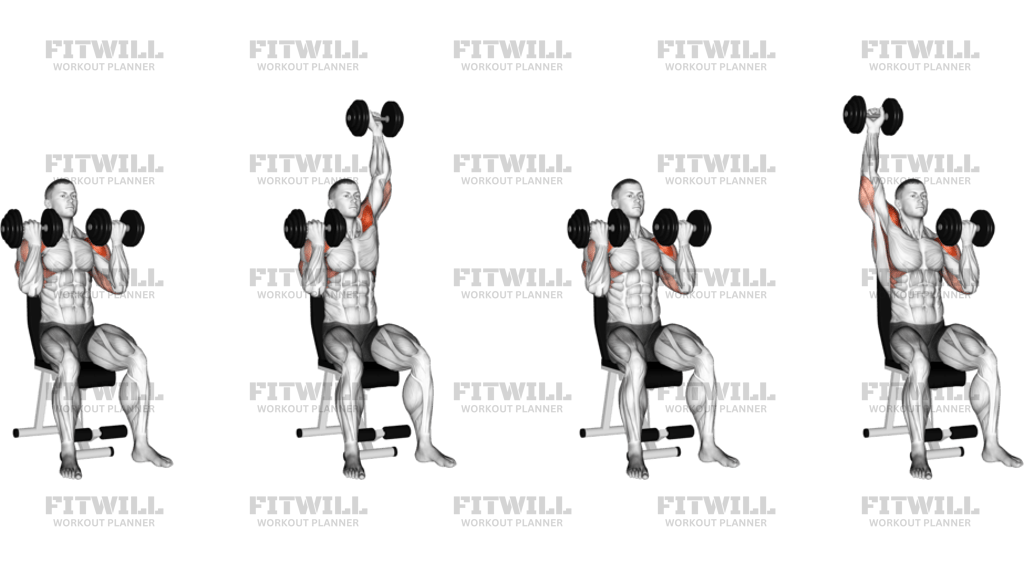
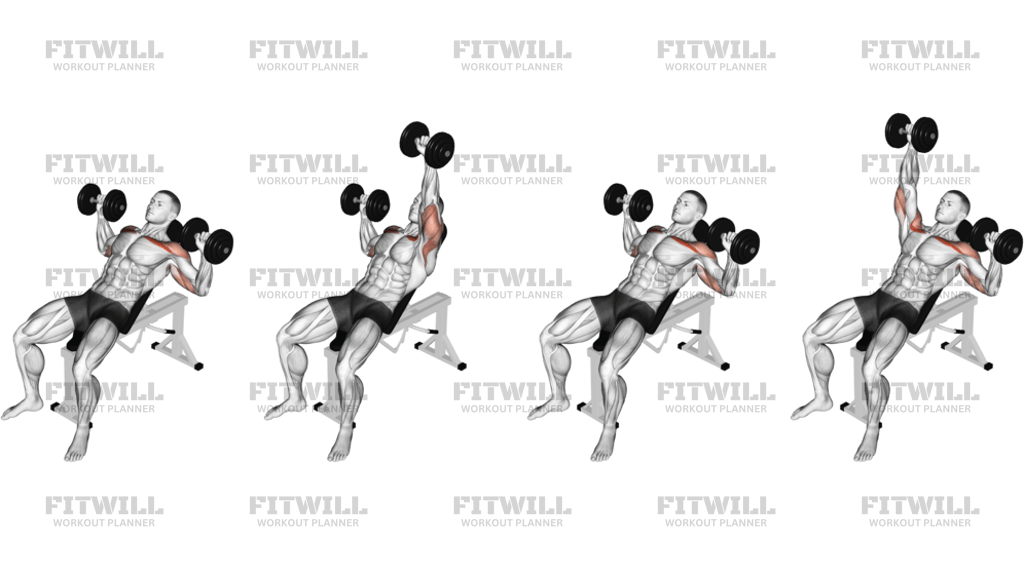
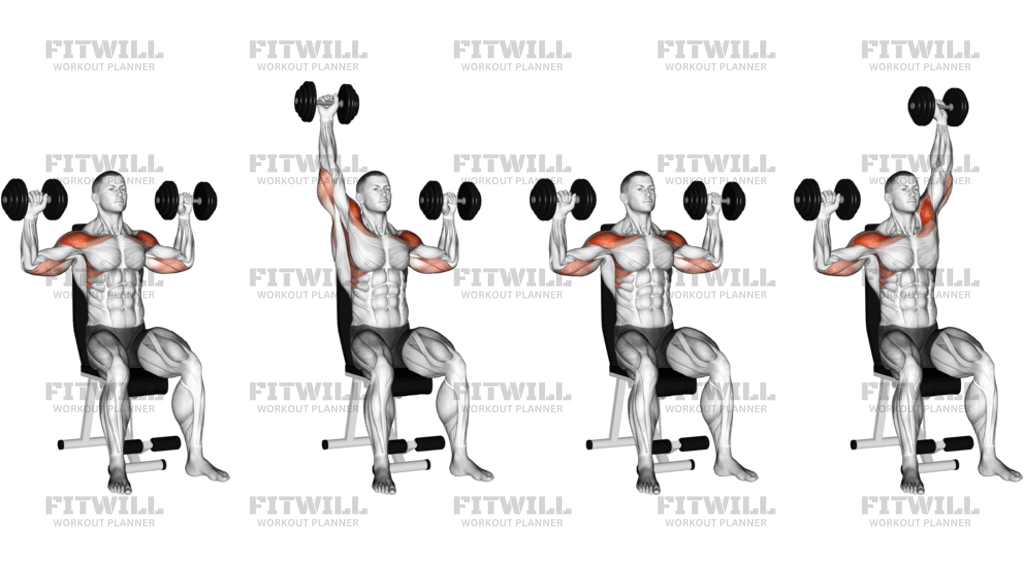
Dumbbell Alternate Arnold Press is a seated shoulder press variation that adds rotation and one-arm-at-a-time control. It trains the shoulders hardest, especially the front delts with help from the side delts and triceps, while the core and upper back work to keep the torso from drifting side to side. Because only one arm presses at a time, it also makes left-to-right control differences easy to notice.
The setup matters more here than on a basic press. Sit tall on a stable bench with both feet planted, hold the dumbbells at shoulder height, and start with your palms facing you and your elbows slightly in front of your ribs. Keep the rib cage stacked over the pelvis so the press comes from the shoulder instead of a backward lean.
On each rep, press one dumbbell up and slightly in front of the shoulder as the palm turns forward, then lower it back to shoulder height under control. The other dumbbell stays parked in the rack position until its turn, which keeps the set honest and prevents the non-working side from taking over. Smooth rotation is the point of the movement; if the wrist and elbow are fighting each other, the load is probably too heavy.
Dumbbell Alternate Arnold Press is useful when you want shoulder volume without rushing the rep pattern, such as in a hypertrophy block, accessory work, or a warm-up before heavier pressing. The alternating format usually makes the exercise feel stricter than pressing both arms together, so it often works best with lighter loads and moderate repetitions. If the shoulder feels pinchy at the bottom or top, shorten the range slightly and keep the elbow path in a comfortable plane.
Treat this as a control exercise first and a strength exercise second. Clean reps should look almost identical from side to side, with no torso twist, shrugging, or leg drive. When the dumbbells finish over the shoulders rather than drifting behind the head, the rep usually feels smoother and the shoulders stay in a better position. That cleaner line also makes it easier to keep tension on the delts instead of letting the press turn into a shrug.
[ Workout Log & Planner ]
Put your next workout in Fitwill
Keep your plan and training log ready when you are.


Instructions
- Sit on a stable bench with both feet flat on the floor and your torso tall, then bring both dumbbells to shoulder height.
- Start with your palms facing you, elbows slightly in front of your sides, wrists stacked over the dumbbells, and one arm ready to press while the other stays parked.
- Brace your midsection and keep your rib cage stacked over your pelvis so you do not lean back to start the rep.
- Press one dumbbell upward and slightly in front of your head as you rotate the palm to face forward.
- Keep the opposite dumbbell fixed at shoulder height instead of letting it drift, shrug, or bounce.
- Lower the working dumbbell back to shoulder level on the same path, controlling the rotation as the palm turns back toward you.
- After the dumbbell is back in the rack position, switch sides and repeat the press with the other arm.
- Breathe out as you press up, breathe in as you lower, and keep alternating until the set is complete.
- When the set ends, bring both dumbbells to your thighs before standing or placing them down.
Tips & Tricks
- Use lighter dumbbells than you would for a standard shoulder press, because the rotation adds difficulty fast.
- Keep the working elbow slightly in front of the shoulder on the way down so the dumbbell follows a smoother arc.
- Do not let the non-working arm relax completely; a quiet rack position keeps the set strict and balanced.
- If the dumbbell starts drifting behind your head, shorten the path and finish with the weight over the shoulder joint instead.
- Avoid turning the press into a backbend by keeping your ribs down and your glutes lightly braced on the bench.
- Rotate the wrist smoothly instead of trying to twist the forearm aggressively at the top of the rep.
- Stop the set if the front of the shoulder pinches or the dumbbell path becomes uneven from side to side.
- Match the lowering speed on both arms so one side does not rush through the eccentric phase.
Frequently Asked Questions
What does Dumbbell Alternate Arnold Press train most?
It targets the shoulders most, especially the front delts, with triceps and upper-back stabilizers helping the press stay controlled.
Why do I start with my palms facing me?
That start position sets up the Arnold-style rotation. As you press, the palm turns forward so the dumbbell ends overhead with a smoother shoulder path.
Should both dumbbells move at the same time?
No. In Dumbbell Alternate Arnold Press, one arm presses while the other stays parked at shoulder height, which makes the set stricter and more stable.
Can I do Dumbbell Alternate Arnold Press on a bench without a backrest?
Yes. Just sit tall, keep your feet planted, and avoid leaning back to fake the press.
How low should the dumbbell come down?
Lower it back to shoulder height with the elbow slightly in front of the torso. Do not force the weight so low that the shoulder rolls forward.
What is the most common mistake with this exercise?
The biggest mistake is turning it into a heavy push press with torso swing. The rotation should stay smooth and the torso should stay quiet.
Is Dumbbell Alternate Arnold Press good for beginners?
Yes, if the load is light and the rotation stays comfortable. Beginners should focus on clean shoulder-height positions before adding weight.
What should I do if the rotation bothers my shoulders?
Reduce the range, use a lighter load, or switch to a neutral-grip alternating dumbbell press without the full Arnold rotation.