Dumbbell Alternating Floor Press
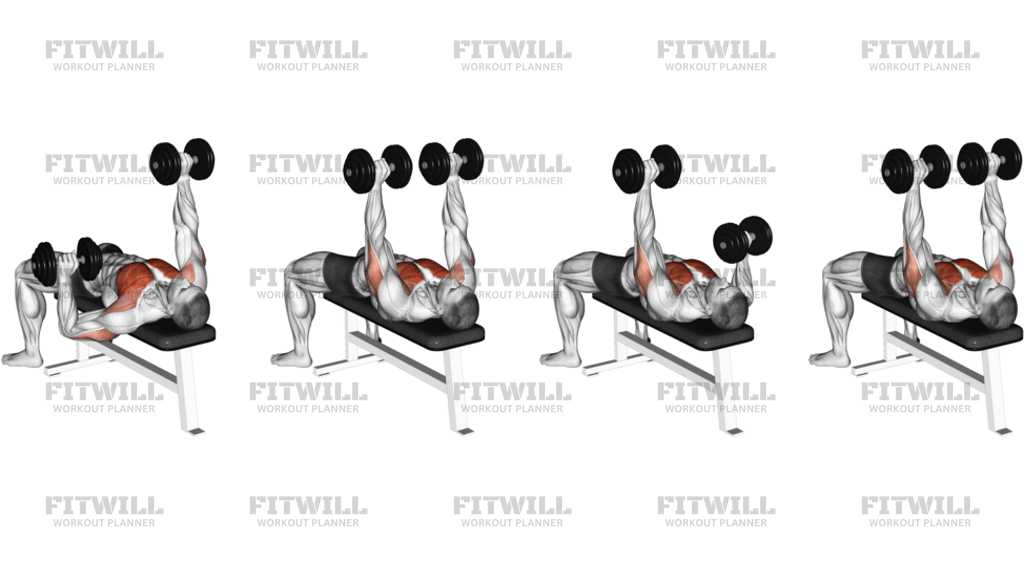
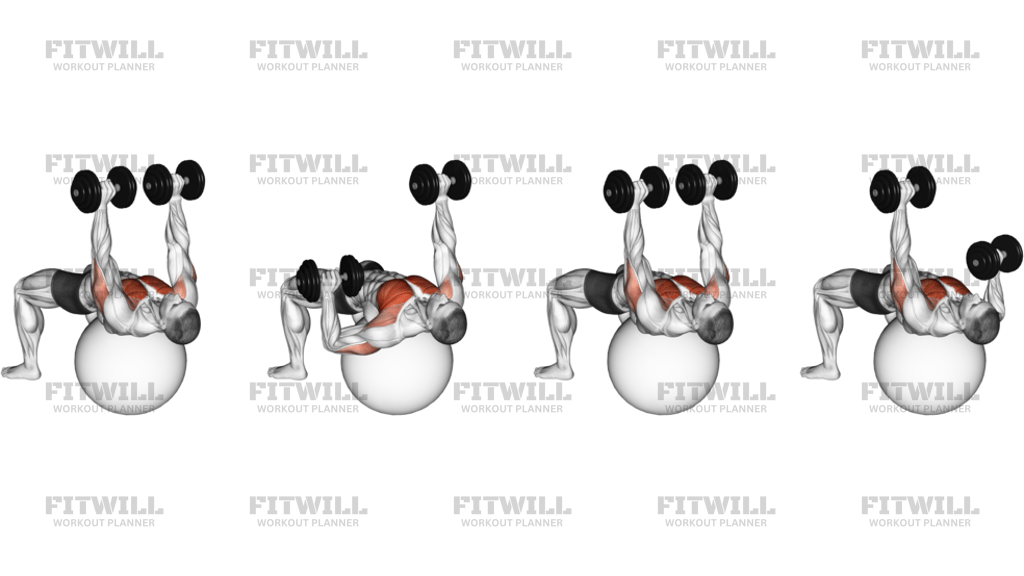
Dumbbell Alternating Floor Press is a single-arm chest press performed while lying on the floor. The floor shortens the range of motion and gives you a clear stopping point for the elbows, which makes it useful for learning a strong press path, building lockout strength, and keeping shoulder position organized. Because one arm stays on the floor while the other presses, the exercise also trains anti-rotation control through the torso and helps you stay stacked through the ribs and pelvis.
The movement mainly loads the chest and triceps, with the front of the shoulder and the upper back working to steady the shoulder blade and keep the dumbbell tracking cleanly. The alternating pattern changes the demand compared with a two-dumbbell floor press: you have to resist twisting, keep the non-working side quiet, and avoid letting the working elbow flare wildly away from the body. That makes it a good choice when you want pressing volume without the shoulder stress of a deep bench press.
Setup matters a lot. Lie flat on the floor with the knees bent or the legs extended, depending on which position lets you keep your ribcage down and your lower back relaxed. Hold one dumbbell above the chest with a stacked wrist and the other arm resting on the floor or across the torso until it is that side's turn. Each rep should start from a stable shoulder position, not from a shrug or a twist. The dumbbell should travel in a controlled line from just outside the chest to the top of the press, not drift toward the face or out over the shoulder.
Use this exercise when you want a chest-focused press that is easier to control than a bench press and more honest than a machine press. It works well in accessory blocks, upper-body strength work, or as a safer pressing option when shoulder range is limited. Keep the descent smooth, pause briefly when the upper arm touches the floor, and drive the weight up without bouncing. If the lower back arches, the shoulders shrug, or the torso rocks from side to side, the load is too heavy or the setup is too loose.
[ Workout Log & Planner ]
Put your next workout in Fitwill
Keep your plan and training log ready when you are.


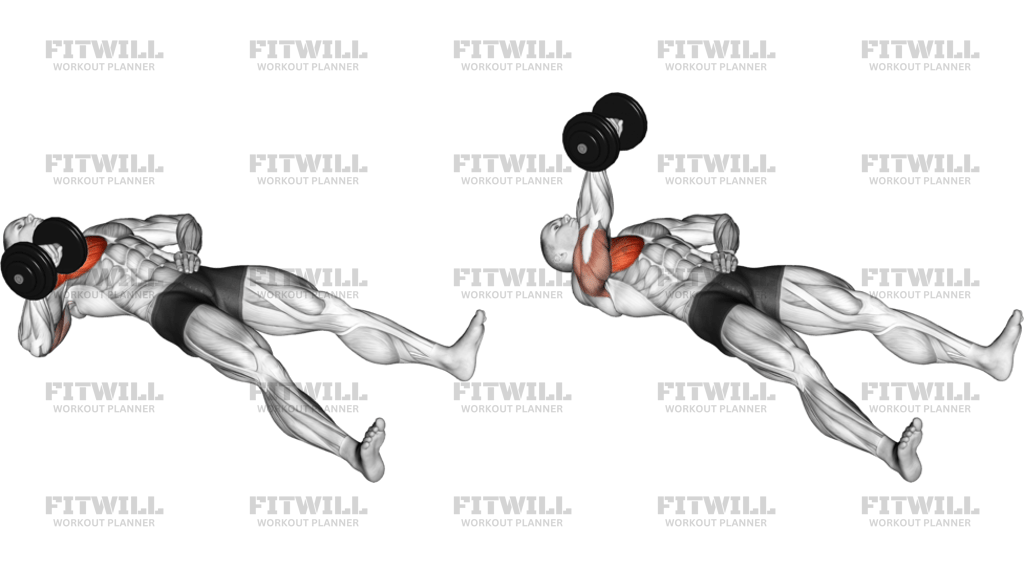
Instructions
- Lie on the floor with your knees bent or legs extended, and hold a dumbbell above your chest with one arm while the other arm rests on the floor.
- Plant your feet, flatten your ribs, and keep your shoulder blades set so your upper back feels stable before you move.
- Stack your wrist over your elbow and lower the dumbbell slowly until your upper arm and elbow touch the floor beside your torso.
- Pause briefly on the floor without relaxing your shoulder or bouncing the weight.
- Press the dumbbell up in a slightly inward path until your elbow is straight and the weight is back over your chest.
- Keep the non-working arm quiet on the floor while the working side presses, and resist letting your trunk rotate.
- Switch arms after the rep if you are alternating each repetition, or complete the planned reps on one side before changing sides.
- Exhale as you press, inhale as you lower, and keep the rep smooth from start to finish.
Tips & Tricks
- Keep the upper arm angled about 30 to 45 degrees from your torso instead of flaring the elbow straight out to the side.
- Let the floor stop the descent; do not force a bigger range by lifting the shoulder off the ground.
- Press from a stacked wrist and avoid letting the dumbbell fold the wrist backward at the top.
- If your torso rocks while you alternate, reduce the load and slow the tempo until your ribs stay quiet.
- A brief pause on the floor removes bounce and makes the triceps and chest do the work.
- Use a load you can lower under control, because the eccentric is where the shoulder position is easiest to lose.
- Keep the opposite hand and shoulder relaxed on the floor instead of gripping or bracing hard on that side.
- Stop the set when the dumbbell starts drifting toward your face or the elbow path becomes inconsistent.
Frequently Asked Questions
What muscles does the Dumbbell Alternating Floor Press work?
It primarily trains the chest and triceps, with the front deltoid and core helping to stabilize each rep.
Why perform this press on the floor instead of a bench?
The floor limits how far the elbow can drop, which reduces shoulder strain and makes the bottom position easier to control.
How do I keep my torso from twisting during the alternating reps?
Keep both feet planted, keep the ribs down, and press the dumbbell straight up without letting the working shoulder roll across your body.
Should my elbow touch the floor every rep?
Yes, the upper arm should come down until it reaches the floor, then press back up without bouncing off the bottom.
Is this exercise suitable for beginners?
Yes. It is often easier for beginners than a full bench press because the floor limits the depth and gives a clearer bottom position.
What grip should I use on the dumbbell?
Use a neutral or slightly angled grip that keeps the wrist stacked over the elbow and the shoulder comfortable through the press.
What is the most common mistake with this movement?
Most people either flare the elbow too much or rush the lowering phase and lose shoulder position on the floor.
How should I breathe during alternating floor press reps?
Inhale as the dumbbell lowers, then exhale as you press it back to the top.