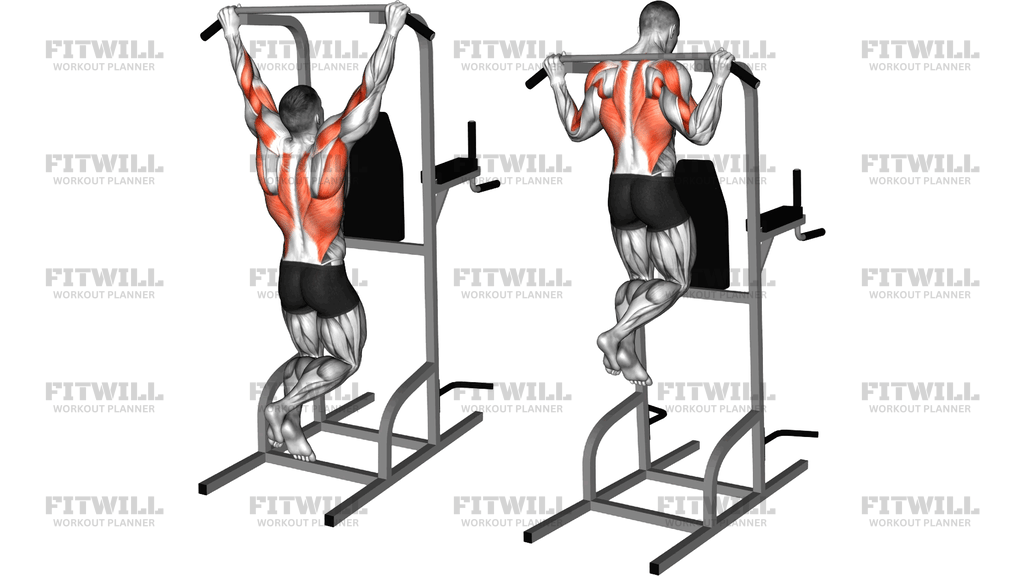
Reverse-Grip Pull-Up
Reverse-Grip Pull-Up is a bodyweight pulling exercise that trains the lats, upper back, biceps, and forearms while asking you to control your own body in space. The underhand grip shifts the emphasis slightly toward elbow flexion, so the biceps help more than they do in a standard overhand pull-up, but the lats still drive the main upward pull. It is a useful option when you want a vertical pull that feels strong through the arms as well as the back.
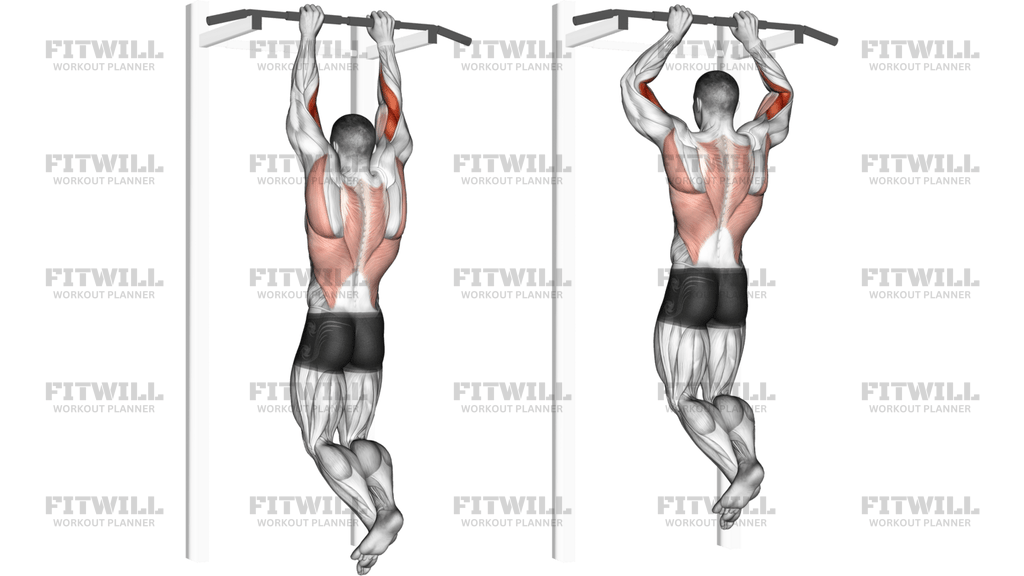
The movement works best when the setup is strict. Grab the bar with a supinated grip, usually about shoulder width or a little narrower, then hang with the arms fully extended and the shoulders set down away from the ears. Cross the ankles or keep the feet quiet behind you so the lower body does not swing, and keep the ribs from flaring as you prepare to pull.
From the bottom, start the rep by pulling the shoulder blades down and back just enough to create tension, then drive the elbows toward your ribs and bring the chest up toward the bar. The goal is to rise smoothly until the chin clears the bar without jerking the hips or kicking the legs. Lower yourself under control all the way back to a dead hang so each rep starts from a consistent stretch.
Reverse-Grip Pull-Up is especially useful in strength-focused upper-body sessions, calisthenics programs, and accessory work for athletes who need more vertical pulling strength. Because the underhand grip can feel friendlier on the elbows for some lifters and more demanding on the biceps for others, grip width and total volume matter. If the rep quality starts to break down, use a band, assisted machine, or fewer repetitions rather than turning the set into a swing.
For coaching purposes, think about keeping the torso long, the neck neutral, and the pull path vertical. The best reps look quiet: no wild leg drive, no neck craning, and no half reps at the bottom. When done well, Reverse-Grip Pull-Up builds useful strength through a full range of motion and reinforces clean scapular control under bodyweight load.
Fitwill
Log Workouts, Track Progress & Build Strength.
Achieve more with Fitwill: explore over 9600 exercises with images and videos, access built-in and custom workouts, perfect for both gym and home sessions, and see real results.
Start your journey. Download today!




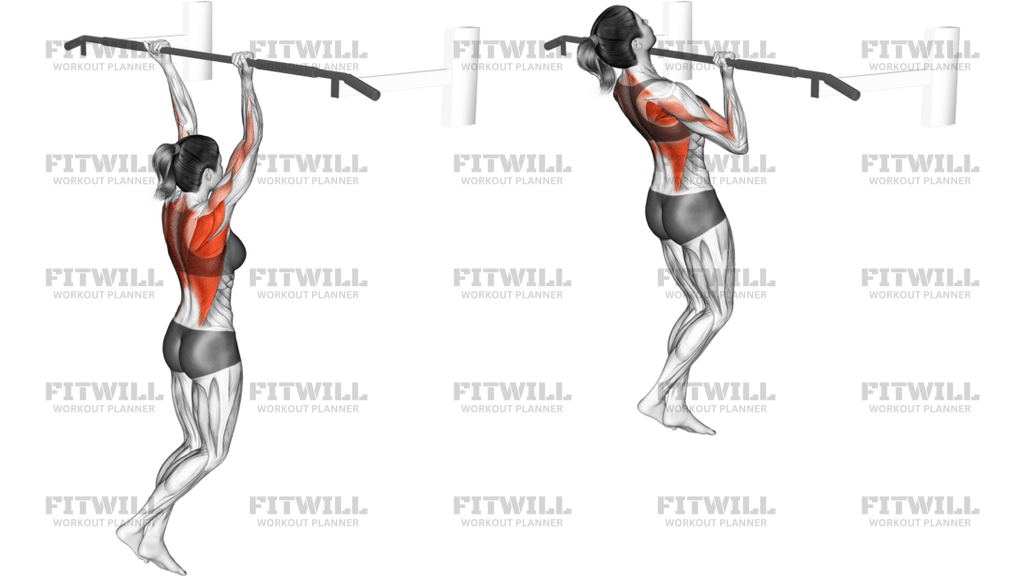
Instructions
- Grip the pull-up bar with an underhand, shoulder-width or slightly narrower grip and hang with your arms straight.
- Set your shoulders down away from your ears, keep your ribs stacked over your pelvis, and cross your ankles behind you or hold your feet still.
- Let your body settle into a dead hang without swinging before you start the first rep.
- Initiate the pull by drawing the shoulder blades down and back slightly so the lats turn on before the elbows bend hard.
- Drive your elbows down toward your ribs and lift your chest toward the bar in a smooth vertical path.
- Pull until your chin clears the bar, keeping your neck neutral and your legs quiet.
- Lower yourself under control until the elbows fully extend and the shoulders return to a long hang.
- Reset the body between reps if you start to swing, then repeat for the planned set.
Tips & Tricks
- Keep the grip underhand and just inside shoulder width; a very wide reverse grip usually turns the rep into a shoulder-and-wrist problem.
- Start every rep from a still hang. If your feet swing forward, pause and reset instead of trying to save the set with momentum.
- Think about pulling the elbows down, not just the chin up. That cue keeps the lats involved instead of turning the rep into a pure arm curl.
- Stop the ascent when the chin reaches the bar, not when the shoulders start shrugging upward toward the ears.
- Lower for a full count so the elbows straighten and the shoulder blades can lengthen again at the bottom.
- If your grip or biceps fail before your back, use a band or assistance so the torso stays in position instead of kipping.
- Keep the ribs from flaring as you pull; arching hard usually steals tension from the lats and adds unnecessary swing.
- Use controlled sets rather than max-effort grinding reps if your elbows get cranky with a heavy underhand grip.
Frequently Asked Questions
What muscles does Reverse-Grip Pull-Up work most?
It mainly trains the lats, with strong help from the biceps, upper back, and forearms. The underhand grip usually makes the arm contribution more noticeable than in a standard pull-up.
Is Reverse-Grip Pull-Up easier than a regular pull-up?
For many people it feels a little easier because the biceps assist more, but it is still a demanding bodyweight pull. If you cannot control the descent, use assistance first.
How should I hold the bar for Reverse-Grip Pull-Up?
Use an underhand grip with the hands about shoulder width or slightly narrower. That position gives you a strong pulling line without forcing the wrists or elbows into an awkward angle.
Why do my legs swing during Reverse-Grip Pull-Up?
Swinging usually comes from starting the rep before the body is still or from trying to force extra height with momentum. Cross the ankles, brace the torso, and reset between reps if the swing starts.
Can beginners use an assisted version?
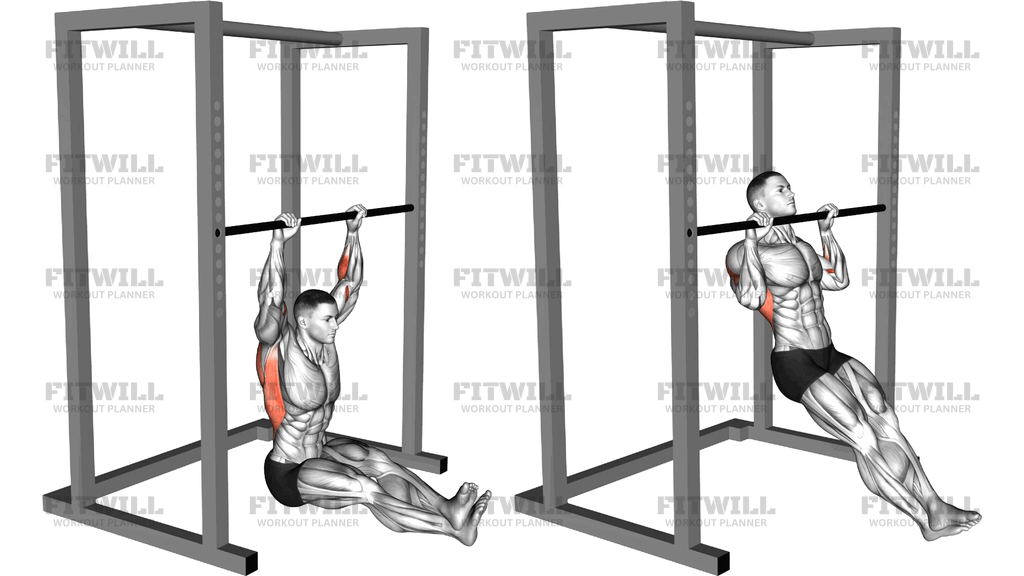
Yes. A band-assisted pull-up or assisted machine is a good way to learn the underhand grip and the vertical pull path before doing full bodyweight reps.
What should I do if the underhand grip bothers my elbows?
Reduce volume, use a slightly wider grip, or switch to a neutral-grip pull-up for a while. If the elbows still feel irritated, stop and change the variation rather than grinding through pain.
How high should I pull on Reverse-Grip Pull-Up?
Pull until your chin clears the bar with the shoulders staying down. Chasing extra height by craning the neck or swinging the hips usually reduces back tension.
What is a good substitute if I cannot do full reps?
Use a band, an assisted pull-up machine, or slow negatives from the top position. Those options let you practice the same grip and path while building strength for full reps.