Shoulder Grip Pull-Up
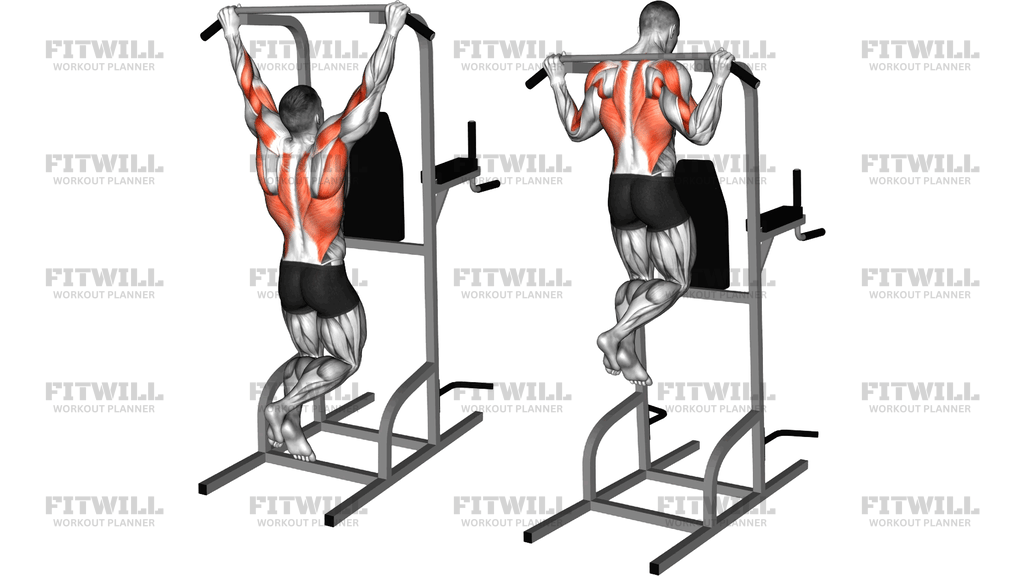
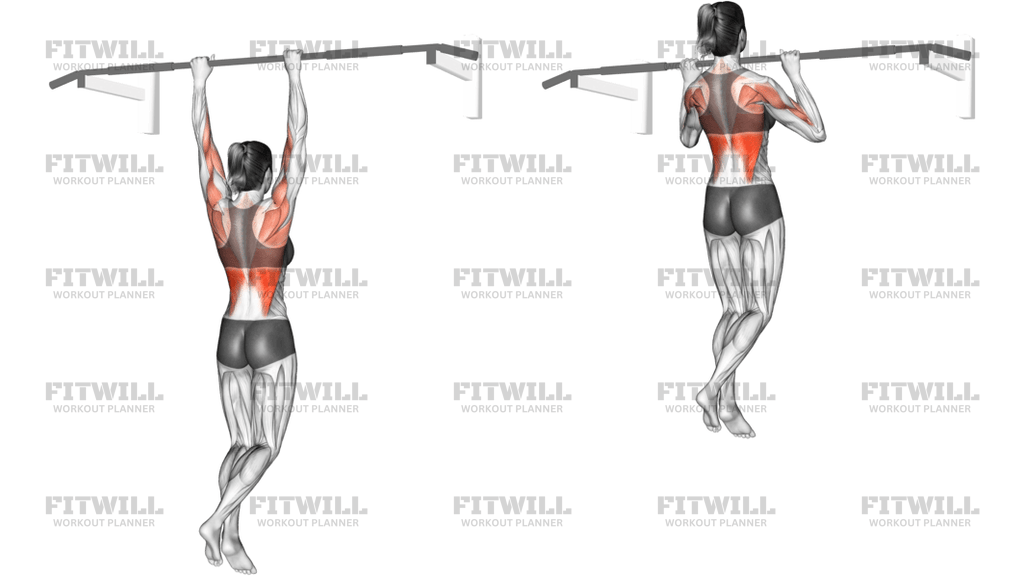
Shoulder Grip Pull-Up is a bodyweight vertical pull that uses an overhand grip on a fixed bar to train back strength, scapular control, and upper-body pulling power. With the hands placed around shoulder width, the movement asks the lats to do most of the work while the upper back, biceps, forearms, and shoulders stabilize the body through every rep.
The grip width matters because it changes how the pull feels from the bottom to the top. A shoulder-width hand position usually gives a strong blend of range of motion and strength, making the exercise useful for building strict pull-up skill without the exaggerated leverage demands of a very wide grip. The goal is not to yank the chin over the bar, but to pull the body upward with a smooth elbow path and a controlled descent.
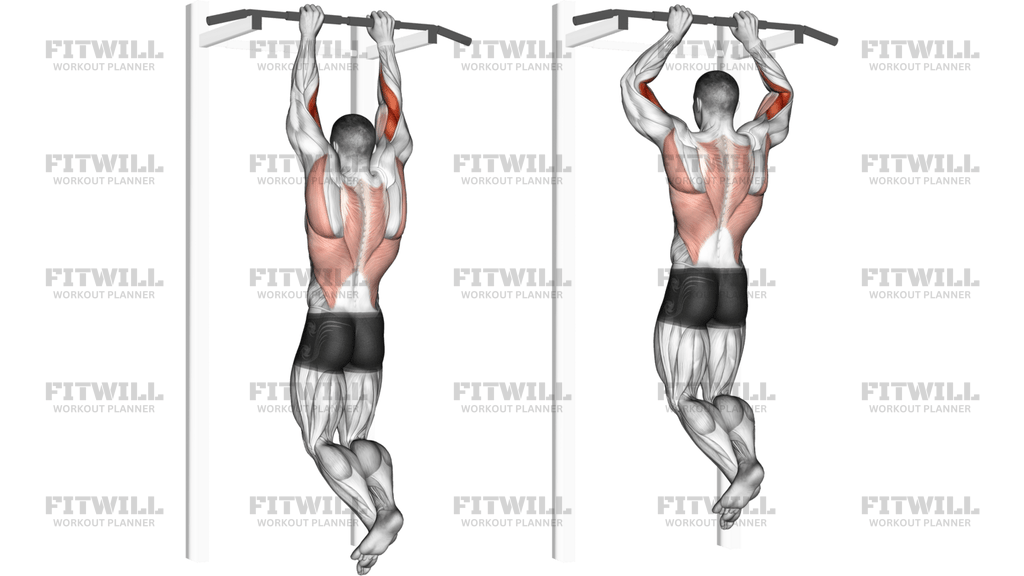
A clean setup starts before the first pull. Grab the bar with an overhand grip, hang with straight arms, and let the shoulders settle away from the ears without relaxing into a loose shrug. Cross the ankles or keep the feet together so the legs stay quiet, then brace the trunk so the body does not swing when the pull begins. That still starting position helps the lats and upper back create force instead of the hips and legs generating momentum.
As you pull, think about driving the elbows down and slightly back while the chest rises toward the bar. Keep the neck long, avoid craning the chin forward, and finish the rep only as high as you can control without kipping. The lowering phase matters just as much: descend under control until the elbows are straight again and the shoulders stay organized, then reset the dead hang before the next repetition.
Shoulder Grip Pull-Up fits well in strength sessions, upper-body pulling work, or accessory blocks where strict reps matter more than speed. It can also be scaled with band assistance, a machine, or partial-range reps if full bodyweight pull-ups are not yet clean. Because the shoulders are in a demanding overhead position, the safest version is the one that stays smooth, free of swinging, and pain-free through the full range you can own.
[ Workout Log & Planner ]
Put your next workout in Fitwill
Keep your plan and training log ready when you are.


Instructions
- Grip the pull-up bar with an overhand, shoulder-width hand position and hang with your arms fully extended.
- Cross your ankles or keep your feet together so your lower body stays quiet beneath the bar.
- Set your shoulders down away from your ears and brace your midsection before the first pull.
- Start from a still dead hang or a light active hang without swinging backward.
- Pull your elbows down and slightly back while your chest rises toward the bar.
- Keep your ribs stacked and your neck long as you pull until your chin clears the bar or your upper chest approaches it.
- Pause briefly at the top without kicking, shrugging, or craning your head forward.
- Lower yourself under control until your elbows are straight again and your shoulders feel settled.
- Reset in the hang, breathe, and repeat for the planned number of repetitions.
Tips & Tricks
- A shoulder-width overhand grip usually feels stronger than a very wide grip and gives a cleaner path for the elbows.
- If your shoulders creep toward your ears, reset the hang and pull them down before you start each rep.
- Crossed ankles help stop leg drift and keep the set from turning into a swing.
- Think about bringing the elbows to the ribs rather than just lifting the chin over the bar.
- Keep the top position brief; long pauses often turn into shrugging and lost tension.
- Lowering too fast makes the next rep harder to control and reduces work for the lats.
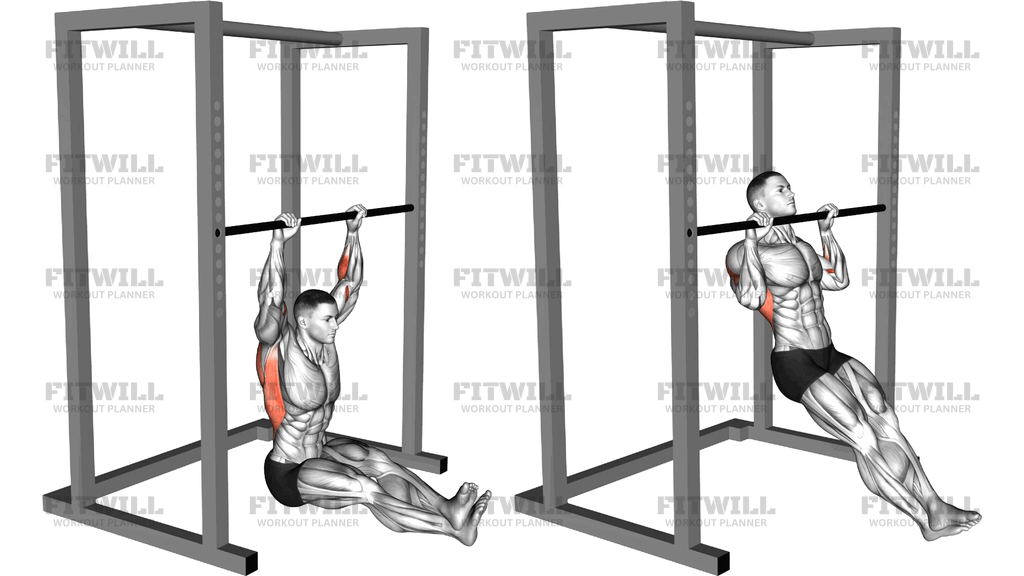
- If you cannot reach the bar without kicking, use a band or an assisted pull-up machine instead of forcing momentum.
- Stop the rep before shoulder pain or pinching appears at the bottom of the hang.
Frequently Asked Questions
What muscle does Shoulder Grip Pull-Up target most?
The lats do most of the work, with the upper back, biceps, and forearms helping to stabilize and finish the pull.
Can beginners perform this exercise?
Yes, but many beginners need band assistance, an assisted pull-up machine, or shorter sets to keep the rep strict.
How wide should my hands be on the bar?
Place your hands around shoulder width or just outside it. That position usually gives a smoother pull than forcing a very wide grip.
Should I keep my legs straight or crossed during Shoulder Grip Pull-Up?
Either can work, but crossing the ankles or keeping the feet together helps reduce swinging and keeps the torso quieter.
Why does my neck hurt when I pull up?
Usually because the chin is reaching forward. Keep your neck long and let the chest rise toward the bar instead of jutting the head out.
What if I cannot get my chin over the bar cleanly?
Use a band, assistance machine, or partial reps until you can pull through the top without kicking or shrugging.
Is Shoulder Grip Pull-Up the same as a chin-up?
No. A chin-up uses an underhand grip, while Shoulder Grip Pull-Up uses an overhand grip that shifts more demand to the upper back and lats.
How many reps should I do?
Use low to moderate reps if you are chasing strength, or stop each set before form breaks so every rep stays strict.