Kettlebell Deadlift
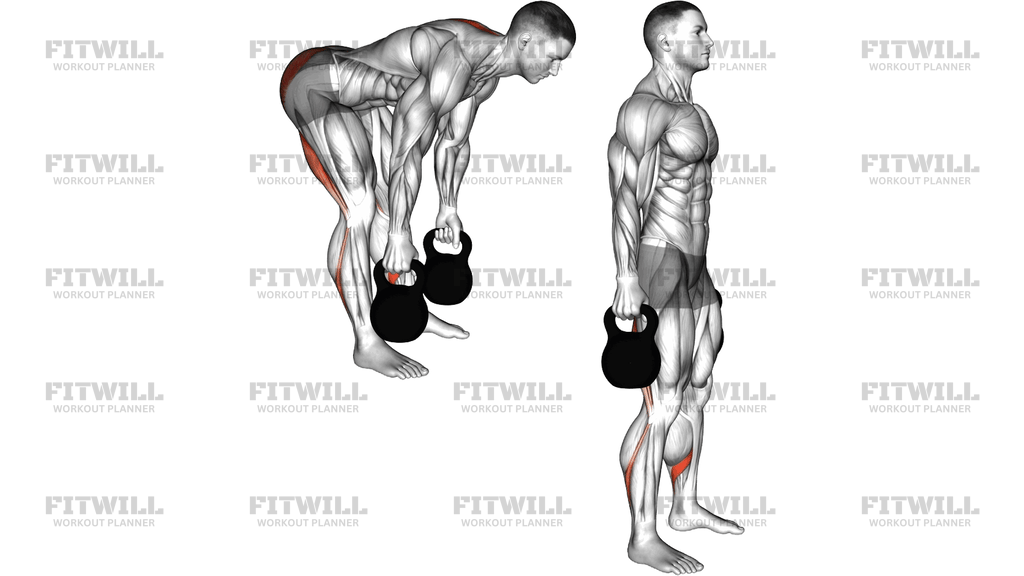
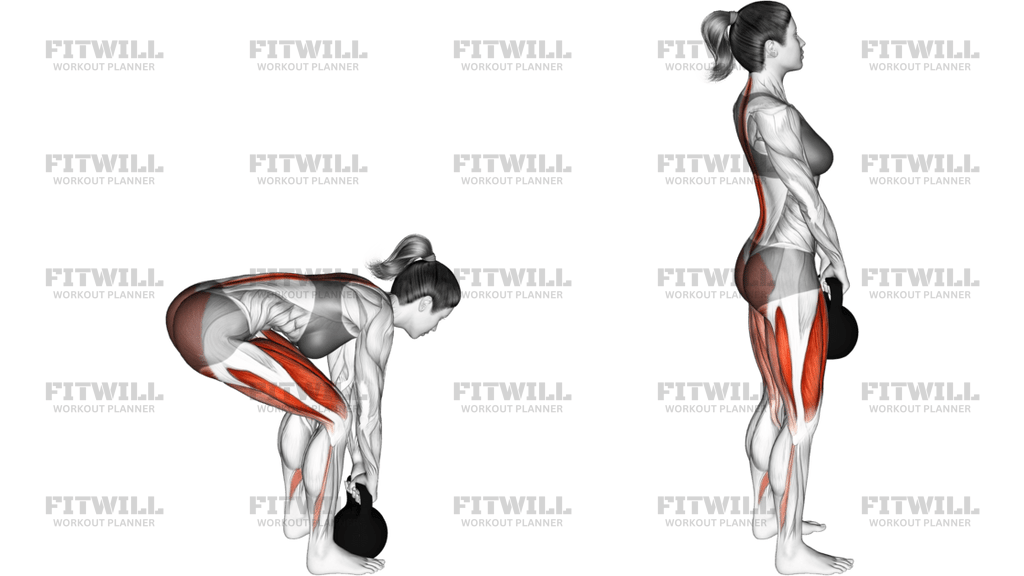
Kettlebell Deadlift is a loaded hip-hinge exercise performed with the kettlebell set on the floor between your feet. It teaches you to lift from the hips instead of dropping into a squat, which makes it useful for building the movement pattern behind everyday lifting, posterior-chain strength, and safer technique under load.
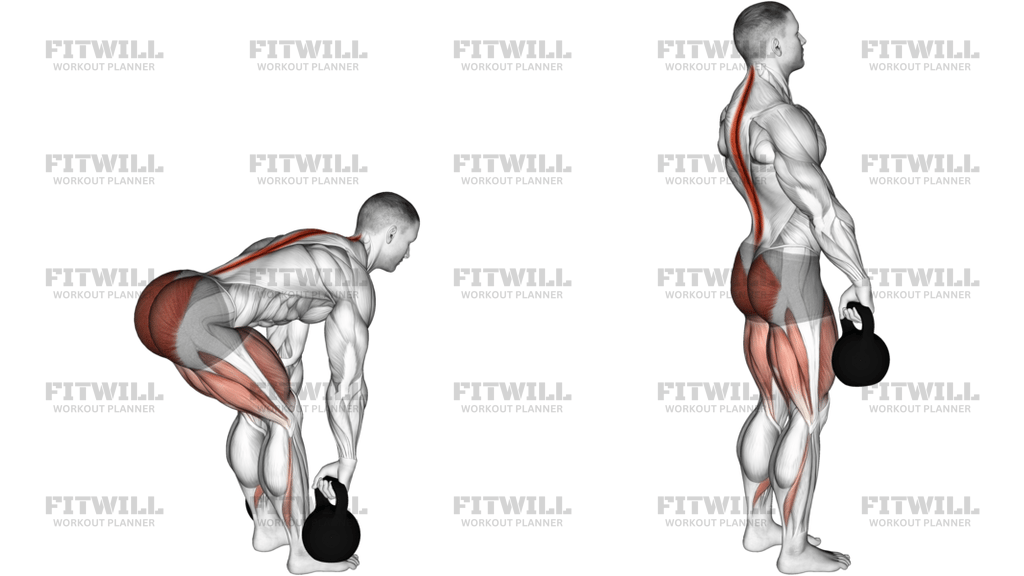
The main work comes from the glutes, hamstrings, and adductors, with the lower back, upper back, and lats helping you keep the torso rigid and the bell close to the body. In this version, the kettlebell starts low, so the setup matters: if your feet are too close, too wide, or the bell is drifting forward, the lift quickly turns into a back-dominant pull instead of a clean hinge.
A good rep begins before the bell moves. Stand with the handle centered between your arches, hinge the hips back, and keep the spine long while you reach down to the handle. Once you grip it, create tension through the midsection and pull the shoulders down so your torso feels locked in. That preload helps you drive the floor away smoothly rather than yanking the bell off the ground.
As you stand, think about pushing the floor away and bringing the hips through, not tipping the chest up first. The kettlebell should stay close to your shins and thighs on the way up and down. At the top, finish tall with the glutes on and the ribs stacked over the pelvis, then lower under control by sending the hips back before the knees bend more deeply.
This exercise is common in beginner strength work, warm-ups, and accessory blocks because it lets you practice hinge mechanics with a clear range of motion and easy load scaling. It also works well as a safer alternative to more explosive kettlebell lifts when you want a controlled rep pattern. Keep the movement crisp, repeatable, and pain-free, and stop the set if you lose the hinge or start rounding to reach the floor.
[ Workout Log & Planner ]
Put your next workout in Fitwill
Keep your plan and training log ready when you are.


Instructions
- Place the kettlebell on the floor between your feet, about under the middle of your stance, with your feet about hip-width apart.
- Hinge your hips back and soften your knees until your shins are close to the bell and your back stays long and neutral.
- Reach down and grip the handle with both hands, keeping your shoulders slightly in front of the kettlebell.
- Pull your ribs down, brace your torso, and set your lats so the bell feels close to your body before it leaves the floor.
- Drive through the floor and stand up by pushing your hips forward, not by jerking the bell upward.
- Keep the kettlebell traveling close to your shins and thighs as you rise to a tall finish with the glutes squeezed.
- Lower the kettlebell by hinging the hips back first, then bending the knees once the bell clears them.
- Set the bell back on the floor under control, reset your breath, and repeat for the planned reps.
Tips & Tricks
- If the kettlebell starts in front of your midfoot, you will usually feel it pull you forward; place it directly between your arches before you hinge.
- Keep your shins close to vertical on the way down so the movement stays a hinge instead of turning into a squat.
- Think about squeezing the handle and pulling it slightly toward you to turn on the lats and keep the bell from drifting away.
- Let your hips move back first on the descent; bending the knees too early shortens the hinge and shifts the work away from the posterior chain.
- Your shoulders should stay packed and slightly in front of the bell at the start, not rolled back with the chest flared up.
- Finish each rep by standing tall with the glutes on and the ribs stacked, not by leaning back at the top.
- Use a kettlebell height that lets you keep a neutral spine; if you cannot reach the handle cleanly, raise the start position instead of rounding.
- Exhale as you stand and re-brace before each rep if you are doing dead-stop repetitions from the floor.
Frequently Asked Questions
What muscle does Kettlebell Deadlift target most?
The main work is on the glutes and hamstrings, with the lower back, upper back, and lats helping stabilize the lift.
Is this more of a squat or a hinge?
It should feel like a hinge. Your hips move back first, your shins stay relatively vertical, and the bell stays close to your legs.
Where should the kettlebell sit before I lift?
Set it on the floor between your feet, centered under your body so you can hinge down without reaching forward.
Should the kettlebell touch my shins?
Yes, it should stay very close to your shins and thighs. If it swings away from you, the lift gets harder on the lower back.
Can beginners perform this exercise?
Yes. It is one of the better kettlebell lifts for beginners because the range is clear and the load is easy to control.
What is the biggest form mistake?
Rounding the back to reach the handle or turning the lift into a squat are the most common errors.
How is this different from a kettlebell swing?
The deadlift is a slow, controlled lift from the floor. A swing uses momentum and a more explosive hip snap.
What should I do if I feel it mostly in my lower back?
Reduce the load, reset the bell between your feet, and make sure the hips travel back before you start pulling the bell off the floor.