Kettlebell Single Leg Glute Bridge Pullover
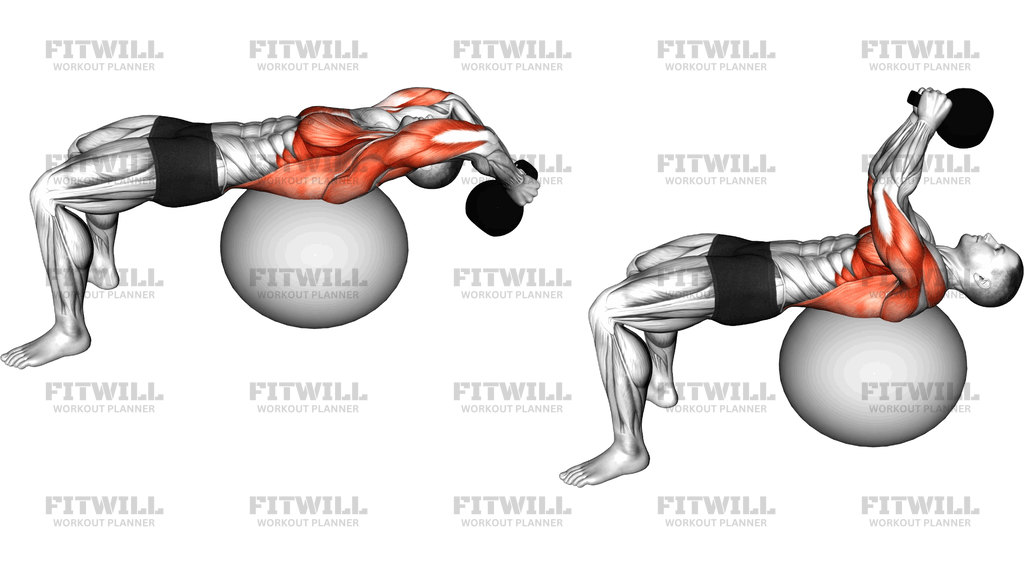
Kettlebell Single Leg Glute Bridge Pullover combines a single-leg glute bridge with an overhead pullover, so the hips and trunk have to stay organized while the arms move the kettlebell through a long arc. It is a floor-based strength and control exercise that trains the glutes hard, but it also asks the lats, core, shoulder stabilizers, and hamstrings to keep the body from twisting or arching as the kettlebell travels behind the head and back over the chest.
The single-leg bridge is what makes this version demanding. With one foot planted and the other leg lifted, the pelvis wants to rotate and the lower back wants to take over if the hips are not held level. The pullover adds a lever that challenges rib position and shoulder control, so the main job is not just moving the weight, but keeping the torso stacked, the ribs down, and the bridge height steady through the entire repetition.
Use the floor to your advantage: lie flat first, then set the shoulders, plant one foot, and drive the working hip up before the kettlebell starts moving. The kettlebell should travel smoothly from above the chest to just behind the head and back again without yanking or bouncing. If the load pulls the ribs open or the hips sag, the range is too aggressive or the weight is too heavy for the current set.
This exercise is useful when you want glute work with a strong anti-extension and anti-rotation challenge. It fits well in accessory work, core-focused lower-body sessions, or as a bridge between hip-dominant work and trunk stability training. Because the pullover places the shoulders in a long overhead path, the best reps are slow, controlled, and free of neck strain or lower-back compensation.
Treat every rep as a coordination drill, not a race for volume. Keep the planted foot stable, keep the lifted leg quiet, and move the kettlebell only as far as you can while maintaining the bridge. The target feeling should be glute-driven hip extension with the chest and ribs staying quiet, not a back arch with the weight being muscled through the path.
[ Workout Log & Planner ]
Put your next workout in Fitwill
Keep your plan and training log ready when you are.


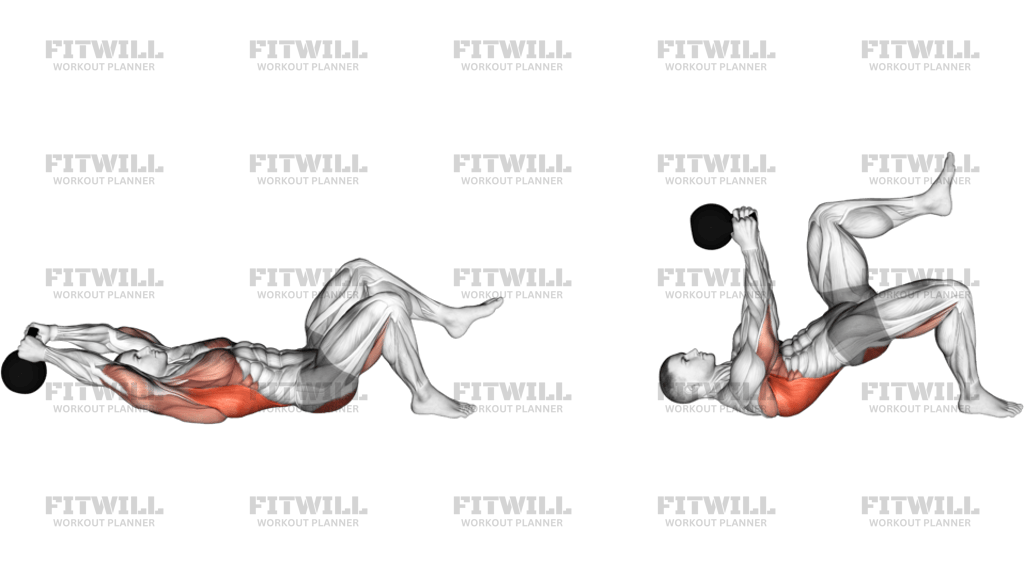
Instructions
- Lie on your back on a mat and hold the kettlebell with both hands above your chest, palms wrapped around the handle and bell, with one knee bent and that foot planted firmly on the floor.
- Extend the other leg so it stays lifted and quiet, then press your shoulders and upper back into the floor before you start the bridge.
- Brace your abdomen, tuck your ribs down, and drive through the planted heel to lift your hips until your body forms a strong line from shoulders to knee.
- Keep the lifted leg in line with your torso so the pelvis does not roll toward the planted side.
- With the hips held high, lower the kettlebell in a slow arc behind your head until you feel a controlled lat and shoulder stretch.
- Stop the descent before your lower back arches or your ribs flare, then pull the kettlebell back over your chest on the same path.
- Squeeze the glute of the planted leg to keep the bridge tall as the kettlebell returns to the start.
- Lower your hips only after the rep is complete, reset your breathing, and repeat for the planned repetitions.
Tips & Tricks
- The planted heel should feel heavy on the floor; if the toes keep taking over, the glute bridge is usually too shallow.
- Hold the kettlebell just heavy enough to challenge the pullover path without forcing the ribs to flare open.
- Keep the pelvis level when the kettlebell moves back; a hip drop on the lifted-leg side usually means the bridge is losing tension.
- Let the kettlebell travel behind the head only as far as your shoulders and ribs can stay stacked.
- If your lower back arches at the bottom of the pullover, shorten the range before loading the movement further.
- Move the kettlebell slowly enough that you can feel the lats control the arc instead of letting gravity yank the weight down.
- Keep the chin slightly tucked so the neck does not chase the kettlebell or crane toward the floor.
- Exhale as the kettlebell comes back over the chest and as you maintain the top of the bridge.
Frequently Asked Questions
What does Kettlebell Single Leg Glute Bridge Pullover train most?
The glutes do the main work on the bridge, while the lats, core, hamstrings, and shoulder stabilizers help control the kettlebell path.
Why do I have to keep one leg lifted during the bridge?
The lifted leg removes extra support, which makes the planted-side glute and the trunk work harder to keep the pelvis level.
How far should the kettlebell go behind my head?
Only as far as you can keep your ribs down and your lower back from arching. The shoulders should stay controlled, not forced into a bigger range.
Should I feel this in my lower back?
No. You may feel the trunk working, but the lower back should not be doing the lifting or taking over the pullover.
Is this more of a glute exercise or an upper-body exercise?
It is primarily a glute and core drill with an upper-body pullover added on top. The kettlebell creates the shoulder and lat demand, but the bridge drives the exercise.
Can beginners use this exercise?
Yes, but only with a very light kettlebell and a short pullover range until they can hold the bridge without twisting.
What is the most common mistake with the kettlebell path?
People often rush the lowering phase and let the kettlebell pull the ribs up, which usually turns the rep into a lower-back movement.
How can I make the exercise harder without using a heavier kettlebell?
Slow the pullover, pause with the kettlebell behind the head, or hold the bridge higher without letting the pelvis drift.