Kettlebell Kickstand One Leg Deadlift
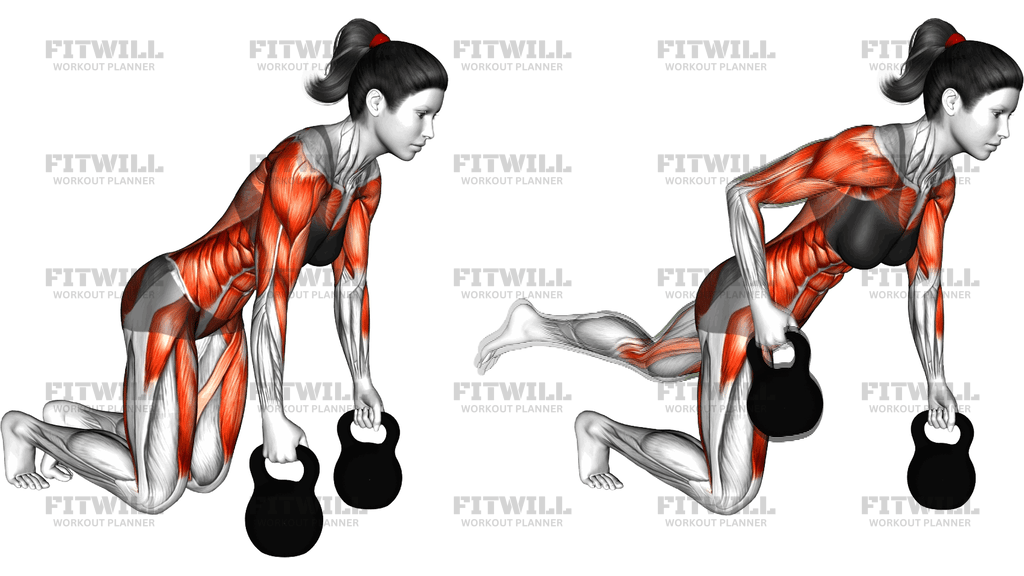
Kettlebell Kickstand One Leg Deadlift is a hinge exercise that loads one leg more heavily while the rear foot stays lightly on the floor as a kickstand. It is useful for building glute and hamstring strength, improving hip control, and teaching you to keep the pelvis and torso steady when most of your weight is on one side.
The kickstand setup matters because it gives you a little extra balance without turning the movement into a full two-legged deadlift. The front leg should do most of the work, the back toe should only help you stay oriented, and the kettlebell should stay close to the body as you hinge. That combination makes it a strong choice when you want single-leg training with a safer, more repeatable setup than a pure single-leg deadlift.
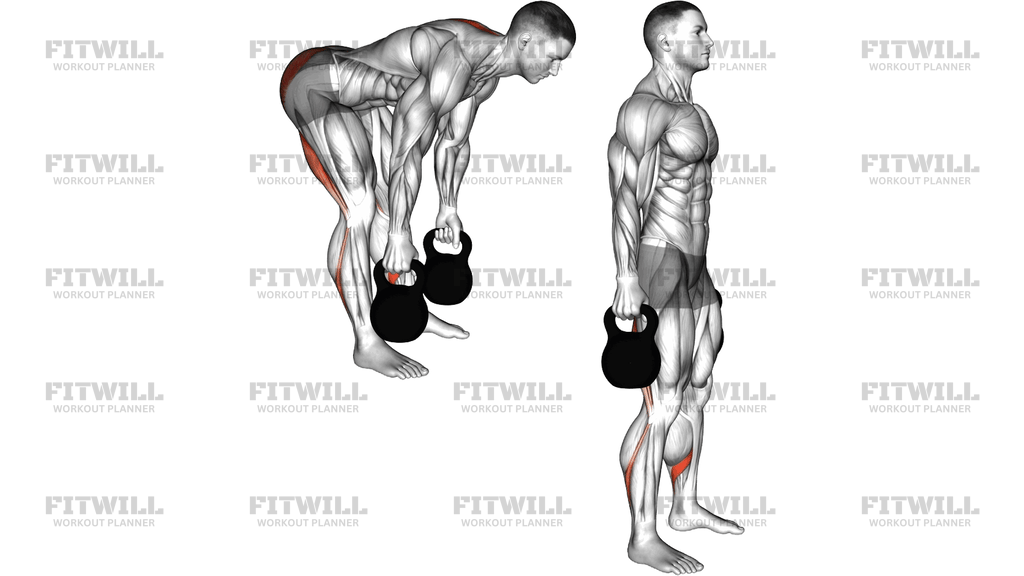
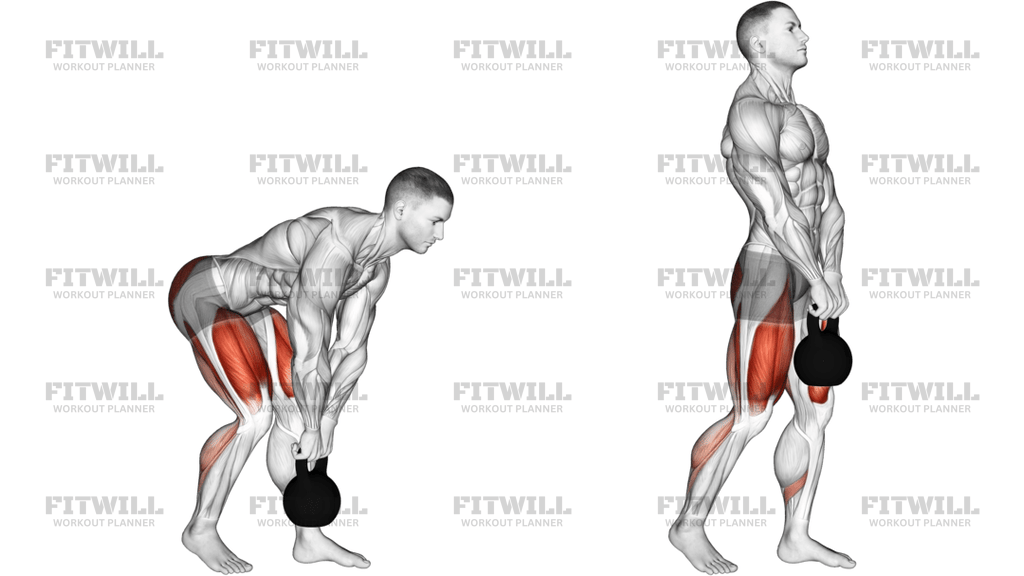
Perform the rep by softening the front knee, pushing the hips back, and lowering the kettlebell in a straight, controlled path. Keep your torso long, your ribs stacked over your pelvis, and your shoulders level so the pelvis does not twist toward the rear leg. At the bottom, you should feel a clear stretch through the front leg hamstrings and glute, not a collapse in the low back or a wobble into the rear foot.
Drive back up by pressing through the front heel and midfoot while keeping the kettlebell close to the thigh and shin. The goal is not to stand by yanking the weight upward, but to extend the hip smoothly until you return to a tall, balanced stance. A controlled lowering phase and a clean reset between reps will usually teach this movement better than chasing speed or range.
This exercise fits well in lower-body strength work, unilateral accessory blocks, warmups, or corrective sessions where you want more hip control and less spinal loading than a heavier conventional deadlift. It is especially useful when one side needs extra attention after squats, running, or other leg-dominant training. Choose a load that lets you keep the rear foot light and the front hip doing the real work from the first rep to the last.
Fitwill
Log Workouts, Track Progress & Build Strength.
Achieve more with Fitwill: explore over 9600 exercises with images and videos, access built-in and custom workouts, perfect for both gym and home sessions, and see real results.
Start your journey. Download today!




Instructions
- Stand with most of your weight on one foot, place the other foot slightly behind you on the toe, and hold the kettlebell with both hands in front of the working thigh.
- Keep the front foot flat and the rear leg light; the back foot is only there for balance, not to drive the rep.
- Soften the front knee, brace your trunk, and set your shoulders level before you begin the hinge.
- Push your hips straight back while letting the kettlebell travel down close to the front leg.
- Keep your back long and your chest angled forward as the shin stays nearly vertical.
- Lower until you feel a strong stretch in the front hamstring and glute without losing your balance or rounding your low back.
- Drive the front foot into the floor, squeeze the front glute, and stand back up by extending the hip.
- Finish tall with the hips fully open, then reset the rear toe and posture before the next rep.
- Breathe in on the way down and exhale as you stand, keeping the brace steady throughout the rep.
Tips & Tricks
- Keep the rear toe light enough that you could lift it briefly without changing the rep.
- Let the front hip travel back, not down, so the movement stays a hinge instead of a squat.
- Keep the kettlebell close to the thigh and shin; letting it drift forward increases stress on the low back.
- Use the front heel and midfoot to drive up, especially if you feel the weight shifting into the toes.
- Stop the descent when the pelvis starts to rotate open or the back begins to round.
- A slower lowering phase usually improves hamstring tension and balance on this variation.
- Keep both shoulders square to the floor so the torso does not twist toward the rear leg.
- If your grip limits the set before your glute does, reduce load and keep the handle path clean.
Frequently Asked Questions
What does the Kettlebell Kickstand One Leg Deadlift train most?
It primarily trains the glutes and hamstrings of the front leg, with the core and upper back working to keep the torso steady.
Can beginners perform this exercise?
Yes. The kickstand setup is often easier to learn than a full single-leg deadlift because the rear toe gives you a bit of balance.
How should my feet be set up?
Keep the front foot flat and place the rear foot a short step behind you on the toe so most of the load stays on the working leg.
Should I feel the rear leg working much?
No. The rear leg should help with balance only. If it starts doing a lot of work, shift more weight to the front foot and keep the back toe light.
Where should the kettlebell travel during the rep?
It should move straight down close to the front thigh and shin, then come back up along the same path.
What is the most common form mistake?
People usually twist the torso, reach the kettlebell too far forward, or turn the movement into a squat instead of a hip hinge.
How low should I go?
Lower only as far as you can keep the front hamstring loaded, the spine neutral, and the pelvis square. Depth is less important than position.
What can I use instead of this exercise?
A regular single-leg deadlift, a staggered-stance Romanian deadlift, or a split-stance dumbbell hinge can all serve a similar purpose.