Squat Tip Toe
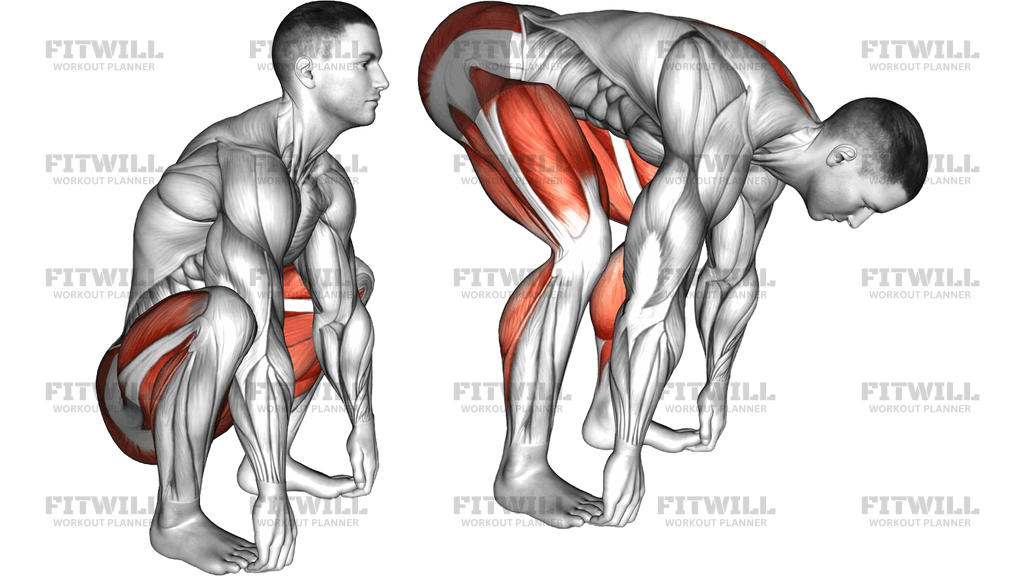
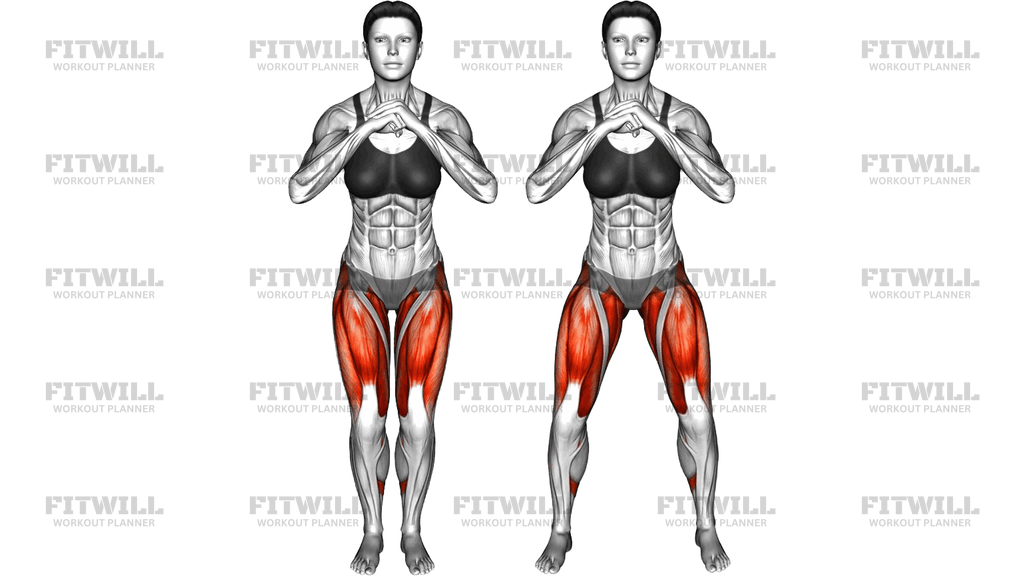
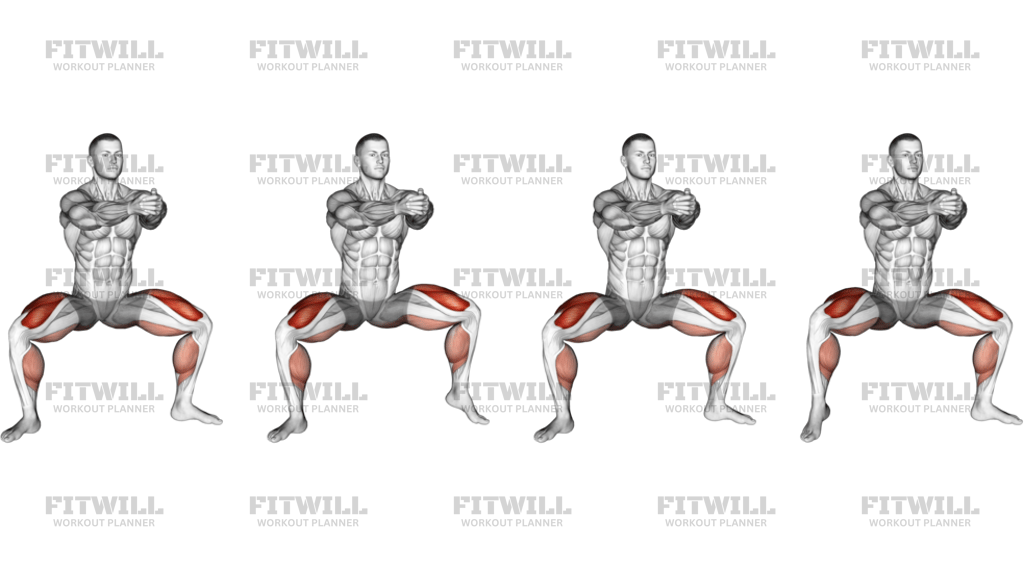
Squat Tip Toe is a bodyweight squat variation performed in a wide stance with the weight kept on the balls of the feet. It keeps the glutes and thighs under tension while demanding more ankle control, balance, and trunk stability than a flat-footed squat. The tip-toe position changes how you load the legs, so the setup and knee tracking matter as much as the depth of the squat.
The main training effect is lower-body control. The glutes drive the standing phase, the thighs help control the descent and ascent, and the hamstrings, core, and lower back stabilize the pelvis and torso. Because the heels stay light or lifted, the calves and feet also work hard to keep you balanced. That makes this variation useful when you want a bodyweight movement that feels more athletic and less like a passive sit-back squat.
Good reps start before the first descent. Set your feet wider than shoulder width, turn the toes out slightly, and keep the heels only lightly elevated so your pressure stays centered over the forefoot. From there, sit down between the legs rather than pitching forward. The chest stays open, the knees travel in line with the toes, and the spine stays long so the glutes can take the lead instead of the lower back.
At the bottom, control matters more than depth. Lower only as far as you can without losing balance, letting the arches collapse, or driving the knees inward. Then press the floor away through the balls of the feet and stand tall with a strong squeeze through the hips. If the heels start dropping or the torso starts folding, the set is getting too hard or too deep for the current load and tempo.
Squat Tip Toe works well as a warm-up pattern, a home-workout leg exercise, or accessory work in a lower-body session when you want bodyweight tension without external load. Beginners can use a smaller range and a nearby support for balance, while advanced trainees can increase the challenge with pauses, slower lowering, or longer sets. The goal is repeatable forefoot control, clean knee tracking, and steady breathing from rep to rep.
[ Workout Log & Planner ]
Put your next workout in Fitwill
Keep your plan and training log ready when you are.


Instructions
- Stand with your feet wider than shoulder width, turn the toes slightly out, and lift the heels just enough so your weight stays on the balls of your feet.
- Reach your arms straight forward at shoulder height, stack your ribs over your pelvis, and keep your chest open.
- Brace your core, then gently turn the knees out so they track in line with the second and third toes.
- Sit down between your legs by bending the hips and knees together, keeping the heels light and the torso tall.
- Lower until your thighs are as close to parallel as you can control without wobbling or collapsing inward.
- Pause briefly at the bottom while keeping pressure through the forefoot and tension in the glutes and thighs.
- Drive up through the balls of your feet, squeeze the glutes to stand, and finish with the legs extended and the heels still light.
- Inhale on the way down, exhale as you stand, then reset your stance before the next repetition.
Tips & Tricks
- Keep the pressure on the balls of the feet, but do not let the arches cave or the ankles roll in.
- Do not turn this into a calf raise; the heels should stay light, not shoot high off the floor.
- The hips should travel mostly down between the legs, not far back like a standard squat.
- Let the knees open with the toes so the glutes have room to work.
- Use a slower lowering phase if you start bouncing out of the bottom.
- A small pause at the bottom removes momentum and makes the forefoot balance more honest.
- Stop the set when the torso starts folding forward or the lower back begins to take over.
- Use a stable shoe or a flat surface so the forefoot position does not feel slippery or unstable.
Frequently Asked Questions
What muscle does Squat Tip Toe target most?
The main emphasis is on the glutes and thighs, with the calves, core, and lower back helping to stabilize the forefoot squat.
Is this just a regular squat with the heels lifted?
It is close, but the lifted-heel or forefoot setup changes the balance and makes ankle control a much bigger part of the exercise.
How wide should my stance be for the tip-toe squat?
Use a stance a little wider than shoulder width with the toes slightly turned out so you can sit between the legs without collapsing inward.
Should my heels stay off the floor the whole rep?
Yes. Keep them light and elevated enough that your weight stays on the balls of the feet instead of shifting back to a flat-footed squat.
How low should I go in Squat Tip Toe?
Go only as low as you can while keeping the knees out, the torso tall, and the balance steady over the forefoot.
Can beginners do this exercise safely?
Yes, but beginners should use a smaller range of motion and hold a wall or post if the forefoot balance feels unstable.
Why do my calves cramp during this movement?
The heels-up position makes the calves work hard to stabilize. Reduce depth, slow the pace, and rest longer between sets if cramping starts.
What is a good substitution if the tip-toe position is too hard?
Do the same wide-stance squat with flat feet first, then return to the tip-toe version once your balance and knee tracking are solid.