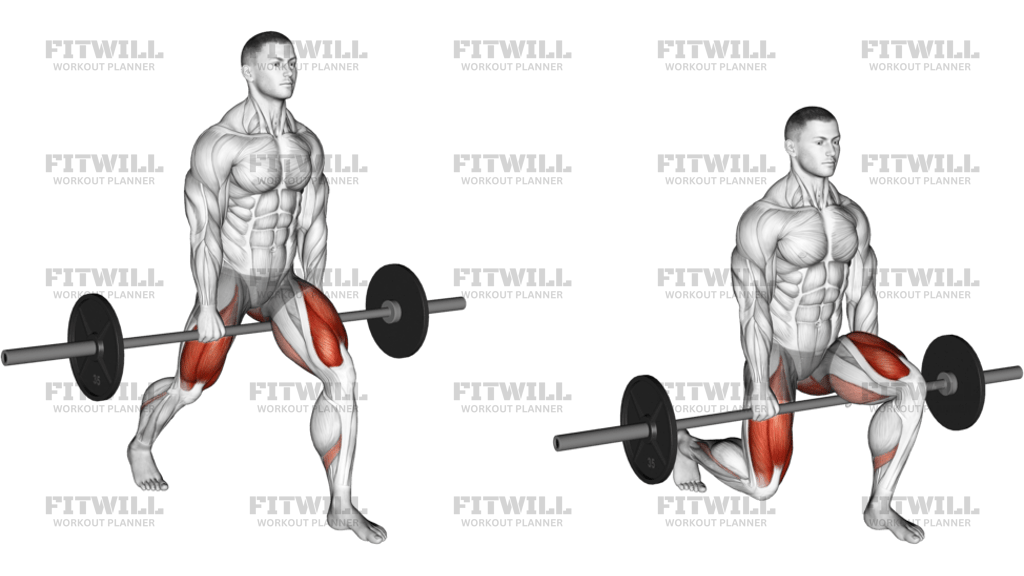
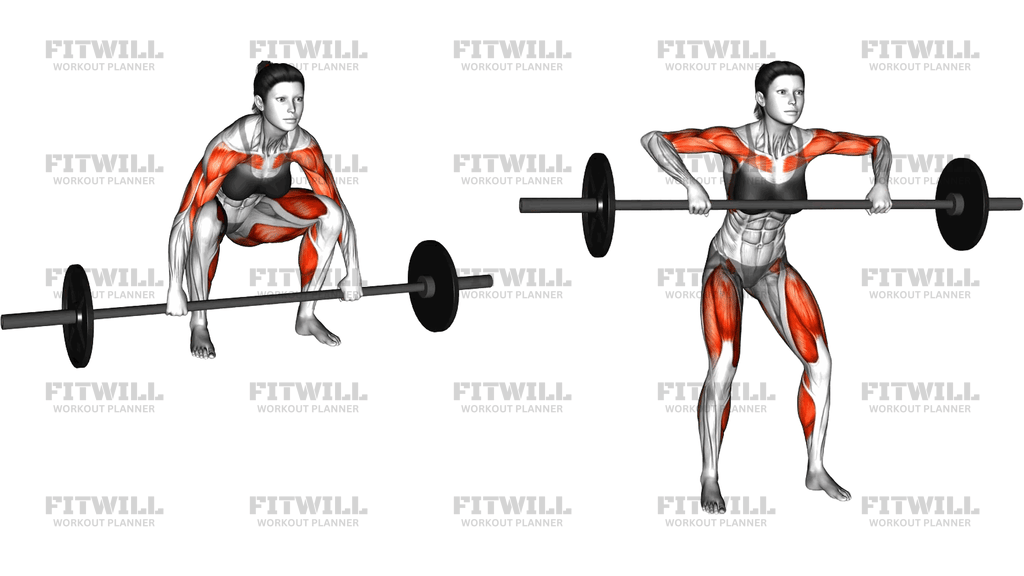
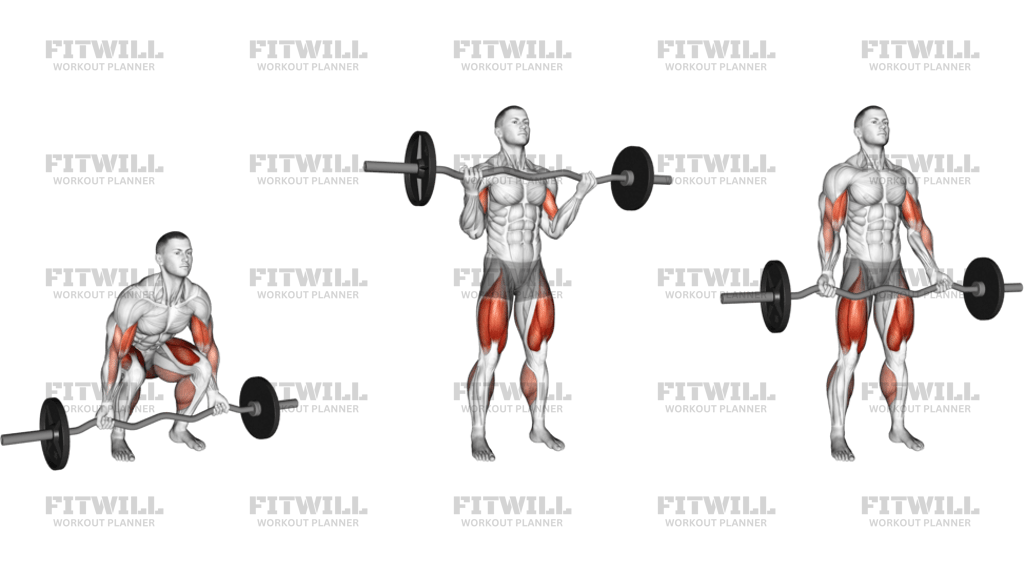
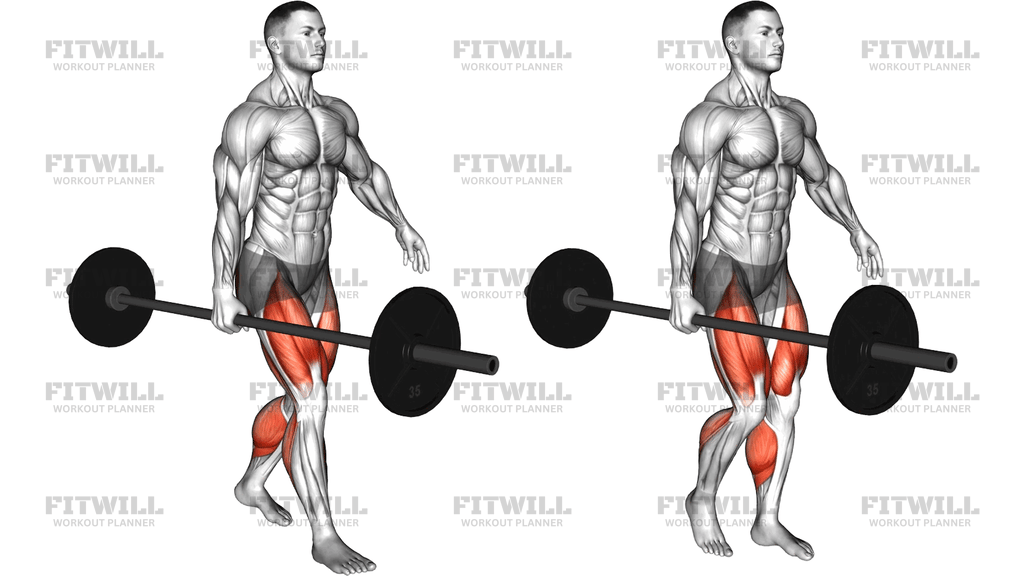
Barbell Squat With Chains
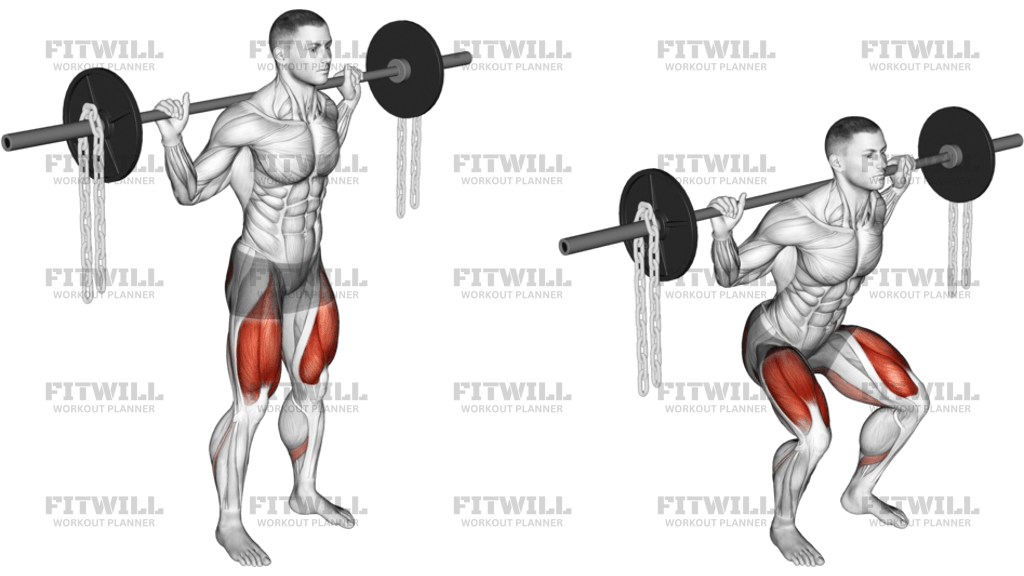
Barbell Squat With Chains is a back squat variation that uses accommodating resistance to make the top of the lift harder than the bottom. The chains hang partially on the floor at the bottom of the squat and lift progressively as you stand, so the load increases where most lifters can usually accelerate the fastest. That makes Barbell Squat With Chains a useful option for strength work, speed-strength training, and athletes who need to drive hard through the whole ascent instead of relaxing once they leave the hole.
The movement mainly trains the thighs, especially the quadriceps, while the glutes, adductors, hamstrings, spinal erectors, and upper back stabilize the bar. The changing load also demands a firm brace through the trunk so the torso does not collapse forward as the chains come off the floor. Barbell Squat With Chains is most useful when you want to keep the bottom position honest, build power out of the squat, and challenge lockout strength without making every inch of the descent brutally heavy.
Setup matters more here than in a plain squat because the chain length determines how much resistance you actually feel at the bottom and top. The bar should sit securely across the upper back, the chains should be loaded evenly on both sleeves, and several links should settle to the floor when you reach the bottom of the rep. If the chains are uneven or too short, the bar can sway or stay too heavy at the bottom, which defeats the point of the variation.
During each repetition, descend under control, keep the bar over the middle of the foot, and let the knees track in line with the toes as the hips travel between the heels. Then drive up hard enough that the chain links leave the floor smoothly instead of jerking up in a twist. The goal is a strong, repeatable squat path with a stable torso, not a rushed bounce or a partial range just to move more chain.
Barbell Squat With Chains is best used in a strength session, a lower-body power block, or as a variation after a standard squat pattern has already been learned. Start with light chains and conservative bar weight, especially if you are new to accommodating resistance, because the top of the lift can feel dramatically heavier than expected. Use rack safeties or a competent spotter, and stop the set if the bar starts tipping, the chains swing unevenly, or your depth changes from rep to rep.
Fitwill
Log Workouts, Track Progress & Build Strength.
Achieve more with Fitwill: explore over 9600 exercises with images and videos, access built-in and custom workouts, perfect for both gym and home sessions, and see real results.
Start your journey. Download today!




Instructions
- Set the bar in a rack, then drape equal chains over both sleeves so the links rest evenly and several links can still touch the floor at the bottom of the squat.
- Place the bar across your upper back, grip it slightly wider than shoulder-width, and pull your shoulder blades tight enough to make a stable shelf for the bar.
- Brace your torso, stand up to unrack the bar, and take a controlled walkout until your feet are about shoulder-width apart with the toes turned slightly out.
- Settle your weight through the middle of your feet and heels, then take a breath and lock your ribs down before you start the descent.
- Sit your hips down and between your knees, keeping the chest proud and the knees tracking in the same direction as the toes.
- Lower until your thighs are at least parallel if your mobility and balance allow it, keeping the bar path centered over the midfoot.
- Drive upward by pushing the floor away, letting the chains rise off the floor smoothly as you pass through the bottom half of the rep.
- Finish by standing tall with the hips and knees fully extended, then reset your breath and repeat for the planned reps.
- When the set is over, walk the bar back into the rack only after the chains have settled and the hooks are secure.
Tips & Tricks
- Adjust chain length so the bottom of the squat still unloads the bar slightly; if every link is off the floor at the bottom, the setup is too heavy.
- Keep both chain piles the same height on the floor so the bar does not tilt as you drive out of the hole.
- Use the chains to encourage a strong ascent, not to force a bounce; the rep should still look like a controlled squat.
- If your torso folds forward as the chains leave the floor, reduce the load or widen the stance a little so the hips can stay under the bar.
- Keep the bar over the midfoot the entire rep; drifting onto the toes usually means the chains are pulling you forward or the walkout was too narrow.
- Take a bigger breath before each rep than you would on a regular squat, because the top of the lift gets heavier quickly.
- Use rack safeties or a spotter, since failing a chain squat is awkward if the bar speed changes suddenly near the top.
- Start with lighter plates than your normal back squat because the chains make the finishing range feel much heavier than the bottom.
Frequently Asked Questions
What muscles does Barbell Squat With Chains work most?
The quads do most of the work, with the glutes, adductors, hamstrings, and trunk muscles helping keep the bar path stable.
How is Barbell Squat With Chains different from a regular barbell squat?
The bottom of the squat is slightly easier and the top is heavier, so you have to keep driving all the way to lockout instead of easing up after the hole.
Where should the chains be at the bottom of Barbell Squat With Chains?
Some of the chain should still be on the floor at the bottom so the load unloads slightly there and builds up as you stand.
Can beginners do Barbell Squat With Chains?
Yes, but only after they can squat safely with a normal barbell. Start with light chains, conservative loading, and safety arms.
How deep should I squat in Barbell Squat With Chains?
Use the same depth you can hit cleanly in a standard squat, usually to parallel or slightly below, without losing your brace or bar position.
Why use chains instead of adding more plates?
Chains add accommodating resistance, which lets you train acceleration and lockout strength without making the bottom position feel as overloaded.
What are the most common mistakes with Barbell Squat With Chains?
Uneven chains, changing depth from rep to rep, and leaning forward as the chains come off the floor are the biggest problems to watch for.
Do I need a spotter for Barbell Squat With Chains?
A spotter helps, but rack safeties are the better safety net because the load changes during the rep and failed reps can feel awkward.