Band Cross Body One-Arm Chest Press
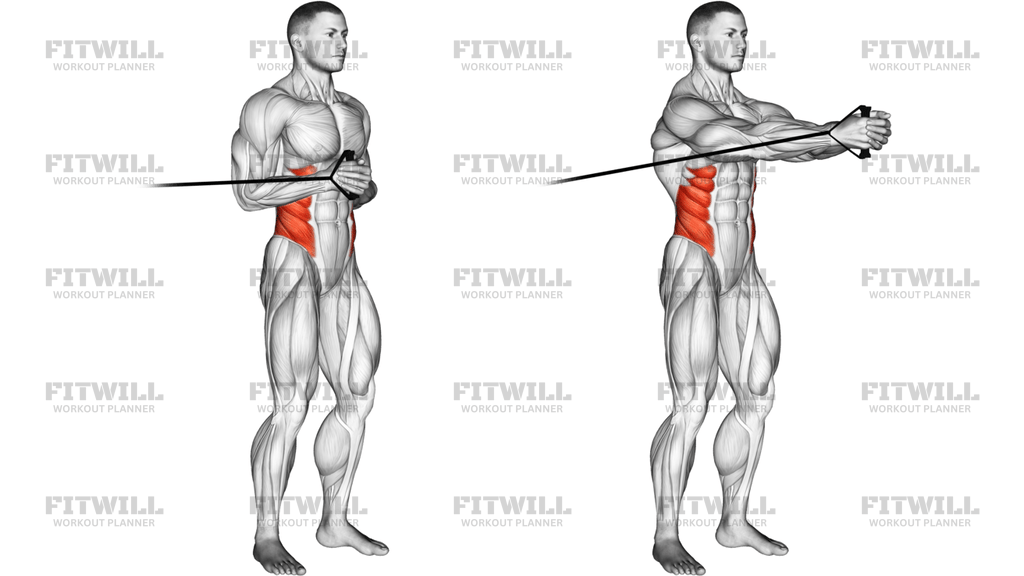
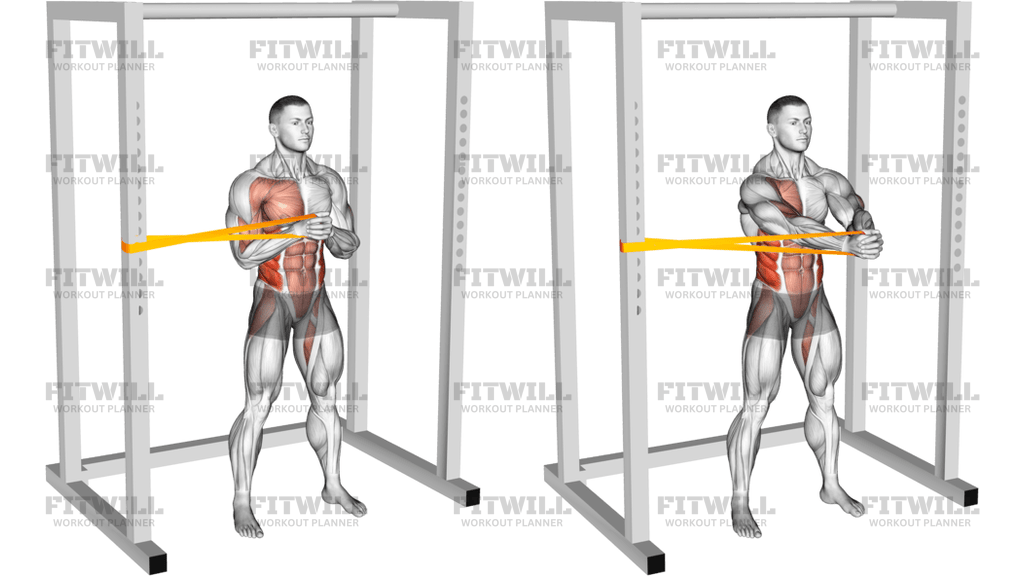
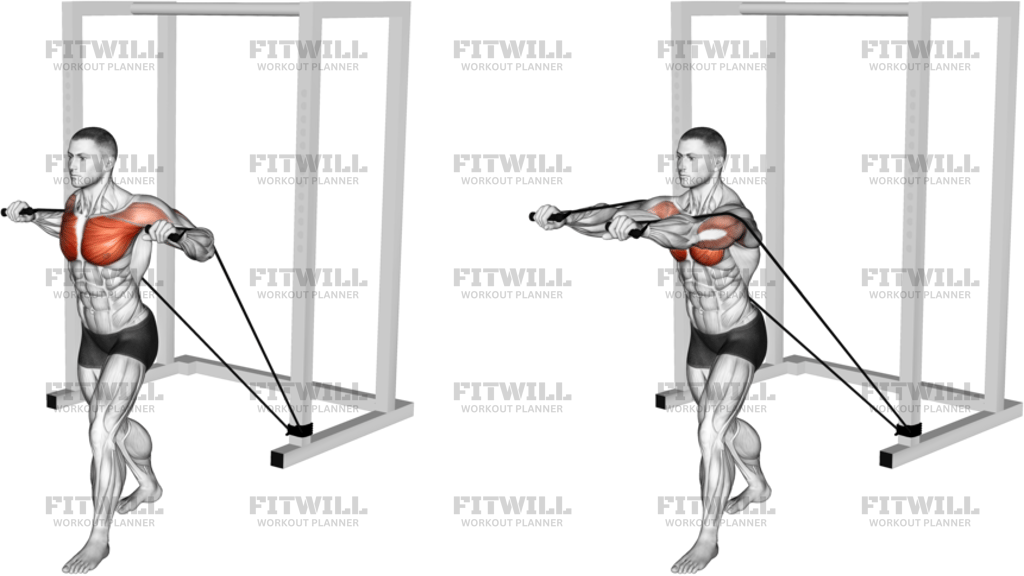
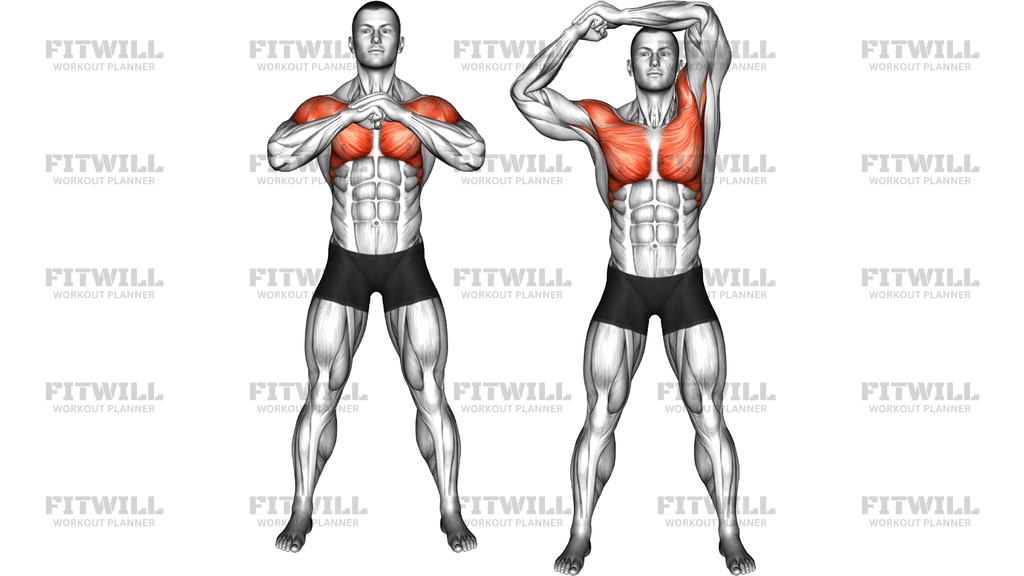
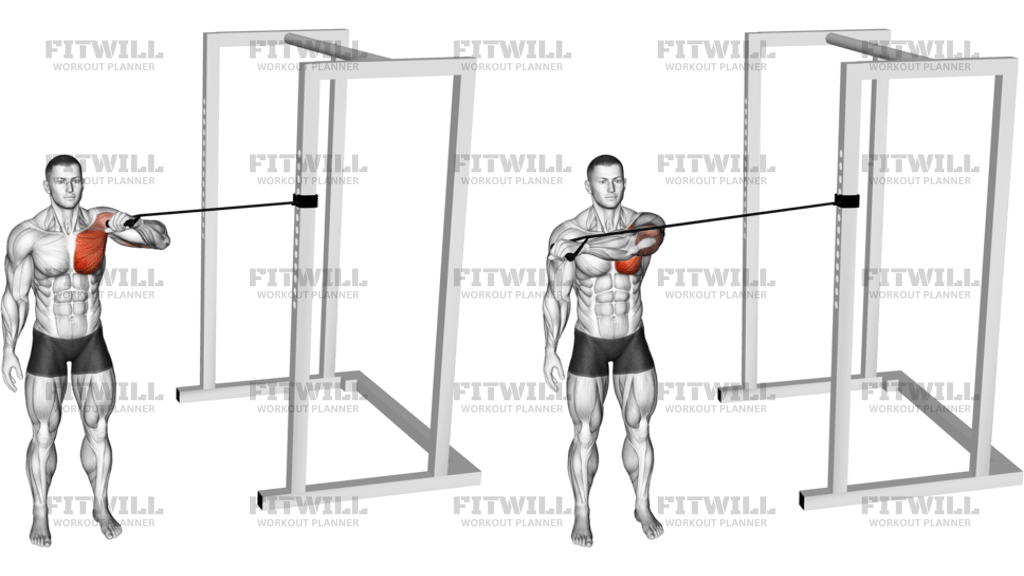
Band Cross Body One Arm Chest Press is a standing single-arm pressing exercise that drives resistance across the body from shoulder height toward the opposite side of the chest. It is useful for training the pecs, front deltoid, and triceps while also forcing the trunk and shoulder girdle to stay organized against the sideways pull of the band or cable.
The cross-body line of force is what makes this variation different from a standard chest press. Because the handle starts out to the working side and finishes in front of the body, the pressing arm has to stay controlled through both horizontal adduction and elbow extension. That makes the exercise valuable for athletes and lifters who want chest work that also challenges anti-rotation control and shoulder stability.
The setup matters more here than in a machine press. Stand far enough from the anchor that the band already has tension at the start, then square your ribs and pelvis before the first rep. The working elbow should begin slightly bent and roughly in line with the shoulder, not dropped behind the torso. A stable stance keeps the press clean and prevents the body from twisting to fake range of motion.
On each repetition, press the handle diagonally across the chest until the arm reaches almost straight in front of the opposite shoulder, then return slowly until the hand is back near the outside of the chest. The shoulder should stay packed and the wrist stacked over the forearm so the band loads the chest instead of yanking the joint forward. Exhale through the press, inhale on the return, and keep the torso quiet enough that the only obvious motion comes from the arm.
This movement fits well in chest-focused accessory work, upper-body circuits, or any session where you want unilateral pressing without a bench. It is especially useful when you need lighter loading, a standing option, or a way to expose left-right differences in control. Clean reps should feel smooth and deliberate, with the chest doing the work and the trunk resisting unwanted rotation.
[ Workout Log & Planner ]
Put your next workout in Fitwill
Keep your plan and training log ready when you are.


Instructions
- Stand beside the anchor point and hold the handle in the working hand at about shoulder height, with the band already pulling slightly across your body.
- Plant your feet hip-width apart or use a small staggered stance so you can stay balanced without leaning into the press.
- Square your chest and pelvis, keep the working elbow bent, and stack the wrist over the forearm before you start.
- Brace your midsection so your ribs do not flare and your torso does not twist toward the anchor.
- Press the handle diagonally across your body until your arm is nearly straight in front of the opposite shoulder.
- Keep the shoulder down and forward enough to let the pec finish the press without shrugging.
- Pause briefly at the end of the press, then return the handle slowly along the same cross-body path.
- Stop when the hand comes back to the outside of the chest and the shoulder is still under control.
- Breathe out during the press, breathe in as the band brings the handle back, and repeat for the planned reps.
Tips & Tricks
- Set the anchor at roughly chest height; if it is too low or too high, the press turns into an awkward incline or decline pattern.
- Start with enough distance from the anchor to feel tension immediately, but not so much that the band drags your shoulder forward at the bottom.
- Keep the sternum pointed forward instead of rotating toward the handle, or you will turn the exercise into a torso twist.
- Let the elbow finish near full extension, but do not lock it hard at the end if that makes the shoulder ride up.
- Think about pressing across and slightly inward, not straight out in front of you like a front raise.
- A small staggered stance often helps more than a rigid square stance because it gives you a clearer base without leaning.
- If the band snaps you back too fast, shorten the set or use a lighter band so the return stays smooth.
- Keep the wrist straight and the knuckles aligned with the forearm; a bent wrist usually means the handle is drifting out of line.
- Stop the set when the torso starts swaying or the shoulder blade loses control, even if the chest still has energy.
Frequently Asked Questions
What does the cross-body press work the most?
It mainly trains the chest, especially the pecs, while the front deltoid and triceps help finish the press.
Why press across the body instead of straight forward?
The cross-body line changes the shoulder angle and adds anti-rotation demand, so the chest has to press while the torso stays square.
Where should the handle start?
Start with the handle beside the outside of the chest, elbow bent, wrist stacked, and the band already under light tension.
Should my torso rotate during the press?
No. A small amount of natural torso tension is fine, but the ribs and pelvis should stay mostly square to the front.
Can I do this with a cable machine or a band?
Yes. The movement is the same as long as the anchor stays near chest height and the line of pull stays across the body.
What usually goes wrong with this exercise?
People shrug, twist toward the anchor, or let the band yank the arm back instead of controlling the return.
Is a staggered stance better than standing flat-footed?
Either can work, but a small stagger often helps you stay stable and keep the press honest without leaning.
Where should I feel the finish of the rep?
You should feel the chest drive the handle across the body, with the front shoulder and triceps assisting at the end.