Resistance Band Standing Hip Abduction
Resistance Band Standing Hip Abduction is a standing lower-body accessory exercise that trains the muscles responsible for moving the leg away from the midline, especially the outer hip and glute area. The band above the knees makes the movement simple to see and easy to feel: you press one knee out against the band while the trunk stays tall and the standing leg remains rooted. It is useful when you want to build lateral hip strength, improve pelvic control, or warm up the hips before squats, lunges, running, or change-of-direction work.
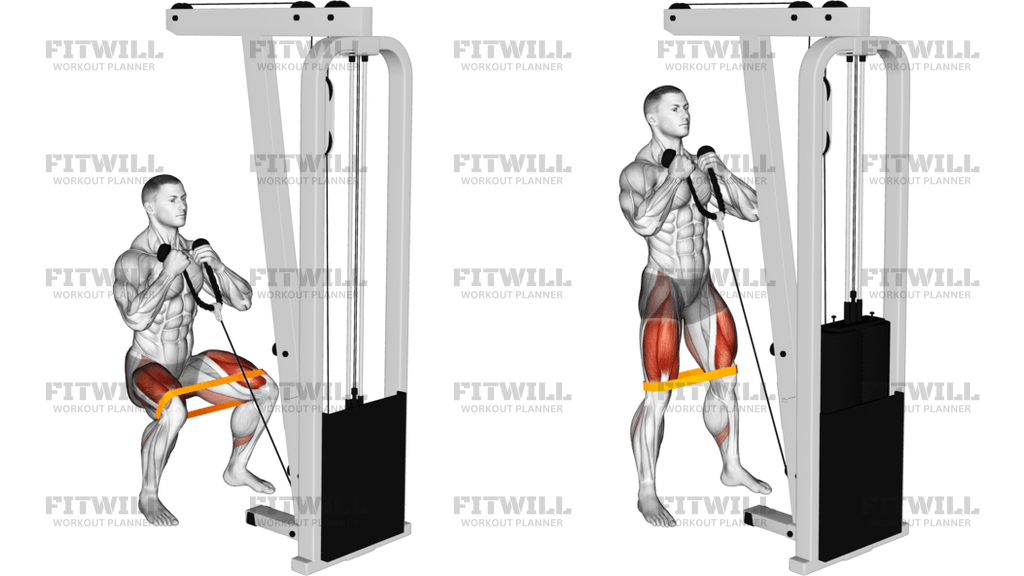
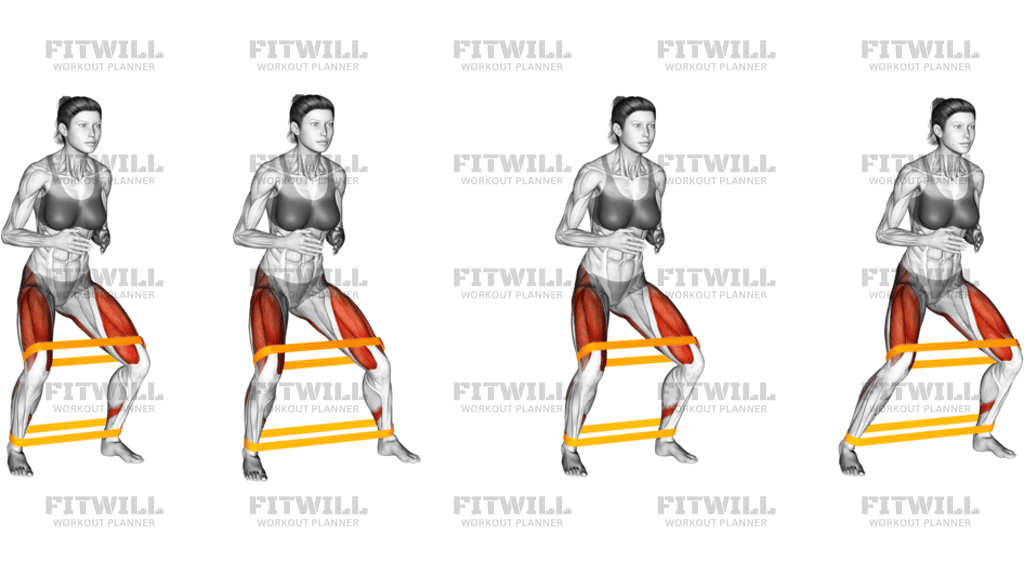
The setup matters because the band changes tension quickly as the knees drift inward or outward. In the image, the lifter stands upright with feet about hip-width apart, knees slightly bent, and hands held in front of the chest for balance. From that position, one leg abducts against the band while the other leg stays stable, which is a good reminder that this is not a swing or kick. The goal is a short, clean sideward opening at the hip with the pelvis kept level and the torso quiet.
This movement is usually felt most in the side glutes, deep hip stabilizers, and the muscles that keep the knee from collapsing inward. It is not a high-load strength lift; it is a control exercise that rewards precision, tempo, and clean alignment. Because the resistance band is fixed around both thighs, the working leg has to create enough force to open the knee while the standing side and core prevent the body from leaning or twisting to fake the rep.
Use this exercise as an activation drill, accessory superset, or rehab-style strength pattern when your hips need direct work without a lot of spinal load. It also works well in warm-ups for athletes who need better single-leg control. Keep the rep quality high, stop before the band control turns into torso sway, and choose a band that lets you move smoothly through the full pain-free range without snapping the knee outward. If the hips start shifting or the feet start rolling, the resistance is too high or the set is too long.
[ Workout Log & Planner ]
Put your next workout in Fitwill
Keep your plan and training log ready when you are.


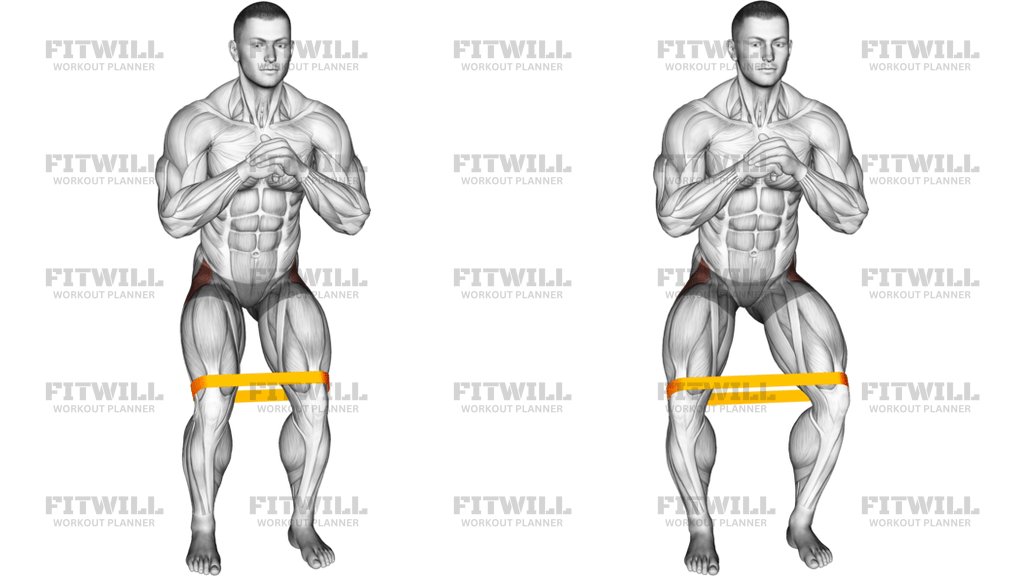
Instructions
- Loop the resistance band around both thighs, just above the knees, and stand tall with your feet about hip-width apart.
- Soften both knees slightly and lift your chest so your pelvis stays level instead of tucked or arched.
- Brace lightly and hold your hands in front of your chest or on a support if you need help balancing.
- Shift your weight onto one leg and keep that standing foot planted from heel to toe.
- Press the working knee outward against the band without leaning your torso or hiking the hip.
- Open only as far as you can keep the pelvis square and the standing leg stable.
- Pause briefly at the widest point, then bring the knee back under control until the band is still under light tension.
- Repeat for the planned reps, then switch sides and match the same range and tempo.
Tips & Tricks
- Keep the movement at the hip, not the waist; if your ribs drift or your torso leans, the band is too heavy.
- Think about pushing the knee out and slightly away, not twisting the whole leg open.
- A soft bend in both knees helps the band stay in the correct line above the knees.
- Use a support with one hand if balance is limiting the working hip more than the band is.
- Do not let the standing foot collapse inward; keep pressure through the heel, big toe, and little toe.
- A short pause at the open position makes the side-glute contraction clearer and keeps the rep honest.
- Lower the leg slowly so the band does not snap the knee back to center.
- Stop the set when you start shifting your hips instead of moving the working knee.
Frequently Asked Questions
What muscles should I feel in standing band hip abduction?
You should feel the outer hip and side glute of the working leg most, with the standing leg and trunk helping you stay balanced.
Where should the band sit on this exercise?
The band should sit just above the knees so you can press the working knee outward without the band sliding into the calf or twisting the foot.
Do I need to hold onto something for balance?
Not always, but a light fingertip support is useful if balance makes you sway or if you cannot keep the pelvis level.
What is the most common mistake with this movement?
The biggest mistake is leaning the torso or shifting the hip to create range instead of opening the knee cleanly against the band.
How far should I move the working leg?
Open only as far as you can keep the standing foot planted, the pelvis square, and the band under smooth tension.
Is this more of a warm-up or a strength exercise?
It can be both, but it is usually used as an activation or accessory drill rather than a heavy strength lift.
Can I do this if I have knee pain?
Only if the motion is pain-free and controlled. If the knee feels pinchy or unstable, reduce the band tension or choose a different hip exercise.
How do I make the exercise harder without cheating?
Use a stronger band, slow the return, add a short pause at the open position, or reduce hand support before you try to swing the leg farther.