Band Standing Chest Press Version 2
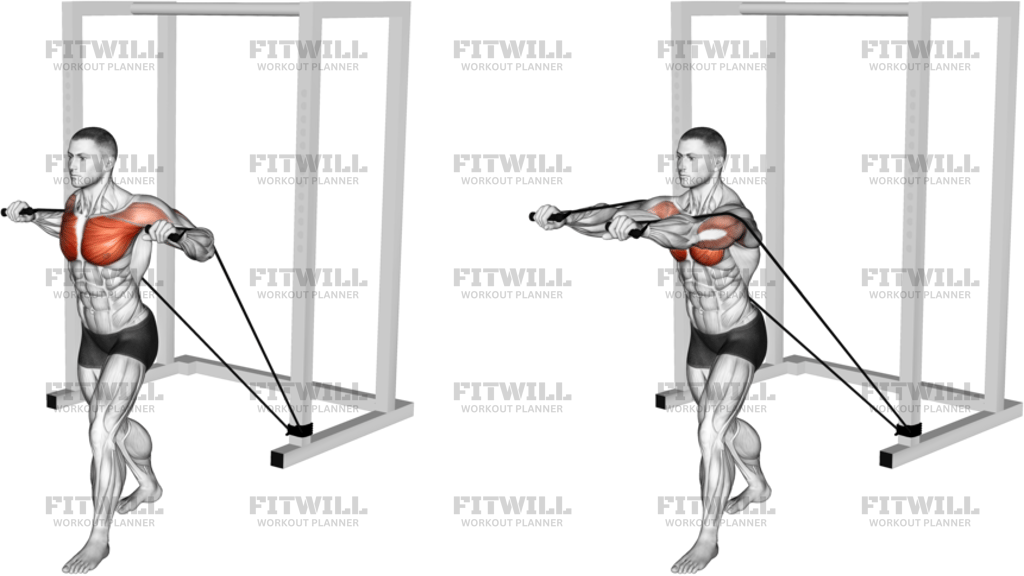
Band Standing Chest Press Version 2 is a standing horizontal press for the chest that also asks the shoulders, triceps, and trunk to stay organized while the arms move. It is useful when you want a pressing pattern without a bench, because the standing position forces you to manage rib position, balance, and shoulder control at the same time as the press.
The main target is the pectorals, especially the fibers that drive the arms forward across the body. The anterior deltoids and triceps help finish each repetition, while the core and glutes keep the torso from drifting forward or rotating away from the anchor. In anatomy terms, the primary mover is the Pectoralis major, with assistance from the Anterior deltoid, Triceps brachii, and Rectus abdominis.
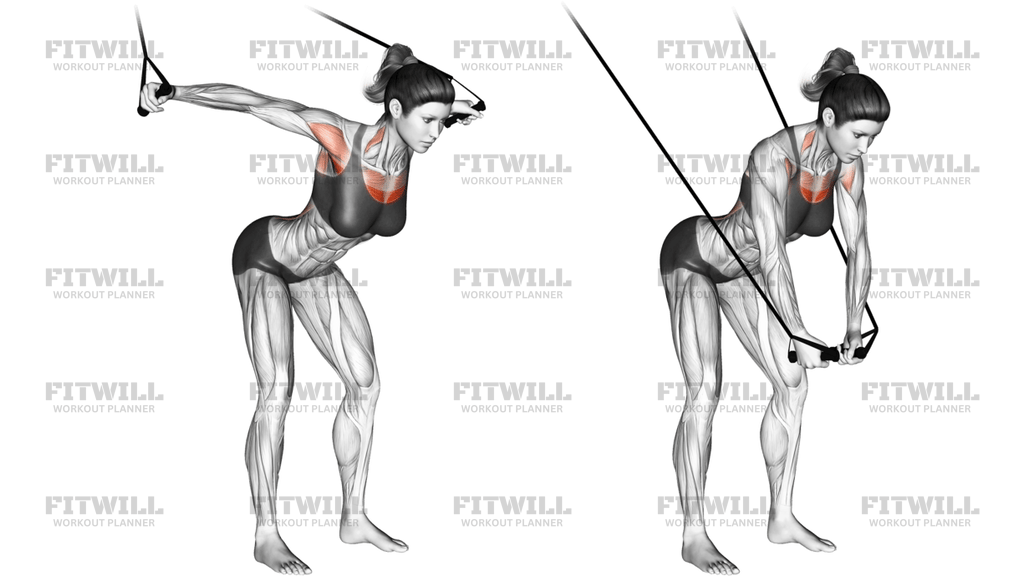
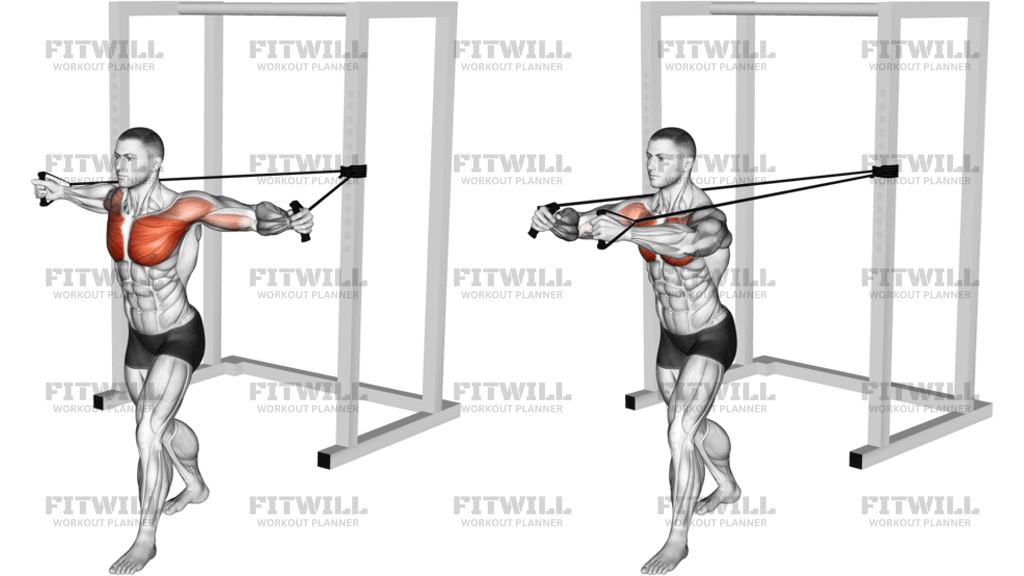
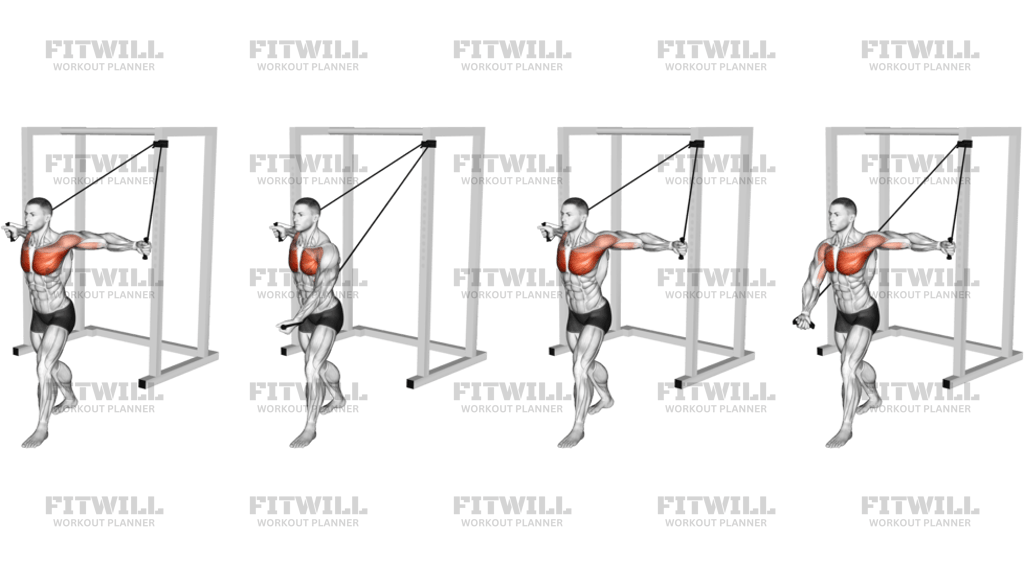
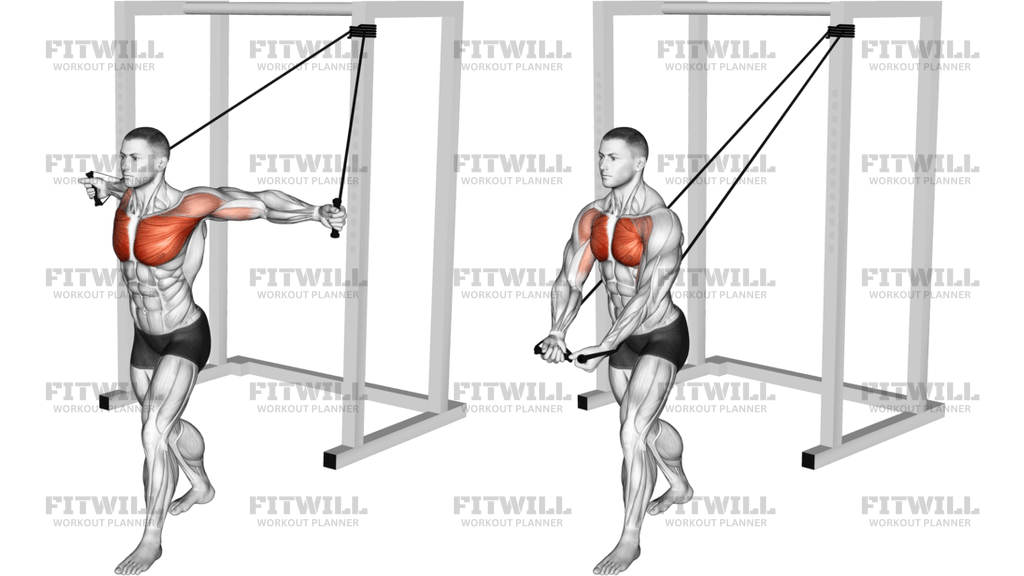
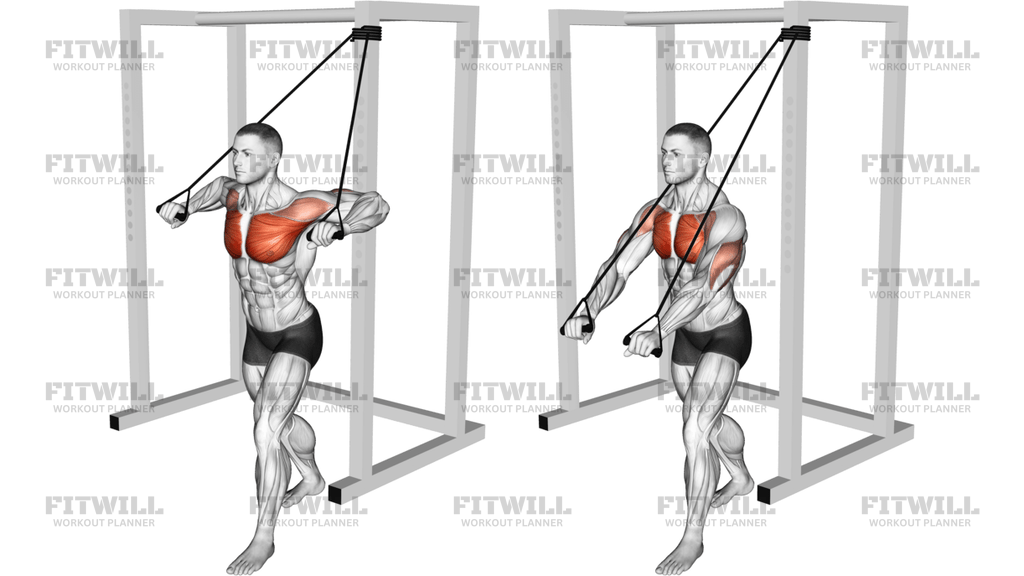
Set the band or handles behind you so the resistance pulls from the rear, then stand a small step in front of the anchor with one foot slightly ahead of the other. Bring the handles to chest height, keep your elbows bent, and start with your wrists stacked over your forearms. The image shows a split stance and a forward press path, which is the key pattern here: press straight ahead from the chest, not upward, and do not let your shoulders shrug toward your ears.
Each rep should begin with a stable torso and finish with the hands out in front of the chest and the elbows nearly straight, but not jammed into a hard lockout. The return is just as important as the press: let the elbows bend slowly while the band tension keeps the chest loaded. Exhale as you press, inhale as the hands come back, and keep the ribs from flaring when the resistance gets heavy.
This version works well as accessory chest work, a warmup before heavier pressing, or a strength circuit movement when you want continuous tension and clean mechanics. It is also a good option for lifters who need a lower-joint-stress press pattern or who want to train the chest while practicing scapular and trunk control. If the band pulls you out of position, the load is too heavy or the stance is too narrow; use enough resistance to challenge the press without turning the set into a lean-and-shrug exercise.
[ Workout Log & Planner ]
Put your next workout in Fitwill
Keep your plan and training log ready when you are.


Instructions
- Anchor the band or set the handles behind you at about lower-chest height, then stand facing away from the anchor with one foot slightly in front of the other.
- Hold the handles at chest level with your elbows bent, wrists straight, and palms facing forward or slightly inward.
- Set your ribs down, squeeze your glutes lightly, and brace your midsection before you start the press.
- Press the handles forward and slightly inward in a straight horizontal path until your arms are almost straight.
- Keep your shoulders low and your chest tall as the handles move away from your torso.
- Pause briefly with the arms extended without locking the elbows hard or letting the shoulders roll forward.
- Return the handles slowly until your elbows are bent and the chest is loaded again.
- Breathe out as you press and breathe in as you control the return.
- Reset your stance before the next repetition if the band starts to pull your torso off line.
Tips & Tricks
- Use a split stance so the band tension does not drag your body forward at the finish of each rep.
- Keep your wrists stacked over your forearms instead of letting them bend backward as you press.
- If the handles start above shoulder level, lower the anchor or step farther forward so the press stays horizontal.
- Stop the rep just short of a hard lockout; the chest and triceps should finish the work, not your joints.
- Do not flare the elbows straight out to the sides, or the front of the shoulder will take over too early.
- Keep your ribs from popping up when the band gets tight; that usually means the load is too heavy.
- Return the handles slowly enough to feel the chest lengthen, but not so slowly that you lose torso position.
- Choose a resistance that lets you keep the same pressing path on every rep instead of leaning harder to finish.
Frequently Asked Questions
What muscle does Band Standing Chest Press Version 2 target most?
The chest is the primary target, especially the pectorals that drive the arms forward.
Why is this version done in a standing split stance?
The staggered stance helps you resist the band pulling your body forward and makes it easier to keep the press path clean.
Where should my hands finish on the press?
Finish with the hands in front of the middle of the chest, with the arms almost straight and the shoulders still down.
Should my elbows flare out during the rep?
No. Keep them slightly bent and press forward in a controlled horizontal line so the shoulders do not take over.
Can beginners use this exercise?
Yes. Light resistance and a slow return make it a good beginner-friendly pressing pattern.
What should I feel if the setup is correct?
You should feel the chest work hardest, with the triceps and front shoulders helping finish the press.
How do I know the resistance is too heavy?
If you have to lean, shrug, or twist to finish the press, the band is pulling you out of position.
Is this a good replacement for a bench press?
It is a useful accessory substitute, but it trains the press from standing with more core and balance demand than a bench press.