EZ Bar California Skullcrusher
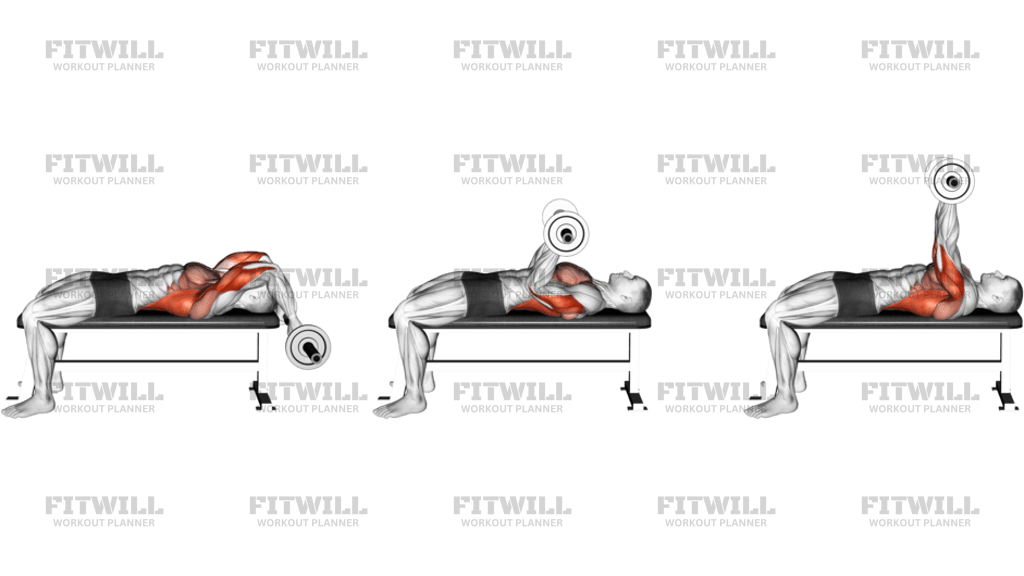
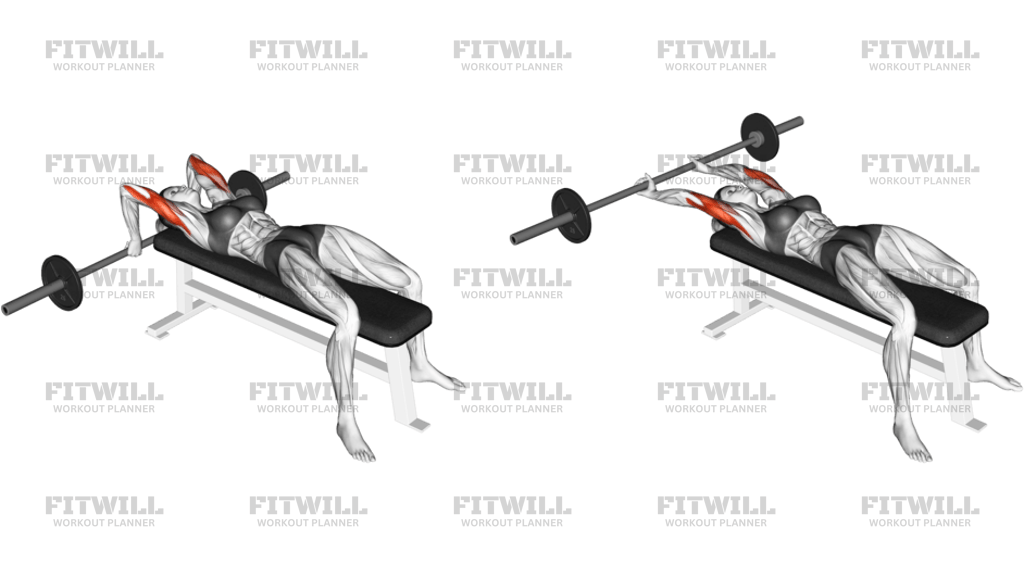
EZ Bar California Skullcrusher is a flat-bench triceps isolation exercise built around a controlled elbow bend and a smooth press back to lockout. The EZ bar and bench support make it easier to keep the wrists and upper arms organized while the triceps do most of the work through a longer, more tension-heavy range than a simple pressdown.
The exercise primarily targets the triceps, with the forearms and shoulder stabilizers helping keep the bar path steady. Because your back is supported on the bench, the quality of the rep depends less on whole-body movement and more on whether the elbows stay pointed in a consistent direction, the wrists stay stacked, and the upper arms resist drifting into a chest press.
Set up lying flat with your head on the bench, feet planted, and the EZ bar held in an overhand grip above the upper chest or just in front of the face. From there, let the elbows bend under control so the bar travels toward the forehead and then slightly back toward the crown of the head, creating the California-style deeper triceps stretch. The motion should feel smooth and deliberate, not like the bar is dropping into the head or shoulders.
Use a load that lets you keep the bar path repeatable, the elbows mostly fixed, and the wrists comfortable on the angled grips. This is a useful accessory movement when you want direct triceps work without standing momentum, but it pays to keep the range pain-free and the tempo controlled. The best reps end with a strong elbow extension, a brief squeeze at the top, and a safe return to the rack after the final repetition.
[ Workout Log & Planner ]
Put your next workout in Fitwill
Keep your plan and training log ready when you are.


Instructions
- Lie flat on a bench with your head supported, feet planted on the floor, and an overhand grip on the angled sections of the EZ bar.
- Start with the bar above your upper chest or slightly in front of your face, wrists stacked over the elbows and shoulders lightly set against the bench.
- Brace your ribs down and keep your upper arms angled slightly back so the shoulders stay quiet while the elbows do the work.
- Bend the elbows and lower the bar in a controlled arc toward the forehead and hairline.
- Continue the descent by letting the elbows travel a little farther back so the bar moves toward the crown of the head or just behind it.
- Keep the elbows from flaring wide and keep the wrists neutral while the bar stays on the same line through each rep.
- Reverse the motion by extending the elbows and press the bar back to the start above the upper chest.
- Squeeze the triceps at the top, breathe out through the press, and inhale as you lower into the next rep.
- After the final repetition, guide the bar back to the rack or start position without swinging it away from the bench.
Tips & Tricks
- Use the EZ-bar grips that let your wrists stay straight instead of forcing them into a hard angle.
- Keep the upper arms mostly fixed; if the elbows swing forward and back a lot, the set turns into a press variation.
- Lower the bar slowly enough that you can feel the triceps stretch before you change direction.
- Stop the descent if the bar path starts to irritate the elbows or shoulders; this movement should feel loaded, not jammed.
- Aim the bar toward the forehead and then slightly behind it rather than dropping it toward the chest.
- Choose a lighter load than you would for a basic triceps extension if the deeper bottom position is new to you.
- Keep the feet planted and the torso tight so your lower back does not arch to create fake range.
- If the top position feels loose, finish by fully extending the elbows and briefly squeezing the triceps before the next rep.
Frequently Asked Questions
What muscles does EZ Bar California Skullcrusher train most?
It mainly trains the triceps, especially through elbow extension, with the forearms and shoulder stabilizers helping control the bar.
What makes the California version different from a standard skullcrusher?
The bar path usually includes a slightly deeper elbow bend and a more continuous triceps stretch, so the set feels longer and more tension-heavy.
Where should the bar move during each rep?
It should travel from above the upper chest toward the forehead and then slightly back toward the crown of the head before you press it up again.
Should my upper arms move a lot during the exercise?
No. A small amount of shoulder angle is fine, but the upper arms should stay mostly in place so the elbows do the work.
Is this exercise suitable for beginners?
Yes, but start light and shorten the range if the bottom position feels awkward or puts stress on the elbows.
Why use an EZ bar instead of a straight bar?
The angled grip usually keeps the wrists happier and makes it easier to maintain control through the elbow bend.
What is the most common mistake with this movement?
Letting the elbows flare and letting the bar drift into a chest press instead of staying centered over the triceps.
What if my elbows feel irritated?
Reduce the load, shorten the range, and stop just before the painful bottom position. If it still irritates the joint, switch to a cable or dumbbell triceps variation.