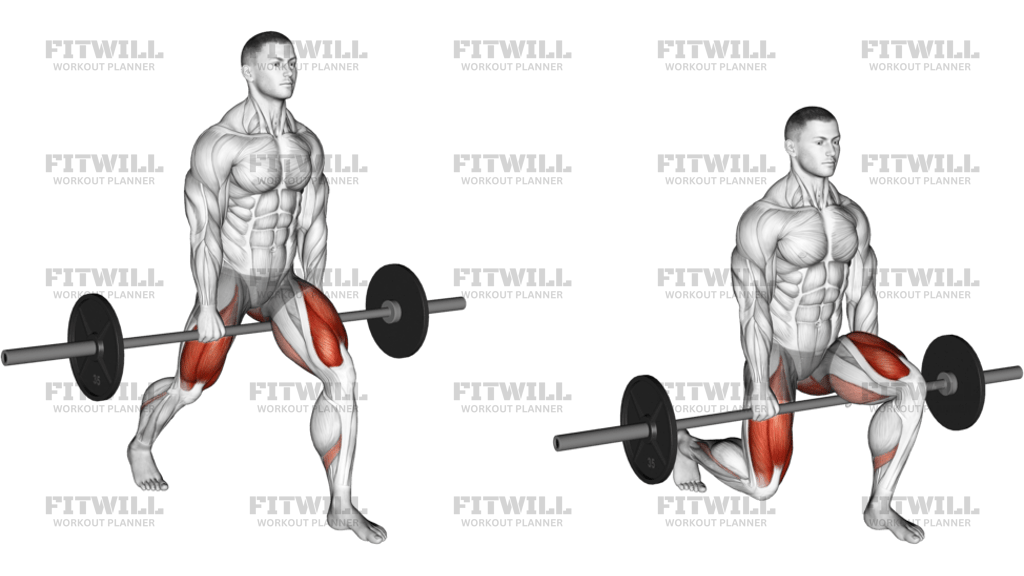
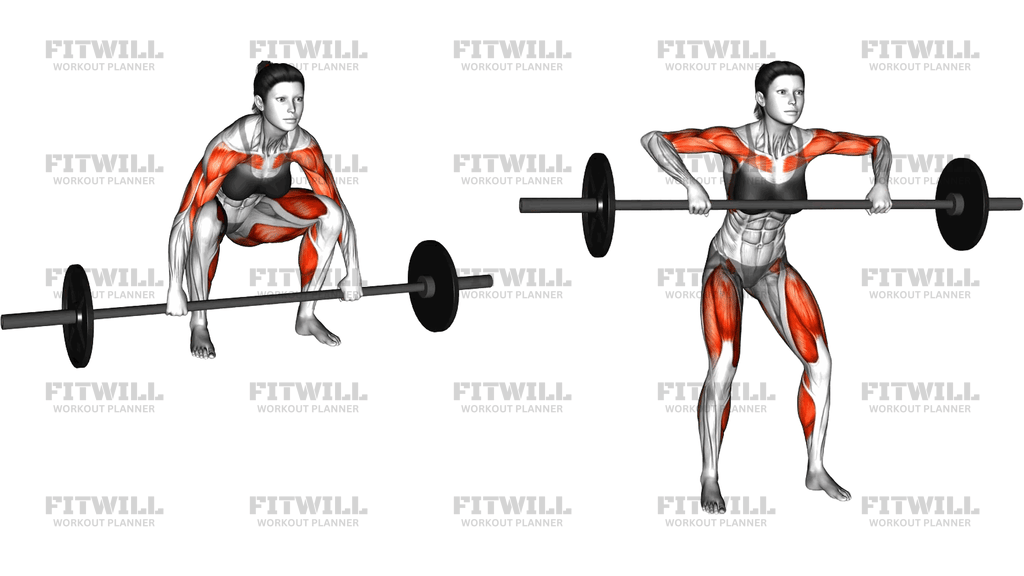
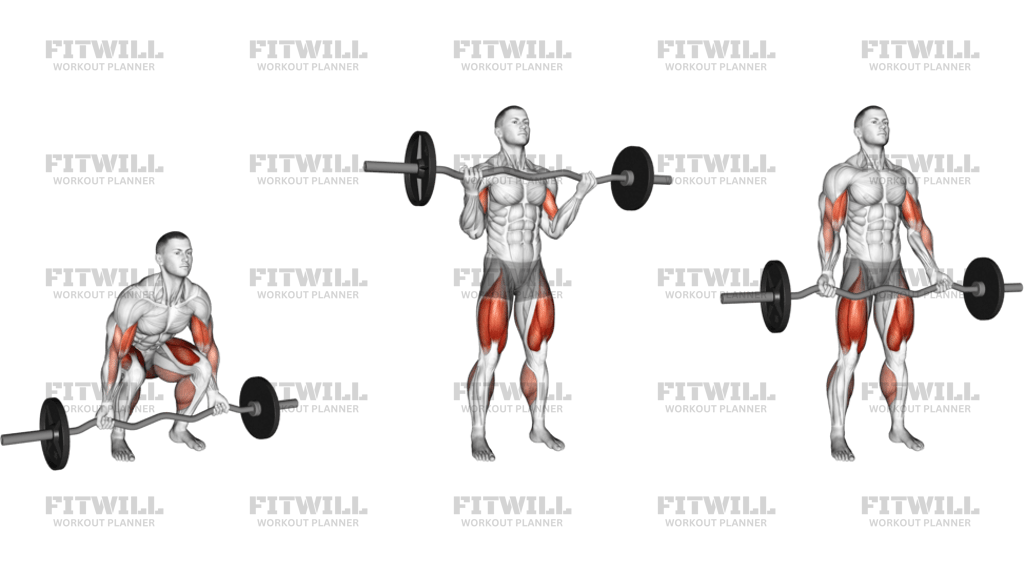
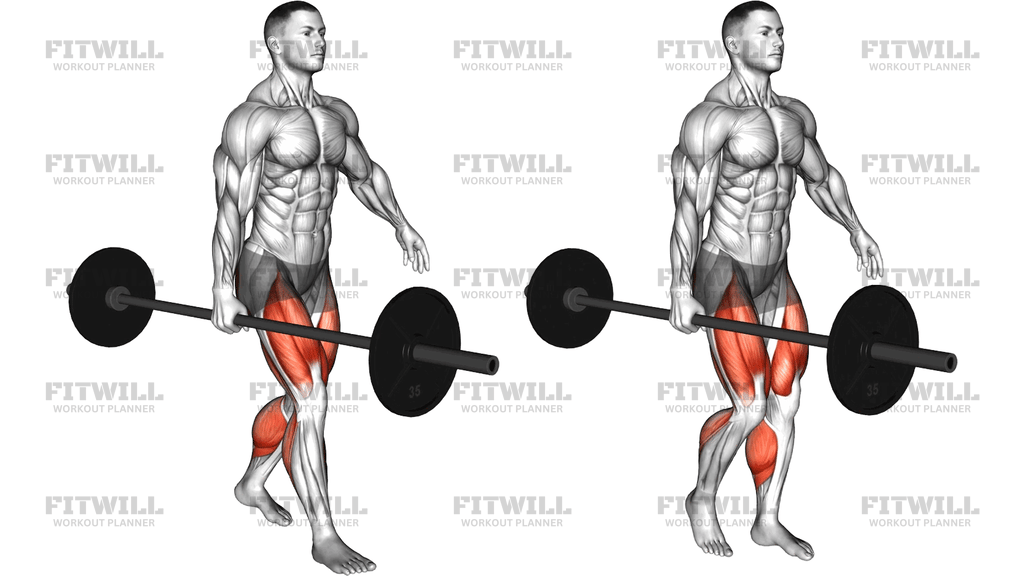
Barbell Elevated Heel Squat
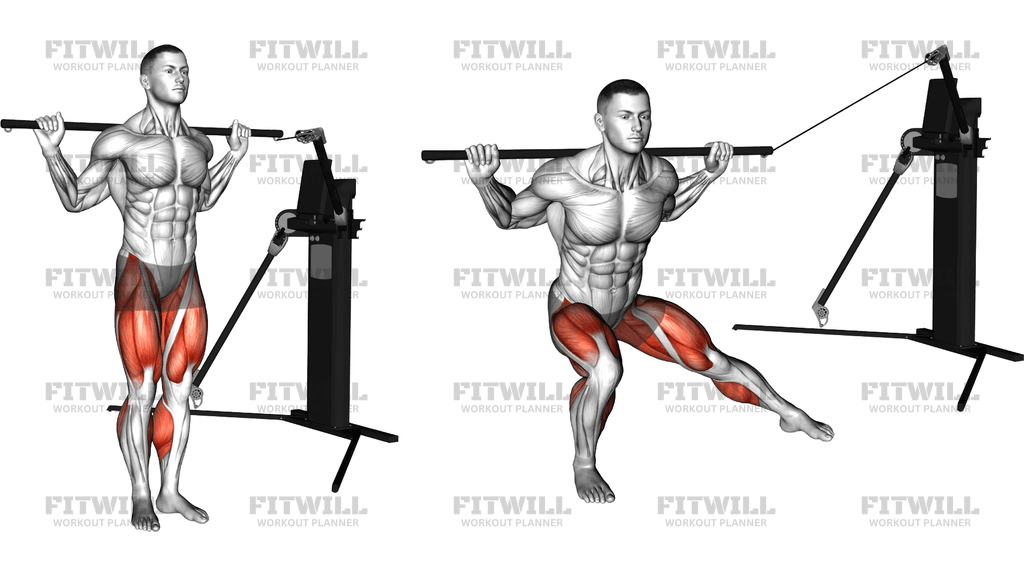
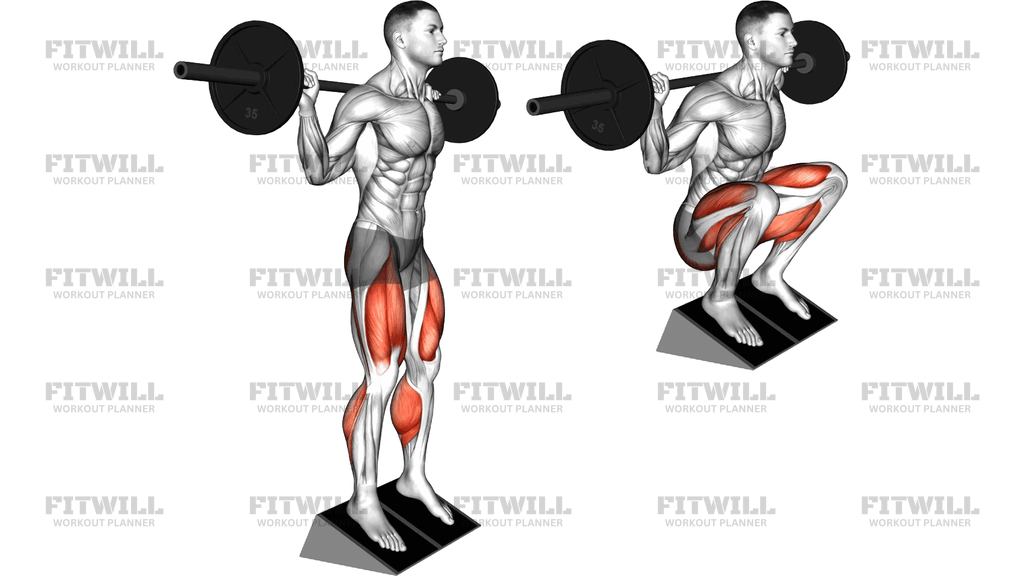
Barbell Elevated Heel Squat is a barbell back-squat variation performed with the heels raised on a wedge, small plates, or another stable incline. Elevating the heels changes the squat angle so the knees can travel farther forward and the torso can stay a little more upright, which usually makes the movement feel more quad-dominant and easier to keep balanced through the bottom position.
This version is useful when you want a squat pattern that emphasizes the front of the thighs while still training the glutes, adductors, and trunk. It can also be a practical option for lifters who struggle to keep their heels down in a regular squat because of ankle mobility limits, as long as the heel support is stable and the stance stays controlled.
The setup matters more here than in many other squat variations. Place the heels evenly on the elevated surface, stand with about shoulder-width feet, and position the bar across the upper back with the chest tall and the ribs stacked over the pelvis. A secure upper-back brace helps the bar stay centered while the knees and hips move together instead of collapsing forward or drifting to one side.
On the way down, send the hips back only as far as needed while letting the knees track forward over the toes and slightly outward. Keep the full foot rooted on the platform, lower under control until the thighs reach a comfortable depth, then drive back up by pressing through the midfoot and heels while keeping the chest from folding. The goal is a smooth squat arc, not an exaggerated forward lean or a bounce off the bottom.
Barbell Elevated Heel Squat fits well in hypertrophy blocks, accessory work after a main squat lift, or as a technique-focused lower-body drill when you want more quad loading without switching to a machine. Use a load that lets you stay upright, keep the knees tracking cleanly, and repeat the same path every rep. If the heels wobble, the knees cave hard, or the bar shifts on the back, the load or stance is too aggressive for the current setup.
[ Workout Log & Planner ]
Put your next workout in Fitwill
Keep your plan and training log ready when you are.


Instructions
- Place both heels on a stable wedge or small plates, stand shoulder-width apart, and rest the barbell across your upper back with your hands just outside shoulder width.
- Unrack the bar, take one or two small steps back, and set your feet so the heels stay fully supported and the toes point slightly out.
- Brace your midsection, lift your chest, and keep your upper back tight so the bar stays centered over the middle of your feet.
- Sit down between your thighs by bending the knees and hips together, letting the knees travel forward and slightly out over the toes.
- Lower until your thighs reach a depth you can control without the heels lifting or the lower back rounding.
- Pause briefly at the bottom if you can stay tight, then drive straight up by pressing through the midfoot and heels on the raised surface.
- Keep the bar path over the middle of the foot as you rise, and avoid letting the torso collapse forward on the way up.
- Exhale as you stand tall, then reset your brace before the next repetition.
- Walk the bar back into the rack only after the set is finished and the feet are stable.
Tips & Tricks
- Keep the heel platform low and even; if one heel sits higher than the other, the bar can drift and the knees will track unevenly.
- A slightly narrower stance often works better here than a wide powerlifting squat because the elevated heel already opens the knee angle.
- Let the knees travel forward, but keep them pointing in the same direction as the toes instead of caving inward at the bottom.
- If your torso folds hard, reduce the load or shorten the depth until you can stay tall through the whole rep.
- The bar should stay fixed on the upper back; if it rolls, your upper-back brace is soft or your grip is loose.
- Use controlled descents of about two to three seconds so the quads stay loaded instead of bouncing out of the bottom.
- Flat, stable shoes or bare feet on a solid wedge usually feel better than soft running shoes for this variation.
- Stop the set when the heels start to shift or the knees lose their forward track, because that is usually the first sign the setup has broken down.
Frequently Asked Questions
What does Barbell Elevated Heel Squat work most?
It mainly targets the quads, with the glutes, adductors, and trunk helping to control the squat.
Why are the heels raised in Barbell Elevated Heel Squat?
The elevated heels let the knees travel forward more easily and usually make it simpler to stay upright in the bottom position.
Should my feet be shoulder-width or wider?
Shoulder-width with a slight toe-out is a good starting point. A very wide stance usually reduces the quad emphasis this variation is meant to create.
How deep should I go in Barbell Elevated Heel Squat?
Go as deep as you can while keeping the heels planted, the knees tracking cleanly, and the lower back from rounding.
Is Barbell Elevated Heel Squat good for beginners?
Yes, if the load is light and the heel support is stable. It can actually feel easier to balance than a flat-foot squat for some lifters.
What if my heels still want to lift?
Use a lower heel wedge, reduce the depth, or lower the load. If the heels keep lifting, the squat is too demanding for the current setup.
Should the bar be high on the traps or lower on the back?
This version is shown as a back squat, so the bar should sit securely across the upper back. Keep the grip tight enough that the bar does not roll.
What is the main mistake to avoid in this squat?
Letting the torso collapse forward while the heels stay elevated. That usually turns the exercise into a balance fight instead of a controlled quad-focused squat.