Cable Seated Pullover
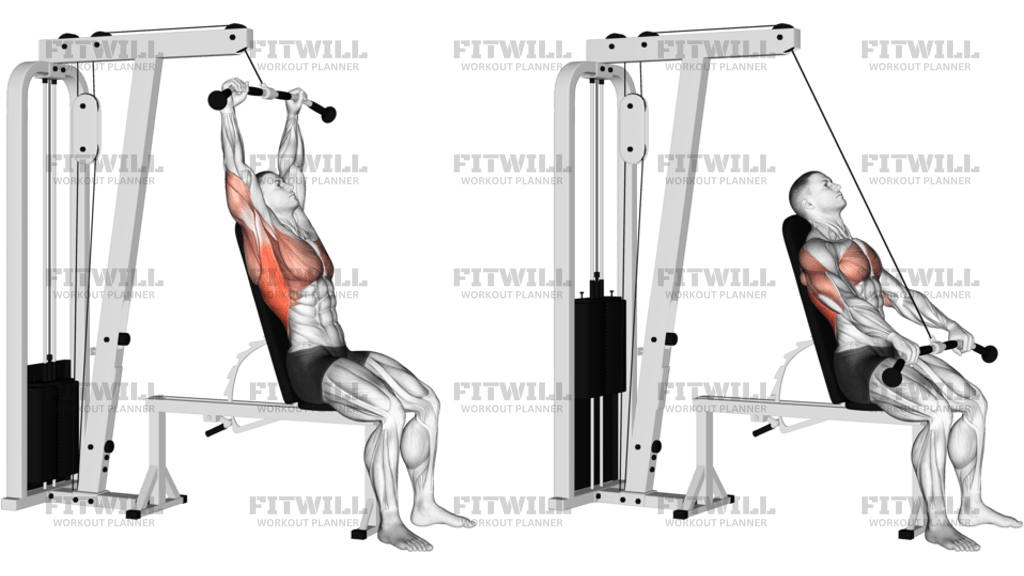
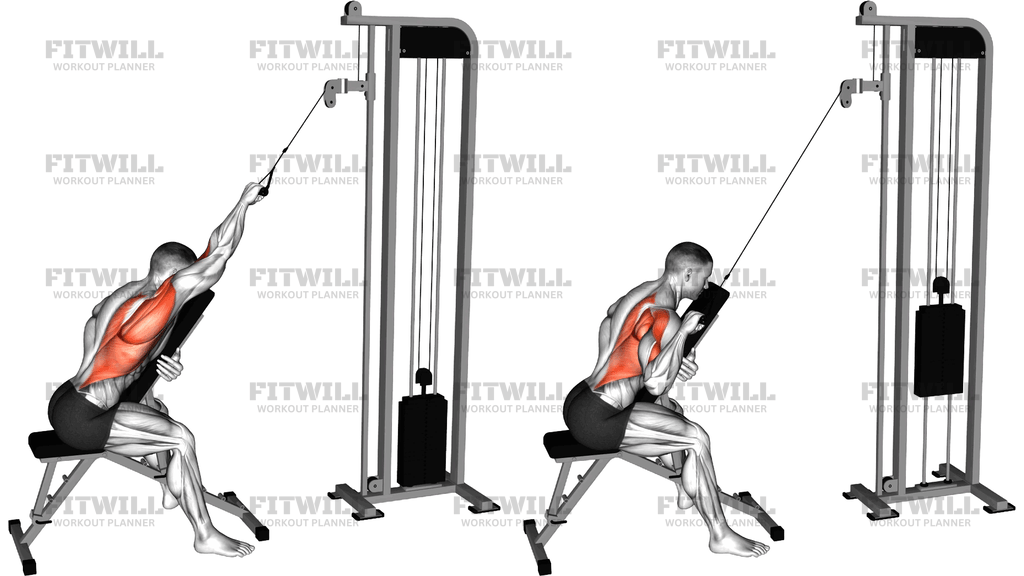
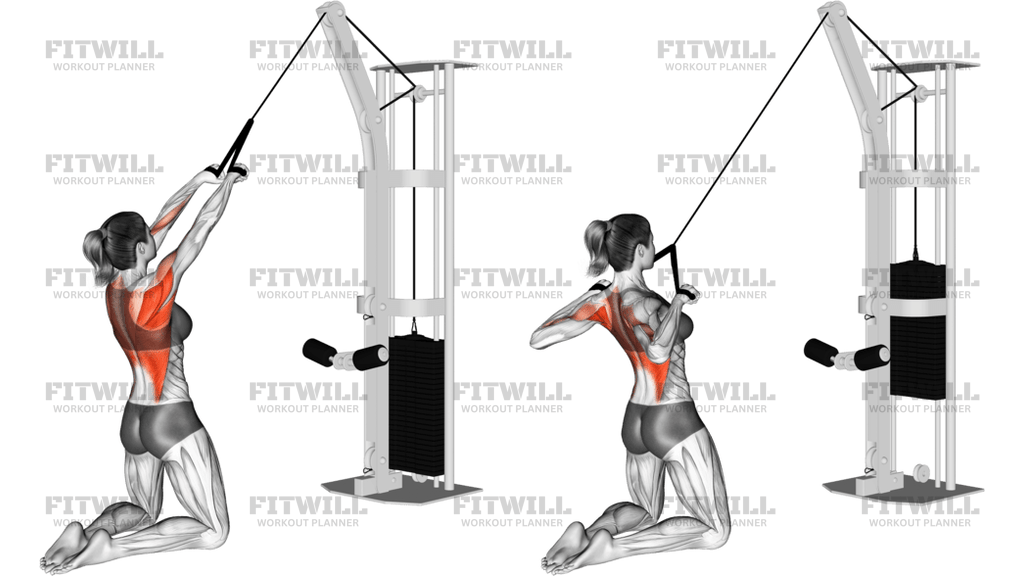
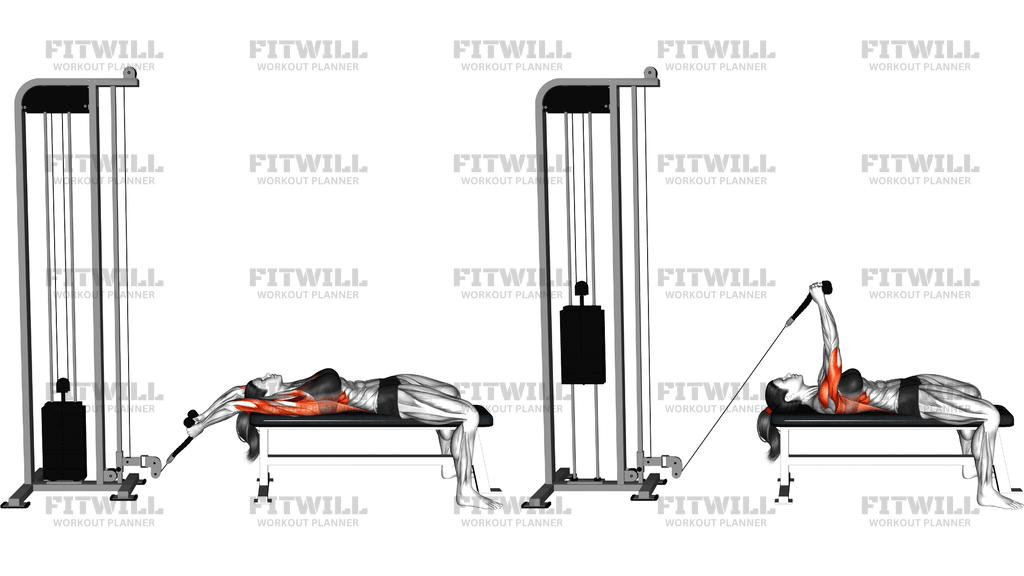
Cable Seated Pullover is a seated cable exercise that trains shoulder extension with the torso stabilized against a bench or pad. The setup matters because the movement is meant to come from the shoulders and upper back, not from leaning, swinging, or turning the rep into a row. When the seat, handle height, and body angle are correct, the cable stays loaded through a smooth arc and the lats can do the work without the lower back taking over.
This version of the pullover is especially useful when you want a back-focused accessory that keeps the body in one position and makes the path easy to repeat. The main work is usually felt through the lats and the area around the ribs and armpits, with the triceps, rear shoulders, and upper-back stabilizers helping to keep the arms organized. Because the arms stay long or only slightly bent, the exercise teaches you to keep tension through the shoulder joint rather than relying on elbow flexion.
A good setup starts with the bench and pulley line. Sit tall with your back supported, feet flat, and the handle positioned so you can reach overhead without losing your rib position. From there, brace lightly, keep the chest from flaring, and start with the cable already under tension. That makes the first inch of the rep deliberate and prevents the stack from jerking your shoulders forward.
During each rep, draw the handle in a controlled arc from overhead down toward the upper thighs or hip crease. The elbows should stay softly bent but mostly fixed, and the shoulders should travel through extension while the torso stays still. If you have to rock back to finish the rep, the load is too heavy or the seat angle is off. The goal is a clean pull, a brief squeeze near the bottom, and a slow return that keeps the cable engaged the whole way back up.
Cable Seated Pullover is a practical choice for back training when you want a strict movement that reinforces shoulder control, lat tension, and stable posture. It fits well as an accessory after heavier pulls, or as a lower-fatigue option when you want to target the back without loading the spine much. Keep the range pain-free, avoid shrugging the shoulders toward the ears, and choose a load that lets you repeat the same path on every rep.
[ Workout Log & Planner ]
Put your next workout in Fitwill
Keep your plan and training log ready when you are.


Instructions
- Adjust the seat or bench so you can sit with your back supported and reach the high pulley handle overhead without shrugging.
- Plant both feet flat, sit tall, and set your ribcage over your pelvis before you grab the handle.
- Hold the straight bar or handle with a shoulder-width grip and keep a soft bend in the elbows.
- Start with the cable taut, arms overhead, shoulders down, and the torso still against the pad.
- Exhale and pull the handle in a smooth arc toward your upper thighs or hip crease.
- Keep the elbow angle nearly fixed so the shoulders, not the elbows, drive the motion.
- Pause briefly at the bottom while you squeeze the lats and keep the shoulders away from your ears.
- Inhale and return the handle overhead under control until the lats are stretched but the stack never slams.
- Repeat for the planned reps without leaning back, swinging, or turning the movement into a row.
Tips & Tricks
- If the handle drifts into a row path, lower the load and think about moving the upper arms down, not pulling with the hands.
- Keep the elbows only slightly bent; too much elbow flexion turns the exercise into a triceps-assisted press-down.
- Do not let the chest pop up to finish the rep. A hard rib flare usually means the weight is too heavy.
- The best bottom position is the one where you still feel the lats loaded. Stop short of any shoulder pinch or overstretch.
- Keep the shoulders depressed throughout the set so the traps do not take over near the top.
- Use a controlled 2-3 second return if you want more lat tension and less momentum.
- A neutral wrist helps keep the forearms and cable in line; avoid bending the wrists back while you pull.
- If your grip gives out before your back does, use a lighter handle or straps so the lats stay the limiting factor.
- The rep should feel like an arc from overhead to the thighs, not like a vertical press or a seated row.
Frequently Asked Questions
What muscles does Cable Seated Pullover work?
It mainly targets the lats, with help from the teres major, rear shoulders, triceps, and upper-back stabilizers.
How is this different from a lat pulldown?
A seated pullover keeps the elbows almost fixed and emphasizes shoulder extension, while a lat pulldown uses more elbow flexion and a more vertical pull.
Should my elbows stay locked out?
No. Keep a soft bend and hold that angle mostly steady so the shoulders do the work instead of the elbows.
Where should I feel the exercise?
You should feel it mostly along the sides of the back and under the armpits, not in the lower back or front of the shoulders.
Why is the bench or back support important?
The support keeps your torso from swinging, which makes the pullover stay on the lats instead of becoming a momentum exercise.
Can beginners do Cable Seated Pullover?
Yes. Start light, keep the range smooth, and stop the rep before the shoulders lose position or the ribcage starts to flare.
What is the most common mistake?
Leaning back and turning the exercise into a row or press-down is the most common error.
What can I use instead of this exercise?
A straight-arm cable pulldown or a dumbbell pullover are the closest substitutions if you want a similar lat-focused shoulder-extension pattern.