Resistance Band Rear Delt Row
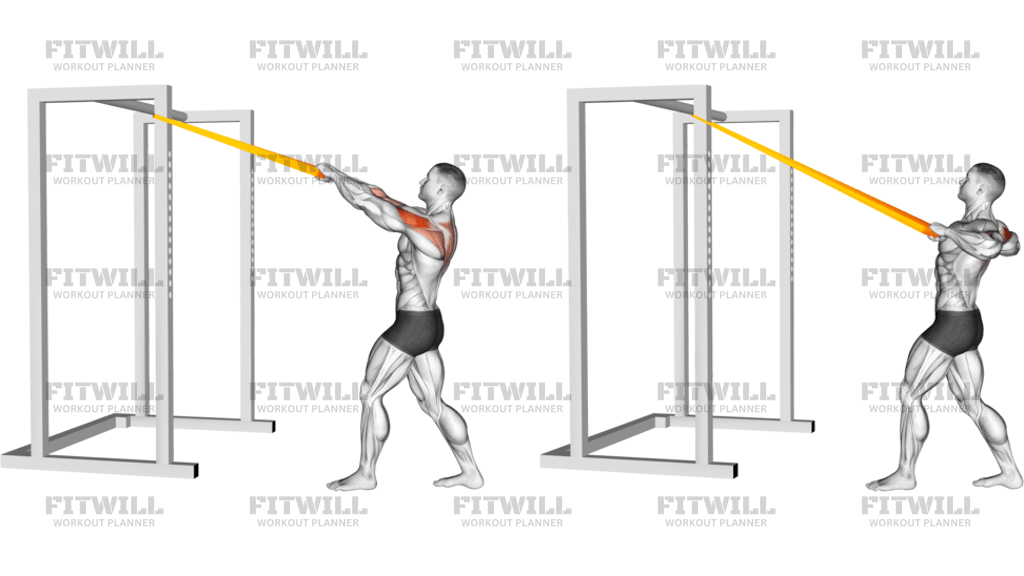
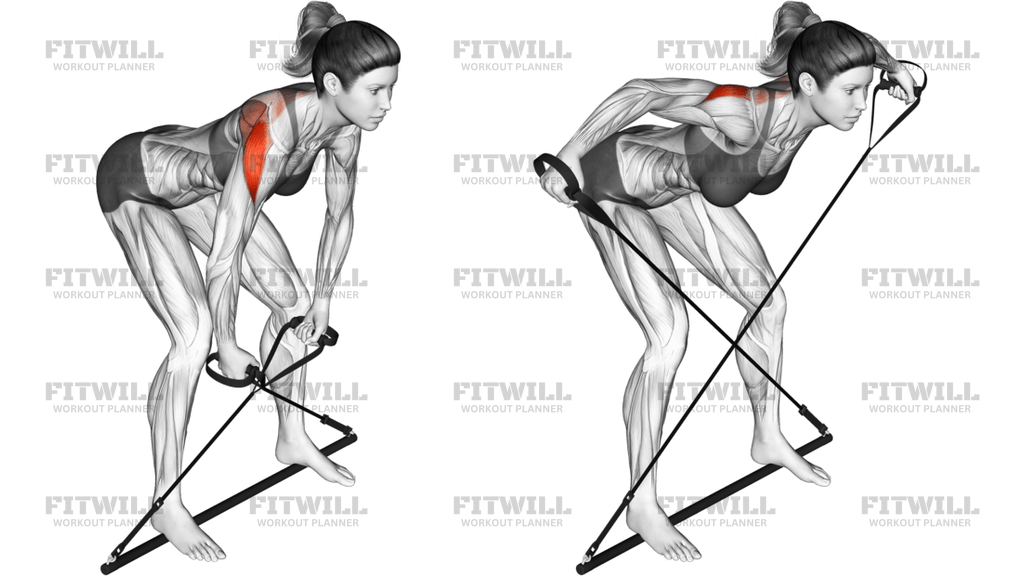
Resistance Band Rear Delt Row is a high-anchor band pulling movement that biases the rear delts, rhomboids, mid traps, and the small stabilizers that keep the shoulders organized as the arms travel back. The band starts in front of you and the rep finishes with the elbows driven out and back, so the exercise is less about brute pulling strength and more about clean shoulder control, posture, and a deliberate squeeze through the upper back.
The setup matters because the line of pull changes the training effect. With the band anchored above shoulder height, your arms can start long in front of the body and then follow a wide rowing path that keeps tension on the back of the shoulders instead of turning the motion into a curl or a sloppy shrug. A small split stance, a slight hip hinge, and a tall chest help you keep the ribs stacked while the shoulders do the work.
When the rep is done well, the elbows travel in a wide arc toward the upper chest or collarbone line, the wrists stay quiet, and the neck stays long. The finish should feel like the rear delts and upper back are closing the last few inches of the pull, not like the low back is helping you lean farther away from the anchor. A short pause at peak contraction is usually enough to make the band row honest without needing more load.
This is a useful accessory exercise for warmups, shoulder balance work, and higher-repetition strength or hypertrophy blocks, especially when you want rear-delt volume without heavy joint stress. It also works well for beginners because the resistance is easy to scale by stepping closer or farther from the anchor. Keep the return smooth, avoid shrugging, and stop the set when the band starts pulling you out of position instead of the target muscles doing the work.
Fitwill
Log Workouts, Track Progress & Build Strength.
Achieve more with Fitwill: explore over 9600 exercises with images and videos, access built-in and custom workouts, perfect for both gym and home sessions, and see real results.
Start your journey. Download today!




Instructions
- Loop the band over a stable high anchor, stand facing it, and step back until you feel light tension with your arms reaching forward.
- Take a split stance, soften both knees, and hinge slightly at the hips so your torso stays tall and stacked.
- Hold the band with both hands at about shoulder height, keeping the arms long but not locked and the wrists in line with the forearms.
- Set your shoulders down, brace your abs, and keep your neck relaxed before the first pull.
- Drive your elbows out and back in a wide arc, aiming the hands toward the upper chest or collarbone line.
- Finish the rep with the elbows behind the torso, the rear delts and upper back squeezed, and the chest still quiet.
- Pause briefly at the end range without shrugging or leaning back, then inhale as you return the hands forward under control.
- Repeat for the planned reps and step in carefully to release the band tension when you are done.
Tips & Tricks
- Keep the anchor high; if the band is too low, the movement shifts toward a standard row instead of a rear-delt bias.
- Let the elbows flare a little as you pull. Tucking them tight usually brings the lats and biceps into the set faster.
- Do not finish by shrugging. The shoulders should stay down while the upper arms close the rep.
- Use a band light enough that the return phase stays smooth instead of snapping your hands forward.
- Stop the pull when the upper arms are roughly in line with the torso; forcing extra range usually turns into trunk sway.
- Keep the wrists quiet and avoid curling the band. The hands should just transmit the pull, not lead it.
- A small hip hinge helps you hold tension on the rear delts without arching the lower back.
- If grip fatigue shows up first, shorten the set or choke up on the band so the rear shoulders stay the limiter.
Frequently Asked Questions
What muscles does the resistance band rear delt row work?
It primarily targets the rear delts, with strong help from the rhomboids, mid traps, and other upper-back stabilizers.
Why is the band anchored high for this row?
A high anchor keeps the pull angled down and forward, which helps bias the rear shoulder rather than turning the movement into a low row.
Should my elbows stay tucked or flare out?
Let the elbows flare moderately and travel wide. A tucked elbow position shifts the work toward the lats and biceps.
What should I feel at the top of the rep?
You should feel a squeeze across the back of the shoulders and between the shoulder blades, not a shrug in the neck.
Is this exercise good for beginners?
Yes. Start with a light band and a short, controlled range so you can learn the elbow path and shoulder position.
How is this different from a standard band row?
The rear delt row uses a wider elbow path and a higher finish, which puts more emphasis on the rear delts and upper back.
What are the most common mistakes with the band and anchor?
Using an anchor that is too low, leaning back to cheat the pull, and letting the shoulders shrug at the finish are the biggest ones.
How do I make the movement harder without changing the exercise?
Step farther from the anchor, slow the lowering phase, or add a brief squeeze at the end of each rep.