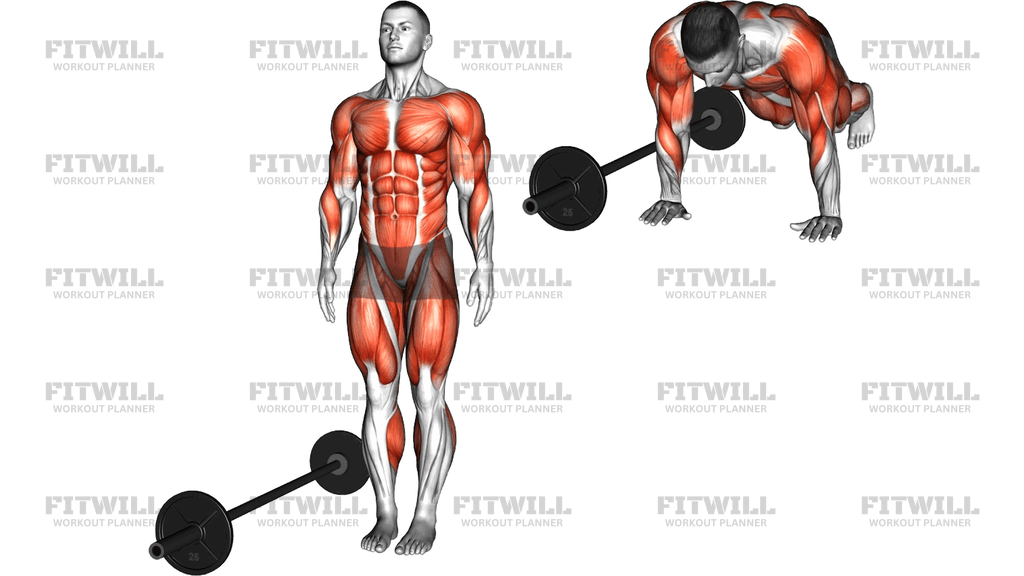
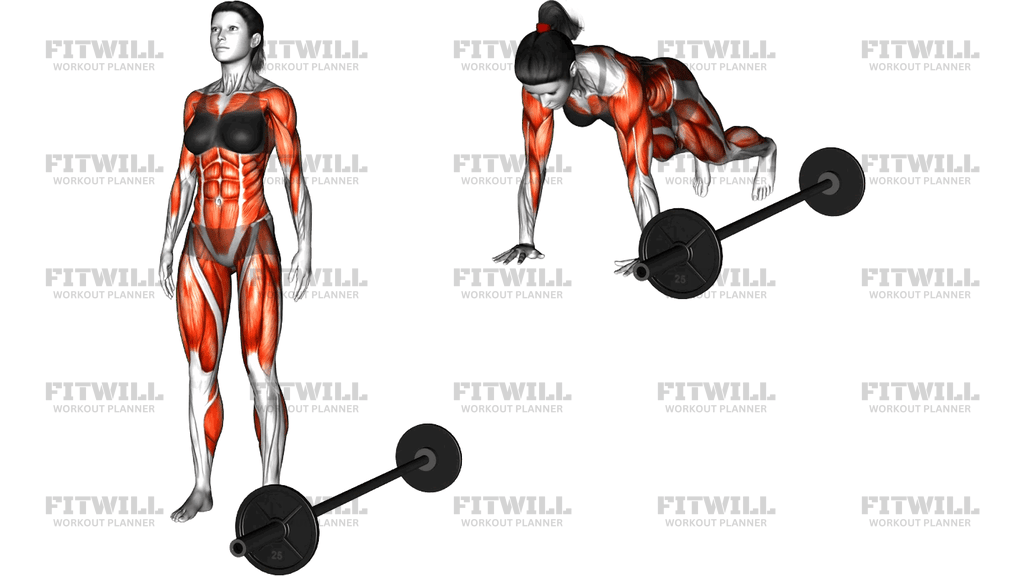
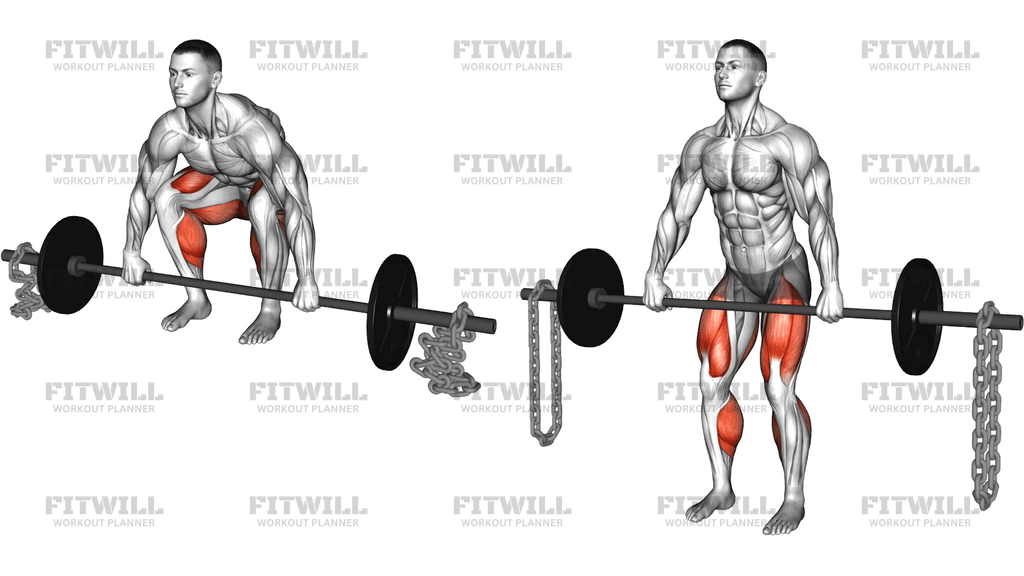
Barbell Deadlift Against Chains
Barbell Deadlift Against Chains is a conventional deadlift performed with chains hanging from the bar so the resistance increases as you stand up. The chains are meant to add load gradually, which makes the bottom of the lift feel more manageable and the top of the lift more demanding. That pattern is useful when you want to practice a strong hinge, a tight brace, and a forceful lockout without turning the start of every rep into a grind.
This variation trains the posterior chain, grip, trunk stiffness, and upper-back position while still asking the hips and legs to do the main work. Because the load changes during the rep, the setup matters more than it does on a plain deadlift. The bar should start over the midfoot, the chains should be arranged so a meaningful amount of links are still resting on the floor at the bottom, and your torso should be wedged into a balanced pulling position before the bar leaves the ground.
The best reps look deliberate from the floor: pull the slack out first, keep the lats tight so the bar stays close, then drive the floor away without letting the chest collapse or the hips shoot up early. As the bar rises and the chains leave the floor, the top of the lift becomes heavier, so finishing tall and controlled matters. Stand all the way up by squeezing the glutes, not by leaning back and overextending the low back.
Use this exercise when you want a deadlift that emphasizes acceleration through the mid-range and a strong finish at lockout. It can fit into a strength block, a power-focused lower-body session, or accessory work for lifters who already understand the conventional deadlift pattern. Make sure the chains are secured correctly and sized so they do not swing wildly, and lower the bar with the same control you use to lift it. If the bar drifts forward, the chain setup is too aggressive or your brace is losing position.
[ Workout Log & Planner ]
Put your next workout in Fitwill
Keep your plan and training log ready when you are.


Instructions
- Load the bar with chains arranged so some links rest on the floor at the bottom of each rep.
- Stand with your feet about hip-width apart and the bar over the middle of your feet.
- Hinge at the hips, bend your knees, and take a mixed or double-overhand grip just outside your legs.
- Set your shins close to the bar, pull your chest long, and lock your lats down before the pull.
- Take the slack out of the bar and brace hard so your torso is fixed before the plates leave the floor.
- Drive the floor away, keeping the bar close to your shins and thighs as the chains begin to rise.
- Stand tall at the top by squeezing your glutes and finishing with your ribs stacked over your pelvis.
- Lower the bar by hinging back first, then bending the knees once the bar passes them.
- Let the chains settle fully on the floor, reset your brace, and start the next rep from the same position.
Tips & Tricks
- Choose chain length so the bar is still controllable off the floor and the chains add most of their load near lockout.
- If the chains are already tight at the start, the bottom of the lift becomes a different exercise and can pull you out of position.
- Keep your lats engaged by trying to bend the bar toward your shins before the pull begins.
- Do not let the bar swing forward around the knees; keep it skimming the legs on the way up and down.
- Exhale through the sticking point near the top only after the bar is moving well and your torso is stable.
- Finish with the glutes, not with an exaggerated lean-back that jams the low back.
- Use chalk or straps if grip fails before your hinge does, but keep both hands evenly loaded on the bar.
- If the chains sway a lot, reset the setup or reduce speed, because swinging chains usually mean the path is too loose.
- Stop the set when your back rounds, your hips shoot up early, or the bar stops tracking close to the body.
Frequently Asked Questions
What does the chain setup change in this deadlift?
The lift gets lighter near the floor and heavier as you stand up, so the lockout and top half have to do more work.
What muscles work hardest in the barbell deadlift against chains?
The glutes, hamstrings, spinal erectors, upper back, and grip all work hard, with the chains making the top of the rep more demanding.
Should the chains touch the floor at the bottom of each rep?
Yes, usually some of the chain should rest on the floor at the bottom so the resistance increases as you stand up.
Can beginners use this variation?
Only if they already know the basic deadlift pattern and can keep the bar close, because the changing load can make sloppy reps worse.
Why would someone use chains instead of a standard barbell deadlift?
Chains are useful when you want to practice accelerating through the middle of the lift and finishing with a strong, controlled lockout.
What is the most common mistake with this exercise?
Letting the bar drift forward or leaning back hard at the top are the two biggest form breaks to watch for.
How much chain resistance should I use?
Use enough that the top of the rep is clearly harder, but not so much that you lose position off the floor.
Can I replace chains with bands?
Yes, bands can create a similar accommodating-resistance effect, but chains feel more consistent and less elastic.