Clap Push-Up
Clap Push-Up is a plyometric push-up variation built to train upper-body power, quick force production, and crisp body control. The goal is not just to press your body away from the floor, but to create enough speed to leave the ground, clap, and land in a stable plank without losing your line from head to heels.
Because the movement is explosive, the chest, triceps, and front shoulders have to work together while the core and glutes keep the torso from sagging or twisting. The floor version shown here demands more speed and more landing control than a standard push-up, so the setup matters a lot. If your hips drop, your shoulders collapse, or the hands land too far forward, the rep becomes sloppy and the power output drops fast.
Start in a strong high plank with the hands slightly wider than shoulder width, fingers spread, and feet set wide enough to help you stay balanced. Lower under control until the chest is close to the floor, then reverse the motion aggressively. The best reps feel like a powerful press from the ground rather than a slow grind, with the clap happening while the body stays tight and the shoulders stay organized.
At the top, the hands should leave the floor together, clap quickly, and then return under the shoulders to catch the body softly. Bend the elbows slightly on landing to absorb force, then reset the plank before the next rep. If the clap gets late, the jump gets low, or the landing gets noisy, the set is too long or too hard for your current power level.
Clap Push-Up is useful in plyometric blocks, athletic conditioning, or any session where you want to train explosive pressing without a barbell or machine. It is also a useful progression for lifters who already own a solid strict push-up and want a faster, more demanding upper-body bodyweight variation. Keep the reps crisp, stop before fatigue turns the movement into a fast but sloppy standard push-up, and choose a progression that lets every rep leave the floor cleanly.
[ Workout Log & Planner ]
Put your next workout in Fitwill
Keep your plan and training log ready when you are.


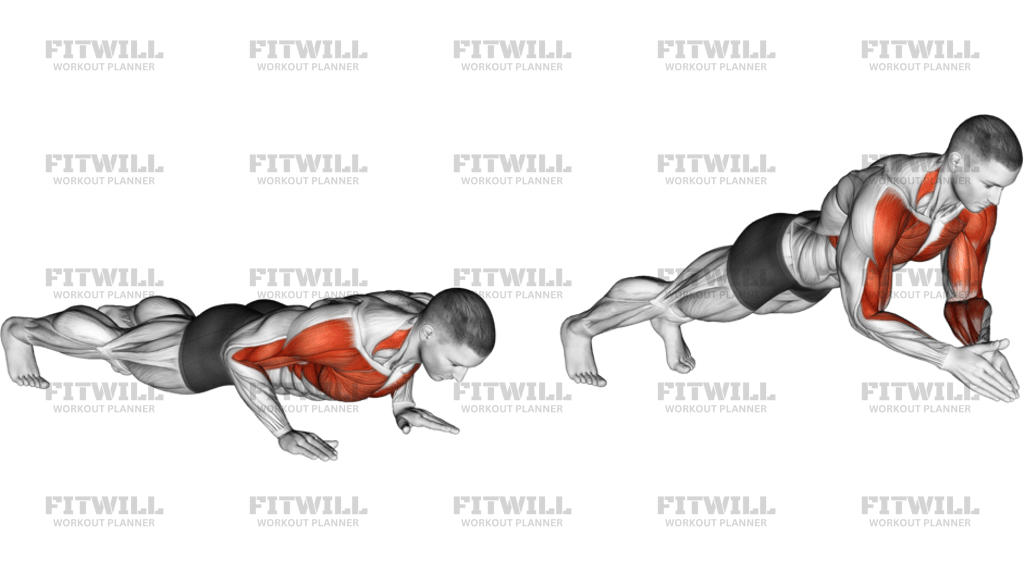
Instructions
- Set both hands on the floor slightly wider than shoulder width, spread your fingers, and extend your legs into a straight high plank with your feet a little wider than hip width.
- Lock in a straight line from your head to your heels, squeeze your glutes, and brace your midsection before the first rep.
- Lower your chest toward the floor with your elbows angled back and slightly out, keeping your shoulders level and your hips from sagging.
- Let your chest hover just above the floor, then reverse direction immediately without relaxing at the bottom.
- Drive hard through the palms and push the floor away fast enough for both hands to leave the ground.
- Bring your hands together and clap once in front of your chest while your torso stays tight and your legs stay extended.
- Land with your hands back under your shoulders, elbows softly bent, and your chest still facing the floor.
- Absorb the landing, re-establish the plank, and repeat for clean explosive reps before stepping back to finish the set.
Tips & Tricks
- Use a slightly wider foot stance if the clap makes your torso rotate or your landing feels unstable.
- Think about pushing the floor away, not just throwing your hands forward; the rep should rise straight up before the clap.
- Keep the clap quick and compact at chest height so your shoulders do not drift into an overextended reach.
- If your hands slap the floor hard on landing, bend the elbows sooner and soften the catch before the next rep.
- Lower the chest with control, but do not pause long at the bottom or the explosive rebound will disappear.
- Stop the set as soon as the hands stop leaving the floor cleanly; a half-height clap is usually a fatigue signal.
- Keep the head in line with the spine and avoid looking far forward, which can break the plank and overload the neck.
- Use an elevated surface such as a bench or box if you cannot get enough air time for a clean clap from the floor.
Frequently Asked Questions
What muscles does Clap Push-Up work most?
The main work comes from the chest, triceps, and front shoulders, while the core and glutes keep the body rigid during the explosive push and landing.
Is Clap Push-Up harder than a regular push-up?
Yes. You need enough pressing strength to leave the floor and enough control to land softly, so it is much more demanding than a standard push-up.
How wide should my hands and feet be?
Place your hands a little wider than shoulder width and your feet slightly wider than hip width if you need extra balance. Narrowing either position makes the clap harder to control.
Where should the clap happen?
The clap should happen in front of your chest while your body stays braced. If you clap too low, the rep usually turns into a rushed hand swing instead of a real plyometric press.
Can I do Clap Push-Up if I cannot get both hands off the floor yet?
Yes, but start with an incline version on a bench or box, or use an explosive push-up without the clap until you can create enough height from the floor.
What is the most common form mistake?
Letting the hips sag or the shoulders collapse on the landing is the biggest issue. Keep the plank tight and catch the body with bent elbows.
How many reps should I do?
Use low reps, usually 3-6 per set, because each rep should be fast and powerful. Stop before the jump height drops or the clap gets late.
What if my wrists or shoulders feel uncomfortable?
Reduce the demand by using an incline surface, widening the hand position slightly, or switching to an explosive push-up without the clap until the landing feels smooth.