Cable Lying Front Raise
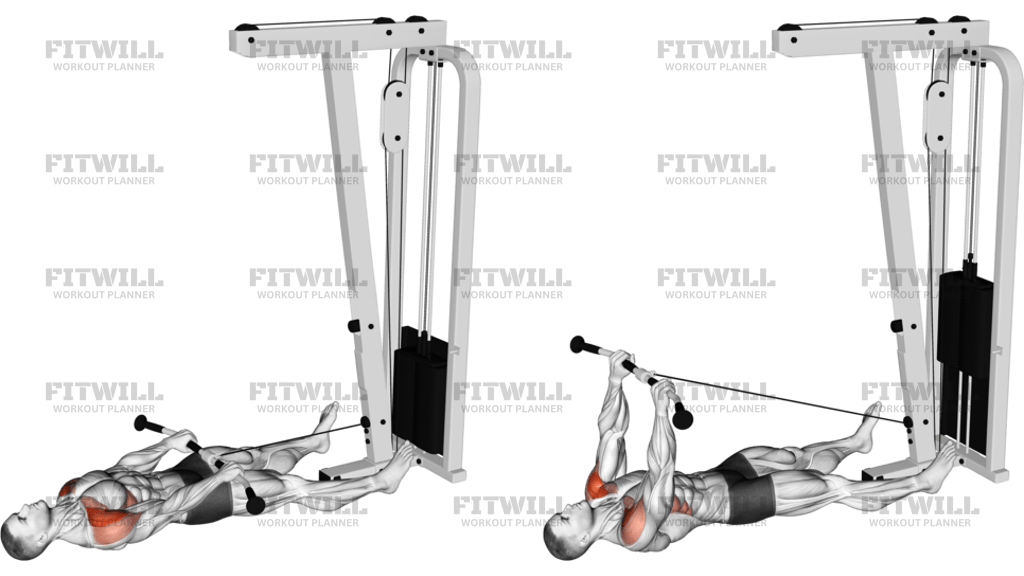
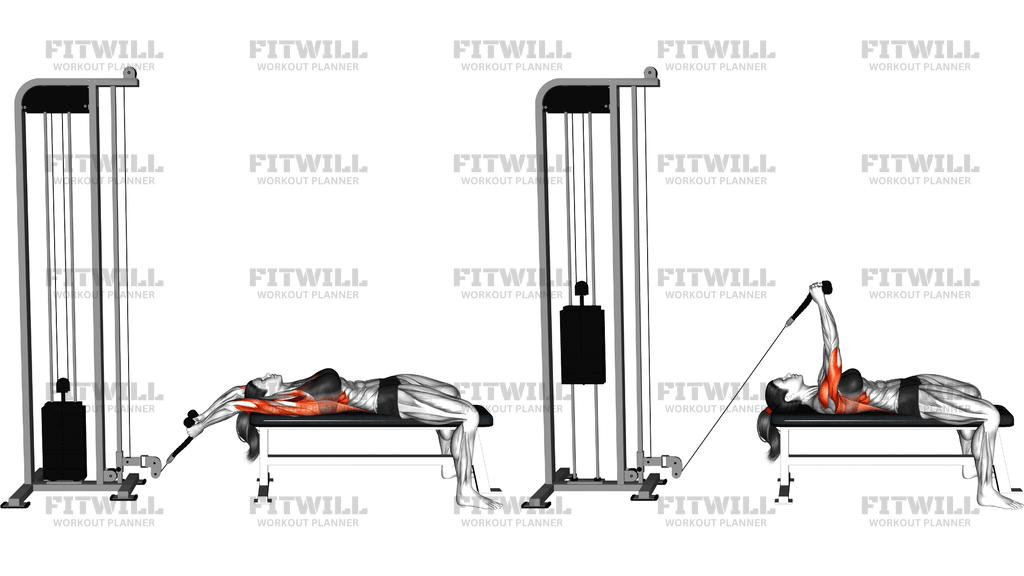
Cable Lying Front Raise is a supine shoulder raise that uses a low cable and a handle or short bar to load shoulder flexion from a fixed position. With your back on the floor and your feet braced, the cable gives the front of the shoulders a steady line of resistance that is harder to fake with body swing than a standing version. That makes it useful when you want to train the raise itself instead of turning the movement into a hip drive.
This exercise is built around the anterior deltoids, with the upper chest, serratus, and core helping keep the torso quiet while the arms move. Because you are lying down, the floor becomes part of the setup: it limits excess arching, helps you feel whether your ribs are flaring, and makes it easier to keep the shoulder path honest. If the starting position is sloppy, the cable will pull your arms out of line immediately, so the setup matters more here than in many other shoulder raises.
Perform it with a low pulley behind your feet, a secure grip on the attachment, and a controlled arc from chest level to a stacked position over the shoulders. The best repetitions feel smooth rather than explosive. Keep the elbows softly bent, let the wrists stay in line with the forearms, and raise only as far as you can keep the shoulders down and the ribs from popping up. A short pause near the top makes the front delt work harder without needing extra load.
Use Cable Lying Front Raise as an accessory for shoulder development, especially if you want a strict isolation movement that is easy to load lightly and progress gradually. It also works well when standing front raises bother your lower back or invite momentum. Keep the resistance conservative, because the bottom position can feel abrupt if the stack pulls your arms backward. The goal is a controlled shoulder raise with a clean return, not a full-body heave.
[ Workout Log & Planner ]
Put your next workout in Fitwill
Keep your plan and training log ready when you are.


Instructions
- Set the pulley at the lowest point and attach a straight bar or short handle, then lie flat on your back with your head away from the stack and your feet braced against the machine base.
- Grip the attachment with both hands, palms facing down, and start with the bar resting near your lower chest or upper abdomen with a slight bend in the elbows.
- Flatten your ribs, tuck your chin slightly, and brace your midsection so your lower back stays quiet on the floor.
- Pull the shoulder blades gently down and back just enough to keep the shoulders from rolling forward at the bottom.
- Exhale and raise the bar in a smooth arc toward the ceiling and slightly toward the line above your shoulders.
- Keep the wrists stacked over the elbows and let the elbows stay softly bent instead of locking out.
- Lift until your arms are vertical or just short of lockout, stopping as soon as the front of the shoulders is fully loaded without losing position.
- Lower the bar slowly back to the start until the cable is under control again and the next rep can begin without a bounce.
- Repeat for the planned reps, resetting the brace every time instead of letting the cable jerk your arms out of line.
Tips & Tricks
- Choose a lighter stack than you would for a standing front raise; the floor removes momentum, so the front delts do the work sooner.
- If the bar starts pulling your shoulders forward at the bottom, shorten the range slightly instead of yanking the cable into position.
- Keep the elbows soft throughout the rep; locked elbows usually turn the raise into a levered swing and stress the front of the shoulder.
- Press your feet into the machine base or floor so the cable does not drag your torso toward the stack.
- A small pause near the top is useful here because it removes the last bit of swing and makes the contraction obvious.
- Do not let your lower back arch to help the bar rise; if your ribs flare, the load is too heavy.
- Use a slow lowering phase so the cable stays tensioned and the next rep starts under control.
- If you feel the movement mostly in the biceps or neck, narrow the grip adjustment and reduce the load until the shoulders are doing the lift.
Frequently Asked Questions
What does Cable Lying Front Raise train most?
It mainly trains the front of the shoulders, with the upper chest and core helping stabilize the body.
Why perform the raise while lying on the floor?
The floor limits body swing and back extension, so the cable has to challenge the shoulders instead of your hips or lower back.
Where should the cable and attachment start?
Use the lowest pulley position and a straight bar or short handle, then start with the bar near the lower chest or upper abdomen.
Should my elbows stay straight during the lift?
No. Keep a slight bend in the elbows so the shoulders control the raise and the joints stay in a safer, stronger line.
How high should I raise the bar?
Raise it until your arms are vertical or just short of lockout, then stop before your ribs or shoulders lose position.
Can beginners use this exercise?
Yes, as long as they use light resistance and keep the movement slow enough to control the cable.
What is the most common form mistake?
The most common mistake is arching the lower back or using a bounce from the cable to finish the rep.
Is this a good accessory after pressing work?
Yes. It fits well after presses or other shoulder work when you want a strict front-delt isolation movement with low momentum.