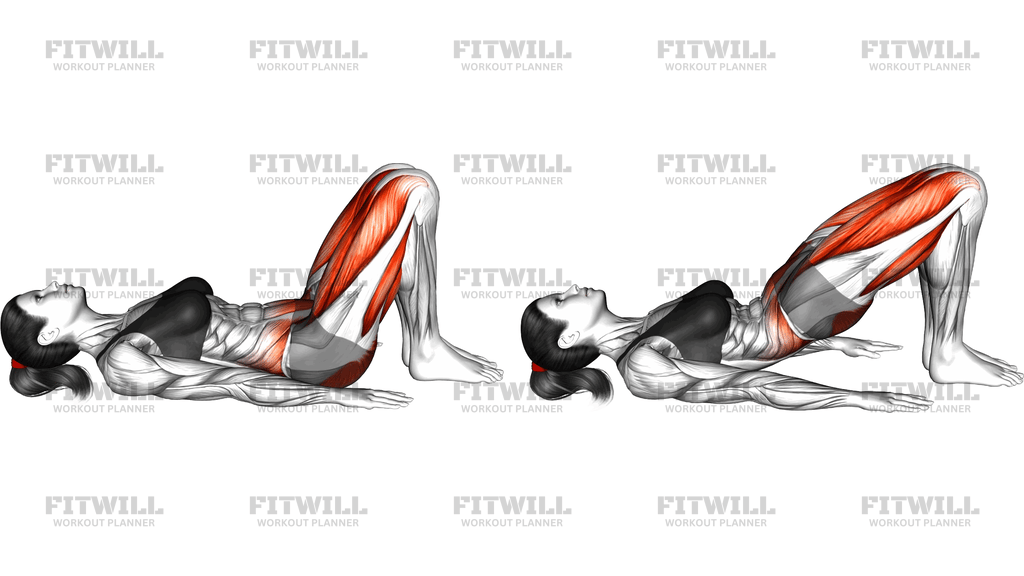
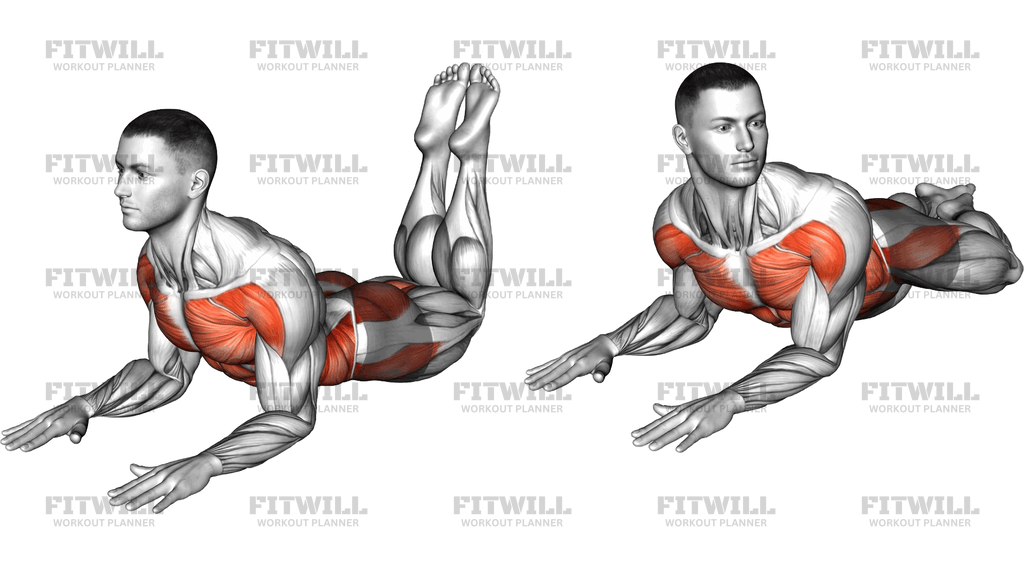
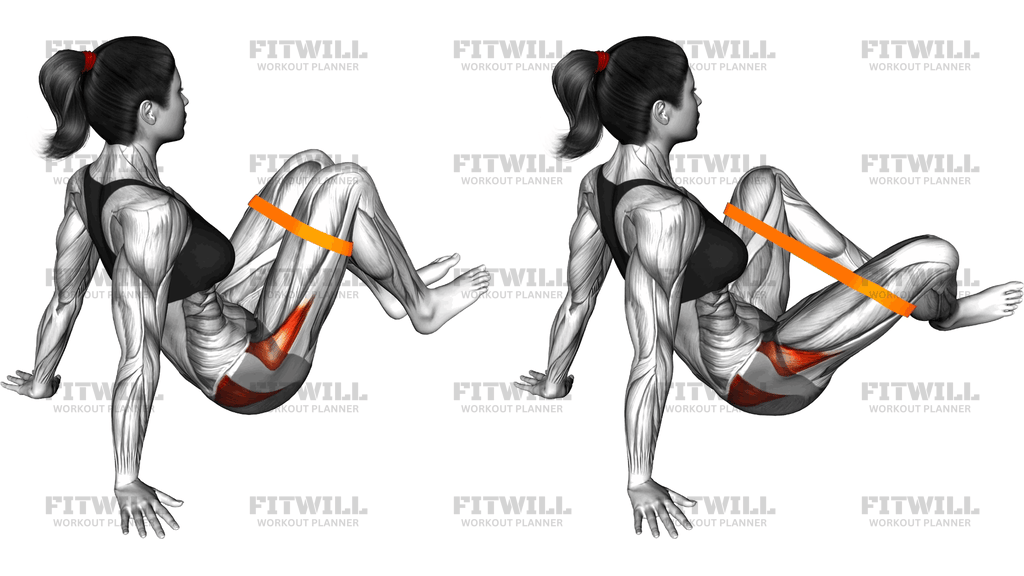
Intermediate Hip Flexor And Quad Stretch
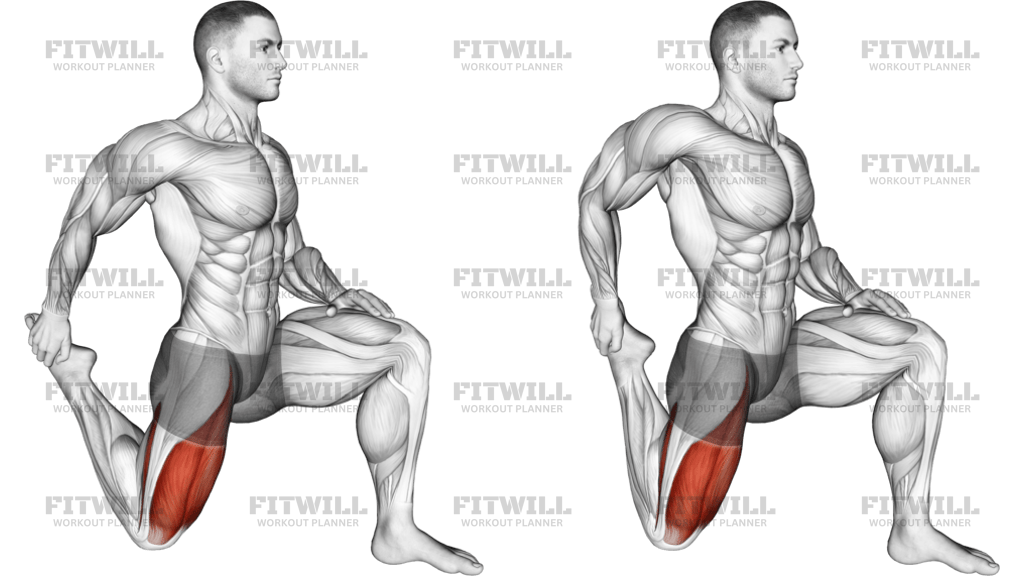
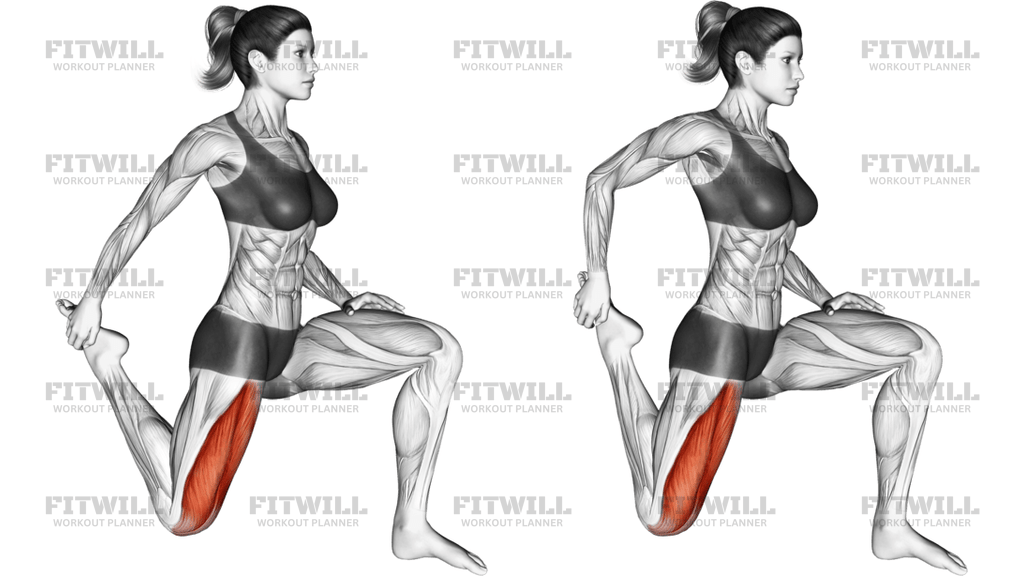
Intermediate Hip Flexor And Quad Stretch is a prone front-thigh stretch for the leg that is bent behind you. It uses an exercise mat and bodyweight to lengthen the quadriceps, especially the rectus femoris, while also opening the front of the hip when you keep the pelvis controlled. The setup matters because this movement can quickly turn into a low-back arch if the ribs flare or the hips twist.
The goal is not to yank the heel closer to the glute. Instead, you create a clean line of tension from the knee through the hip by keeping the torso quiet, the opposite leg long, and the working-side hip square to the floor. That makes the stretch feel more specific in the front of the thigh and less like a random pull through the knee or lumbar spine.
This is called an intermediate stretch because the effective range comes from position and control, not from forcing more bend in the knee. A small pelvic tuck and a gentle glute squeeze on the bent side usually deepen the front-of-hip sensation far more than hard pulling. If the knee flares outward or the low back takes over, the stretch stops being useful and becomes harder to control.
Use it after squats, lunges, cycling, sprint work, or any session that leaves the quads and hip flexors tight. It also fits well in a warm-up if you keep the hold short and active. Stay in a pain-free range, breathe out as you settle, and release slowly so the knee and hip stay organized from rep to rep.
Fitwill
Log Workouts, Track Progress & Build Strength.
Achieve more with Fitwill: explore over 9600 exercises with images and videos, access built-in and custom workouts, perfect for both gym and home sessions, and see real results.
Start your journey. Download today!




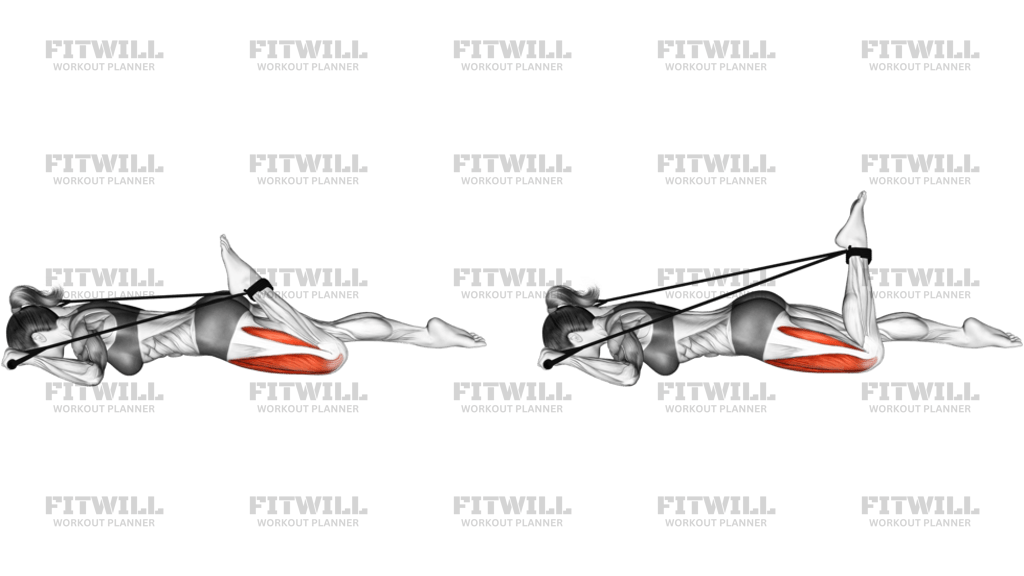
Instructions
- Lie face down on the mat with both legs long, then bend the working-side knee so the heel travels toward the glute.
- Keep the opposite leg straight and press both hip points toward the floor so the pelvis stays square.
- Reach back and hold the foot or ankle on the working side, or use the hand position shown in the setup, without twisting the torso.
- Lightly brace the abs and tuck the pelvis so the lower back stays quiet before you deepen the stretch.
- Squeeze the glute on the bent-leg side to draw the hip into extension and increase the front-of-thigh stretch.
- Keep the working knee pointing down instead of flaring outward as you settle into the end range.
- Breathe out slowly and let the heel come a little closer only if the stretch stays in the quad and front of the hip.
- Hold the position for the prescribed time, then release the foot or reduce the bend slowly before switching sides.
Tips & Tricks
- If your low back arches first, shorten the reach and re-tuck the pelvis before pulling harder.
- A glute squeeze on the bent side usually deepens the stretch more safely than a harder grip on the foot.
- Keep the working knee tracking straight down; letting it drift wide shifts tension away from the rectus femoris.
- The strongest sensation should be in the front of the thigh and front of the hip, not in the kneecap.
- Use a slow exhale to relax the hip flexors; holding your breath often makes the ribs flare and the lumbar spine extend.
- Keep the opposite leg long and heavy on the mat so the pelvis does not rotate toward the bent knee.
- If the quad cramps, ease off slightly, breathe, and rebuild the stretch from a smaller range.
- Do not force through knee pain, sharp hip pinching, or any pulling sensation that feels like a joint rather than a muscle stretch.
Frequently Asked Questions
What does Intermediate Hip Flexor And Quad Stretch target most?
It mainly targets the quadriceps on the bent leg, especially the rectus femoris, with added lengthening through the front of the hip.
Where should I feel the stretch on the mat setup?
You should feel it along the front of the thigh and sometimes high in the front of the hip, not in the low back or knee joint.
Why does this stretch become less effective when my ribs lift?
When the ribs flare, the low back starts taking over and the hip stops staying in a true stretch position.
Do I need to pull the foot hard to make it work?
No. A small glute squeeze and a controlled pelvic tuck usually create a better stretch than forcing the heel harder.
Can I let the bent knee flare out to get more range?
It is better to keep the knee pointed down. Flaring the knee changes the line of tension and reduces the quad emphasis.
Is this okay for beginners?
Yes, as long as the range stays gentle and the pelvis stays flat against the mat.
When is the best time to use this stretch?
It works well after lower-body training, running, cycling, or any session that leaves the quads and hip flexors tight.
What should I do if the front of my knee hurts?
Back off the bend, keep the knee closer to the floor, and stop if the discomfort feels sharp or joint-like.