Feet And Ankles Stretch
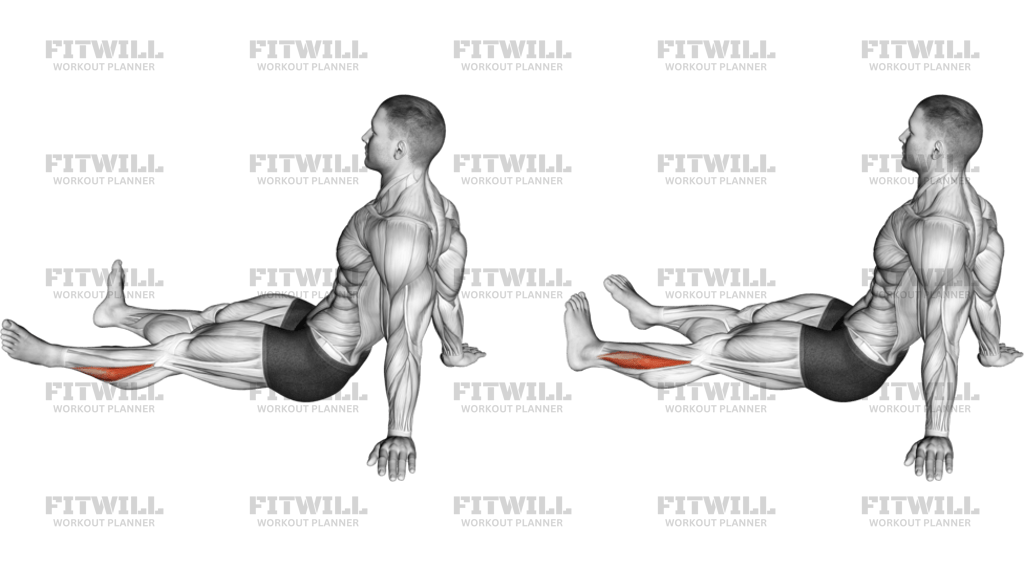
Feet And Ankles Stretch is a floor-based ankle mobility drill performed from a long-sit position. You sit on the mat with your hands braced behind you, legs extended in front, and the feet moving through a controlled point-and-flex pattern. The exercise is simple, but the setup matters because the torso support and leg position let you isolate the ankles instead of turning it into a sloppy seated stretch.
This movement emphasizes the calves, Achilles area, ankles, and the small muscles around the feet. It is useful when you want to restore foot and ankle motion after sitting, prepare for squats or lower-body training, or keep the lower leg moving on days when loading is not the priority. The long lever from hip to toes also makes you notice differences side to side, which is helpful if one ankle feels stiffer or weaker than the other.
Feet And Ankles Stretch works best when the spine stays tall enough to keep the chest open and the pelvis from collapsing backward. With the hands supporting you behind the hips, you can keep the knees straight, reach through the heels, and move the toes deliberately toward the shins and then away again. That controlled end-range motion is what creates the stretch through the calves and the front of the ankles, not speed or a huge bounce.
Because the exercise is done with body weight on the floor, it is easy to scale by changing the angle of the torso, the amount of pressure through the hands, or the size of the ankle motion. A smaller range is often enough if the calves cramp or the feet feel cramped, while a smoother, longer reach is better once the ankles warm up. The goal is not to force maximum range immediately; it is to make each rep look and feel clean.
Feet And Ankles Stretch is a good choice in warm-ups, recovery sessions, or between heavier lower-body sets when you want a low-fatigue way to keep the ankles active. It should feel like a controlled stretch and mobility drill, not a fast conditioning move. If you lose the support from your hands, let the knees bend, or start rocking the whole body to create motion, the stress moves away from the ankles and the value of the exercise drops.
Fitwill
Log Workouts, Track Progress & Build Strength.
Achieve more with Fitwill: explore over 9600 exercises with images and videos, access built-in and custom workouts, perfect for both gym and home sessions, and see real results.
Start your journey. Download today!




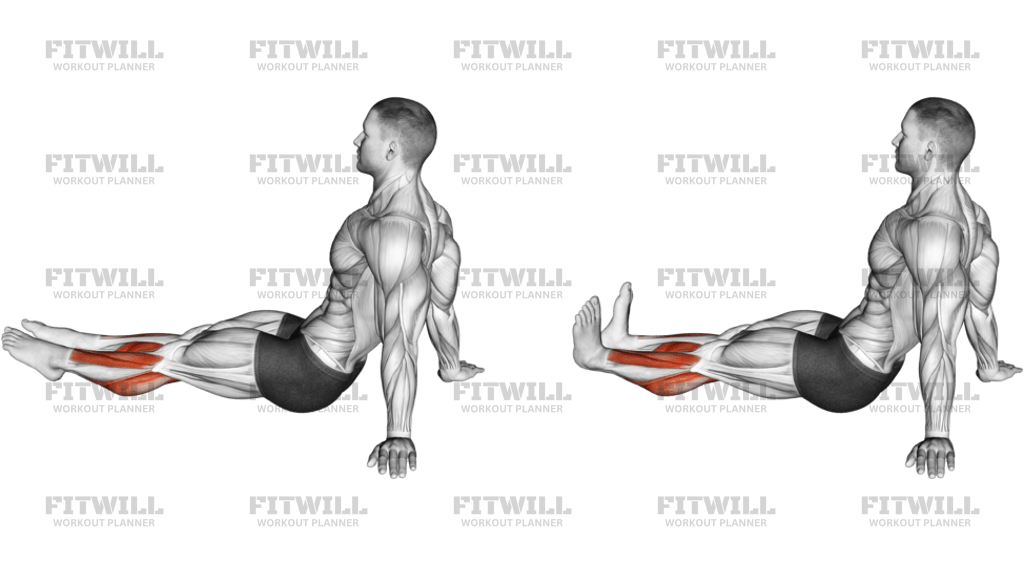
Instructions
- Sit on the floor in a long-sit position with both legs straight in front of you and your hands planted behind your hips for support.
- Keep your fingers pointing out to the sides or slightly behind you, and lift through the chest so your torso stays supported instead of slumping onto the floor.
- Square both thighs forward, keep the knees extended, and let the heels rest lightly on the mat with the toes relaxed.
- Pull your toes back toward your shins to create the ankle stretch through the calves and front of the lower leg.
- Press the feet away from you and point the toes to move through the opposite end of the range.
- Flow back and forth between flexing and pointing the feet without letting the hips rock or the knees bend.
- Keep the movement smooth and even on both ankles, using a smaller range if one side feels tighter or starts to cramp.
- Breathe steadily through the entire set and avoid holding your breath while you chase the end range.
- After the last rep, lower the feet back to neutral and reset before changing position or repeating.
Tips & Tricks
- Keep a light bend out of the elbows so your hands can support the torso without collapsing the chest backward.
- If your calves cramp, shorten the point-and-flex range and pause for a second in the neutral foot position.
- Drive the motion from the ankles, not from rocking the whole body or sliding the heels across the mat.
- Straight knees increase the calf stretch; if the hamstrings tug too hard, bend the knees slightly and keep the ankles moving.
- Use the floor contact under your palms to stay tall enough that the pelvis does not tuck under and steal the stretch.
- Move both feet together for a balanced warm-up, then test one side at a time if one ankle feels noticeably tighter.
- Do not force the toes hard toward the shins if the front of the ankle pinches; a smaller, smoother range works better.
- Keep the tempo even on the way into plantarflexion and dorsiflexion so the lower leg stays relaxed between reps.
Frequently Asked Questions
What muscles does Feet And Ankles Stretch work?
It mainly targets the calves and the ankle complex, especially when you pull the toes back toward the shins and hold the legs straight.
Why are my hands on the floor behind me in Feet And Ankles Stretch?
The hands behind you keep the torso supported so the movement stays focused on the ankles instead of turning into a balance drill.
Should my knees stay straight during Feet And Ankles Stretch?
Yes, straight knees help lengthen the calf muscles and make the ankle motion more noticeable. You can soften them slightly if the hamstrings or calves feel too tight.
What is the main mistake people make with this stretch?
Most people rock their torso or bend the knees and turn it into a whole-body movement. Keep the pelvis quiet and let the ankles do the work.
Can Feet And Ankles Stretch help before squats or running?
Yes, it is a useful warm-up drill before lower-body training, especially if your ankles feel stiff at the bottom of squats or during landing and push-off.
Is Feet And Ankles Stretch supposed to hurt?
No. You should feel a controlled stretch or mild effort in the calves and ankles, not a sharp pinch in the front of the ankle or a cramp in the foot.
Do I need to alternate one foot at a time?
Not necessarily. Moving both feet together is fine for a general mobility set, while alternating sides can help you notice asymmetries more clearly.
What should I do if my calves cramp during the set?
Reduce the range, slow the tempo, and spend a few reps in the neutral ankle position before going back into the stretch.