Feet And Ankles Rotation Stretch
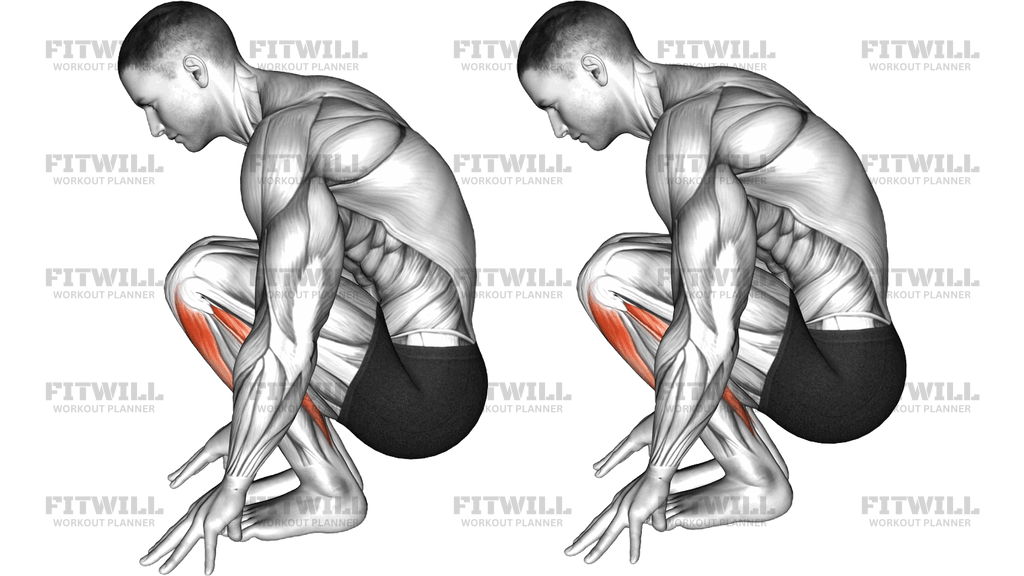
Feet and Ankles Rotation Stretch is a floor-based mobility drill for the ankles, feet, and lower calves. You sit on a mat with your hands behind you for support, keep the legs long, and rotate each ankle through slow circles so the foot can move without the knee or hip taking over. The exercise is simple, but the setup matters because it lets you isolate the ankle joint and see whether one side is stiffer, tighter, or less coordinated than the other.
It is especially useful before or after lower-body training, running, jumping, hiking, or long periods of sitting. The goal is not to force a huge circle. It is to move through dorsiflexion, plantarflexion, inversion, and eversion in a smooth, pain-free way while the calf stays relaxed enough to let the ankle glide. That makes it a good warmup drill when the ankles feel rusty and a useful downshift when the lower legs feel packed up after loading.
The seated support position helps you stay tall without bracing hard through the torso. With your hands behind your hips, you can keep the chest open, the shoulders relaxed, and the pelvis quiet while the foot does the work. If the hips start to sway or the knee starts to twist, the motion is no longer an ankle rotation stretch. Shrinking the circle and slowing the tempo usually fixes that fast.
Quality matters more than speed. Move one foot at a time, trace the same path on every rep, and reverse direction only after the first circle feels controlled. Breathe normally, pause briefly in the stiffest part of the arc, and stop short of any pinch or sharp pull. Use this exercise to find cleaner ankle motion, not to push through pain or force the calves to do more than they should.
[ Workout Log & Planner ]
Put your next workout in Fitwill
Keep your plan and training log ready when you are.


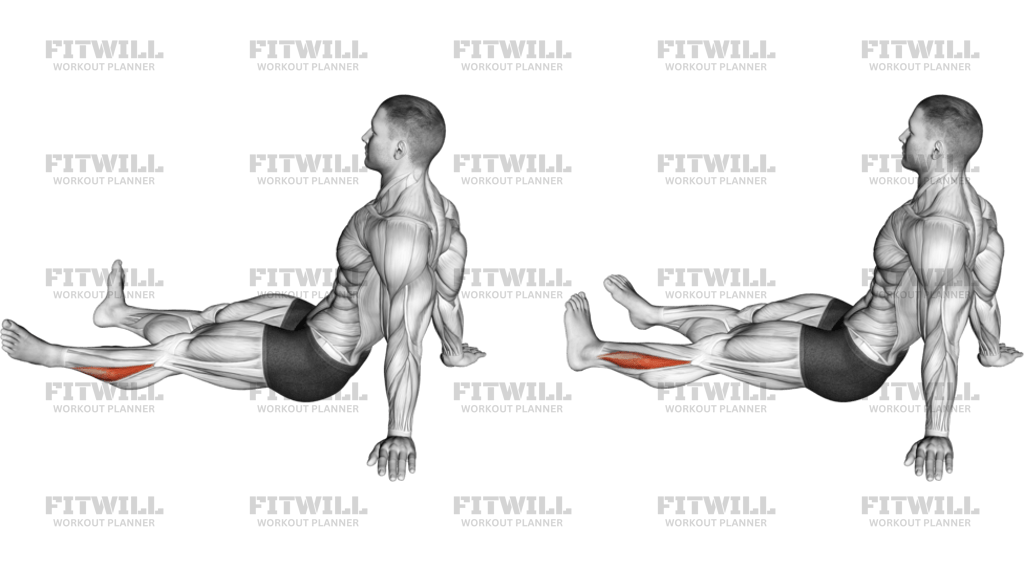
Instructions
- Sit on a mat with your legs extended in front of you and place your hands slightly behind your hips for support.
- Lift your chest, keep your shoulders down, and settle into a tall seated position without collapsing through the low back.
- Keep one knee pointed mostly upward while you slowly circle the foot from the ankle joint.
- Draw a small, smooth circle through dorsiflexion, plantarflexion, inversion, and eversion without swinging the whole leg.
- Keep the heel, toes, and knee quiet while the ankle traces the path.
- Reverse the circle after several controlled reps, then repeat in the opposite direction.
- Switch to the other foot and match the same tempo and range on both sides.
- Breathe steadily and finish with both feet relaxed on the floor or mat before repeating.
Tips & Tricks
- Keep the circle small if the ankle feels stiff; a smaller path is often cleaner than a bigger one.
- If the knee starts drifting, the motion is coming from the hip instead of the ankle.
- Use your hands behind you to stay supported so the torso can remain tall and relaxed.
- Move slowly enough that you can feel the foot pass through each part of the circle.
- Let the toes soften instead of gripping them; clawing the floor makes the ankle work harder than necessary.
- Stop short of any front-of-ankle pinch or sharp pull in the heel cord.
- Compare both sides and let the tighter ankle set the pace for the other side.
- Use this as a warmup before squats, lunges, running, or jumping when the ankles feel limited.
- If balance or position gets sloppy, reduce the range and reset before adding more reps.
Frequently Asked Questions
What does Feet and Ankles Rotation Stretch target most?
It mainly targets ankle mobility and the lower calf area that limits smooth foot rotation.
Do I need any equipment besides a mat?
No. A mat and a little floor space are enough, and your hands just support your body behind you.
What should actually move during the rep?
The ankle and foot should move. The knee, thigh, and hips should stay as quiet as possible.
Why do my calves feel this stretch first?
The calf muscles cross the ankle, so they often limit rotation when the foot is stiff or the lower leg is fatigued.
Can I bend my knees a little while I do it?
A slight bend is fine if it helps you sit tall, but the rotation should still come from the ankle, not the leg.
Is this a strength exercise or a mobility drill?
It is mainly a mobility drill, although the feet and lower legs still have to control the movement.
When is the best time to use it?
It works well in a warmup before lower-body training or after a session when the ankles feel tight.
What should I do if I feel a pinch or sharp pain?
Stop, shrink the circle, and reset. Sharp pain usually means the range is too aggressive for the current position.