Seated Calf Stretch
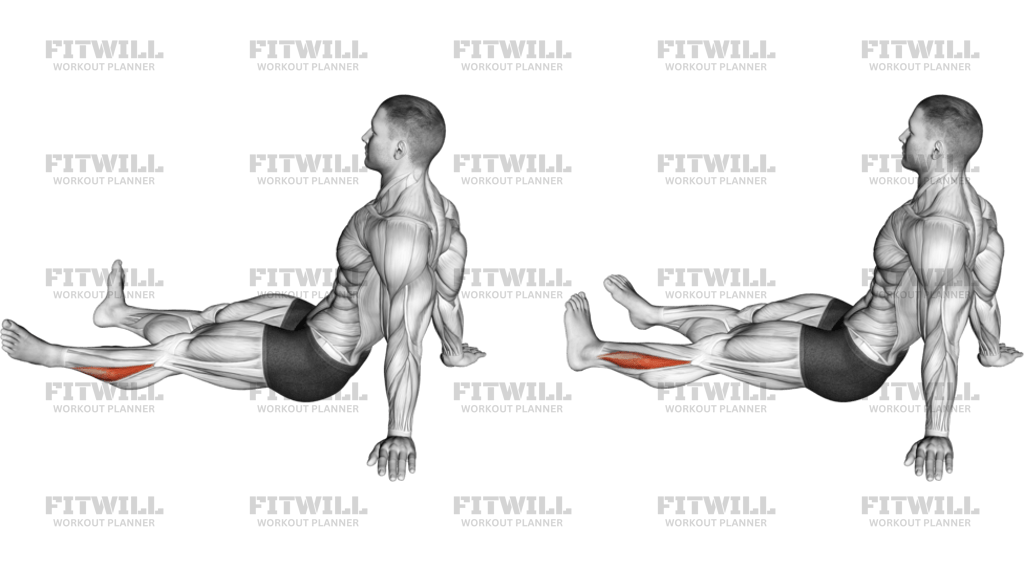
Seated Calf Stretch is a floor-based mobility drill for the lower leg, done on an exercise mat with body weight only. Sit tall, extend the working leg, and use your hands to draw the forefoot back toward the shin so the calf lengthens under control. The position looks simple, but the exact line of pull matters because a small change in ankle angle or knee position changes where the stretch is felt.
The main target is the calf complex, especially when the knee stays mostly straight. In anatomy terms, that means the gastrocnemius and soleus are the primary tissues being challenged, while the hips, trunk, and shoulders work lightly to keep you square and steady. If you slouch, twist, or let the pelvis roll back, the stretch tends to drift away from the calf and into the low back or the arch of the foot.
A good Seated Calf Stretch starts with a stable seat on the mat and a clear setup for the ankle. Keep the heel of the stretching leg anchored, reach to the toes or forefoot, and gently pull until you feel a firm but tolerable line along the back of the lower leg. Hold the position with relaxed breathing and no bouncing, letting each exhale soften the tissues instead of forcing a bigger range.
This stretch is useful after running, jumping, calf raises, or any lower-body session where the ankles feel stiff. It can also be used before squats or lunges when you want a little more ankle freedom without loading the calves aggressively. Because the body is supported on the floor, it is easy to scale for beginners, but the stretch should always stay within a pain-free range.
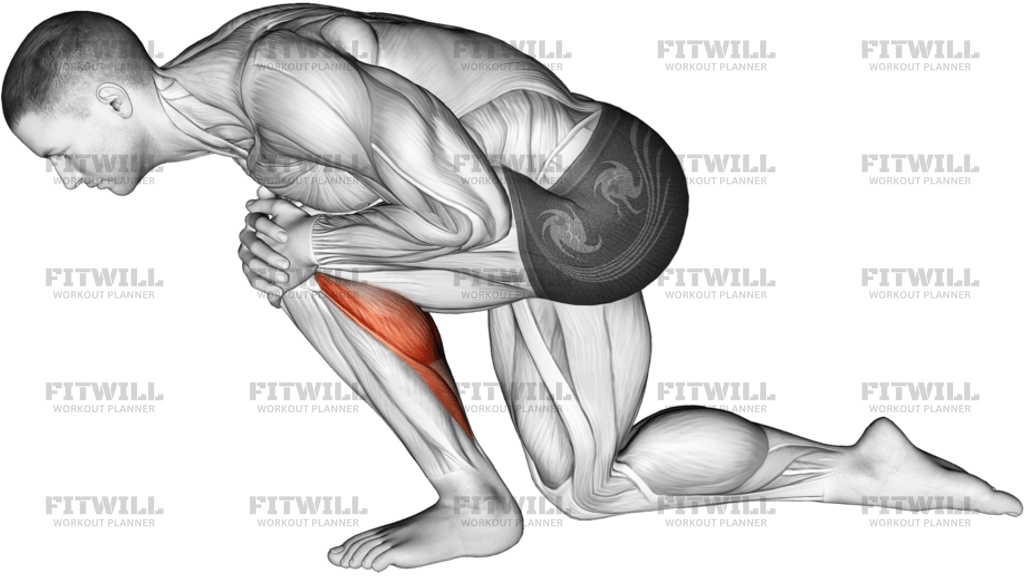
The image shows a controlled, one-sided floor stretch where the torso stays long and the hands guide the foot rather than yanking the body forward. That setup is the point of the exercise: it keeps the calf under tension while minimizing unnecessary strain elsewhere. Done patiently, Seated Calf Stretch can improve comfort at the ankle and make the lower leg feel less restricted without needing anything more than a mat and your own body weight.
[ Workout Log & Planner ]
Put your next workout in Fitwill
Keep your plan and training log ready when you are.


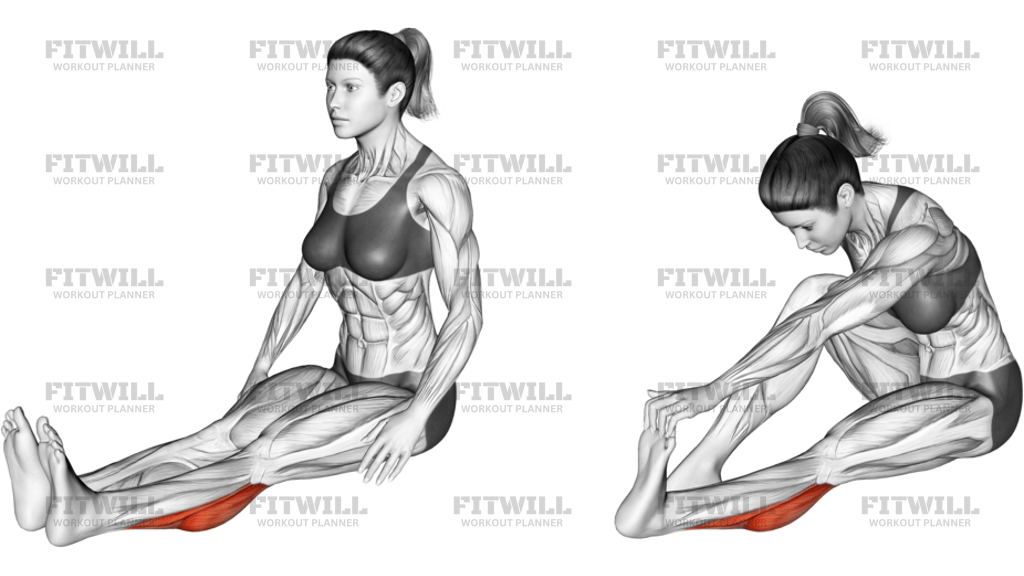
Instructions
- Sit on an exercise mat with one leg extended in front of you and the other leg bent and relaxed to the side.
- Keep the heel of the stretching leg planted on the floor and point the toes up toward the ceiling.
- Sit tall through the spine, square your hips, and reach both hands toward the forefoot of the straight leg.
- Loop your hands around the toes or ball of the foot and gently draw the toes back toward your shin.
- Stop when you feel a firm stretch through the back of the lower leg, not a sharp pull in the Achilles.
- Keep the stretching knee mostly straight to bias the upper calf, or soften it slightly if the stretch is too intense.
- Breathe out slowly and hold the position without bouncing or twisting the torso toward the working leg.
- Release the foot with control, reset your posture, and repeat on the other side.
Tips & Tricks
- Keep the heel heavy on the mat; if it lifts, the stretch shifts away from the calf.
- Pull from the forefoot or toes, not by yanking your torso forward.
- A straighter knee emphasizes the gastrocnemius; a slight knee bend eases tension and shifts more toward the soleus.
- Use a towel or strap around the forefoot if your hands cannot reach without rounding hard.
- Keep the toes aimed up instead of letting the foot turn out, which helps the stretch stay organized.
- Exhale as you draw the toes back; the calf usually relaxes a little more on the breath out.
- Stop short of numbness or tingling in the foot, which usually means you have cranked the stretch too far.
- Hold the torso tall instead of collapsing over the thigh, so the lower leg gets the stretch instead of the back.
Frequently Asked Questions
What does Seated Calf Stretch target most?
It mainly targets the calf complex, especially the gastrocnemius and soleus, with a secondary stretch through the Achilles area.
Why is one leg straight in the Seated Calf Stretch image?
The straight leg gives the calf room to lengthen while keeping the heel anchored and the ankle easy to guide into dorsiflexion.
Do I need a strap for Seated Calf Stretch?
No, but a strap or towel helps if you cannot reach the forefoot without rounding your back or losing the heel position.
Should my knee be straight or bent?
Keep it mostly straight for a stronger calf stretch; add a small bend if the tension is too intense or if you want to ease pressure on the upper calf.
Why do I feel Seated Calf Stretch in my foot instead of my calf?
You are probably pulling too hard through the toes or letting the ankle collapse. Back off slightly and keep the heel planted while you guide the forefoot back.
Can beginners do Seated Calf Stretch?
Yes. It is a low-load floor stretch that is easy to scale, as long as you keep it gentle and pain-free.
How long should I hold Seated Calf Stretch?
A typical hold is 20-40 seconds per side, repeated for a few calm rounds depending on how tight your calves feel.
When should I use Seated Calf Stretch?
It works well after running, jumping, or calf training, and it can also be used before lower-body lifting if your ankles feel stiff.
Is Seated Calf Stretch the same as a hamstring stretch?
No. You should feel the stretch in the back of the lower leg, not high in the thigh or behind the knee.
What should I do if Seated Calf Stretch hurts my Achilles?
Reduce the range immediately and avoid forcing the toes back. Sharp Achilles pain is a sign to back off rather than push deeper.