Slopes Towards Stretch
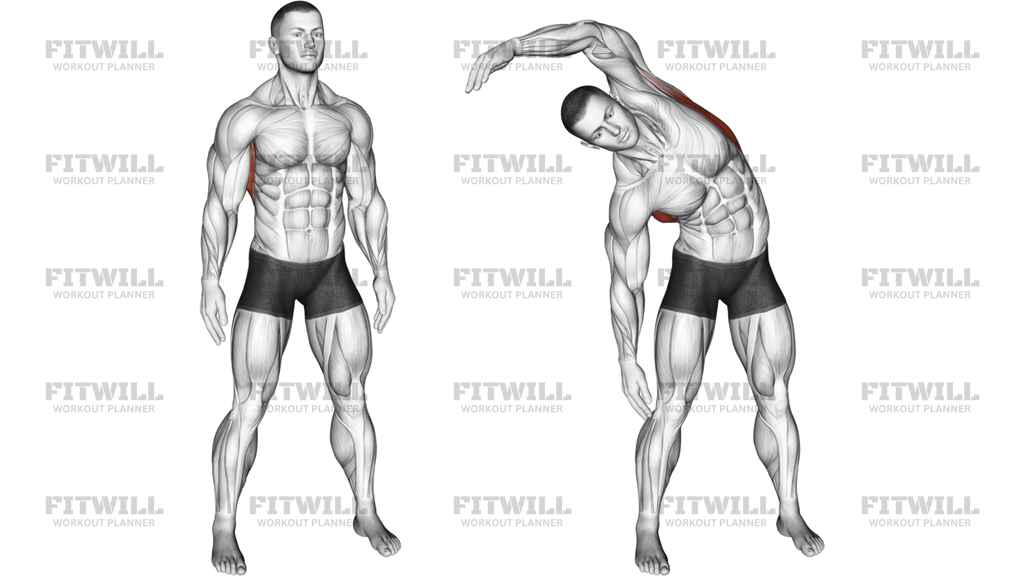
Slopes Towards Stretch is a standing side-bend stretch performed with one arm reaching overhead and the torso leaning away from that arm. The image shows a tall stance on the floor mat with the rib cage opening on one side of the body, which makes this a useful drill for the lats, obliques, intercostals, and shoulder line rather than a loaded strength exercise. The setup matters because a small change in foot placement, pelvic position, or arm reach will decide whether you feel a long side-body stretch or simply collapse into the lower back.
This movement is about creating length through the entire side of the body while keeping the chest open and the hips controlled. The raised arm acts like a long lever: when you reach up first and then tilt away, the space between the rib cage and the pelvis opens on the working side. That is why the exercise pairs well with pulling sessions, overhead pressing days, or any warm-up where the trunk and shoulders need to move more freely before harder work begins.
Good repetitions stay smooth and quiet. Brace lightly, keep both feet grounded, and lean only as far as you can without twisting the torso or letting the shoulder drift forward. The lower hand can slide down the thigh for balance, but the body should stay stacked enough that you can breathe into the stretched side instead of hanging loosely on the joint. If the stretch turns into pinching in the low back or compression in the shoulder, the range is too deep.
Use this movement for controlled mobility work, not speed. Short holds with steady breathing are usually enough to create a useful stretch, and alternating sides helps keep the rib cage and trunk balanced. It is beginner-friendly because the load is body weight only, but the exercise still rewards precision: reach long, keep the pelvis level, and return to center without jerking out of the end range.
[ Workout Log & Planner ]
Put your next workout in Fitwill
Keep your plan and training log ready when you are.


Instructions
- Stand on the mat with your feet about hip-width apart and your weight spread evenly through both feet.
- Lift one arm overhead with the palm facing in and keep the other arm relaxed by your side or sliding lightly down the thigh.
- Reach tall first, then lean your torso away from the raised arm so the ribs and side waist begin to open.
- Keep both hips facing forward and avoid turning the chest toward the floor or ceiling.
- Let the lower hand travel down the thigh only as far as you can keep the stretch smooth and balanced.
- Breathe into the stretched side for a brief hold without shrugging the shoulder toward the ear.
- Return to the center slowly, reset your posture, and repeat on the opposite side.
- Match both sides with the same range and tempo before finishing.
Tips & Tricks
- Think about creating length from the fingertips to the outer hip before you lean; the stretch should feel long, not crunched.
- Keep the pelvis stacked over the feet so the side bend comes from the trunk instead of a hip shift.
- If the shoulder starts to shrug, lower the arm slightly and reach outward through the fingertips instead of forcing more height.
- A wider stance can help you stay balanced if the reach makes you wobble, especially on the side with the lower hand sliding down the leg.
- Let the exhale soften the ribs into the stretch; holding your breath usually locks the side body.
- Do not rotate the torso open to cheat the range, because that turns the drill into a twist instead of a side bend.
- Keep the knees soft if straight legs make the pelvis tuck under or the lower back tighten.
- Stop the descent as soon as you feel a clean stretch along the rib cage, lat, and outer waist rather than a pinch in the spine.
Frequently Asked Questions
What does Slopes Towards Stretch work?
It mainly stretches the side body, especially the lats, obliques, and the muscles between the ribs, with some shoulder involvement from the overhead reach.
Is this a standing stretch or a floor exercise?
It is a standing side-bend stretch done on the mat, so you stay on your feet the whole time.
Should I twist my torso while I reach overhead?
No. Keep the chest facing forward and lean sideways so the stretch stays on the rib cage and waist instead of turning into a rotation.
How far should I bend to the side?
Go only until you feel a long stretch along the side of the body without pinching the lower back or collapsing the shoulder.
Can beginners do this stretch?
Yes. Beginners can keep the stance wider, bend less, and use a shorter hold while they learn to keep the torso stacked.
When should I use this exercise?
It works well in a warm-up before upper-body training, after long periods of sitting, or during a cooldown to restore side-body mobility.
How can I make the stretch easier?
Keep the raised arm slightly lower, slide the opposite hand only partway down the thigh, and reduce the lean until you can stay balanced.
What is the most common mistake?
Most people either twist open, shrug the shoulder, or bend so far that the stretch shifts into the lower back instead of the side waist.