Spine Stretch
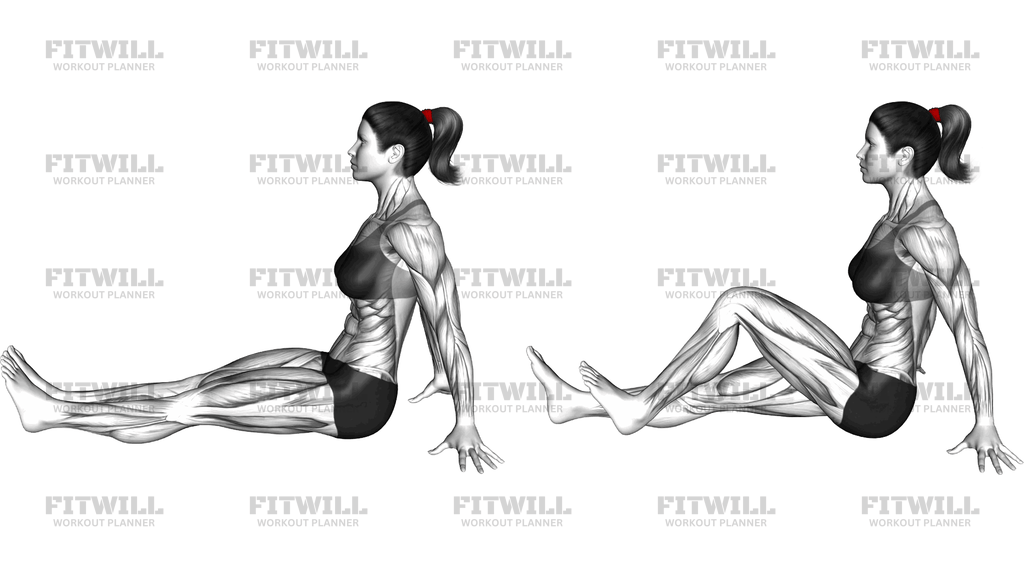
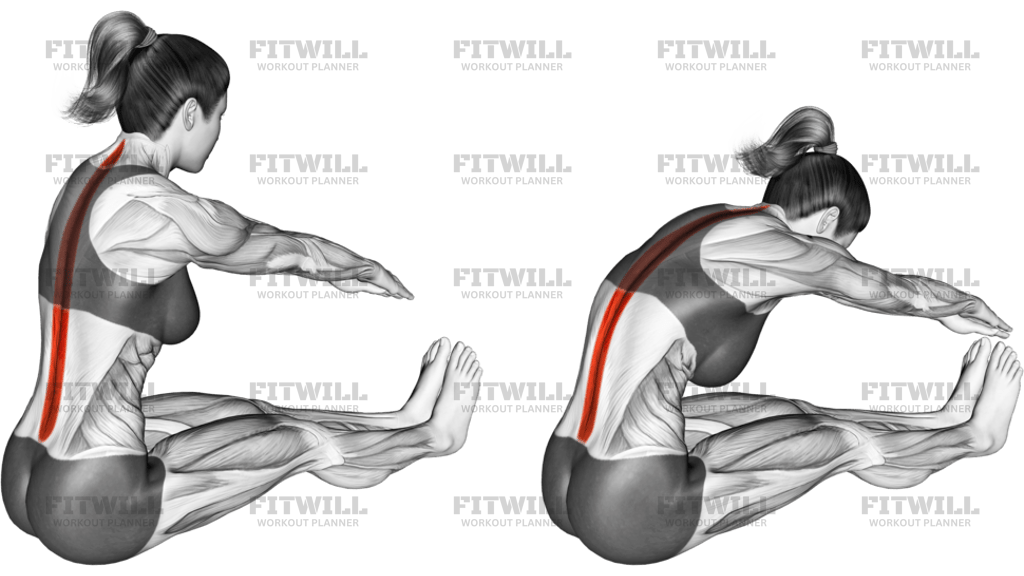
Spine Stretch is a seated mat exercise that takes the body into controlled spinal flexion with both arms reaching forward and the legs held long in front of you. In the image, the torso starts upright and then rounds forward segment by segment, which makes this a posture-and-control drill as much as it is a stretch. The main value is not how far you can fold; it is how cleanly you can articulate the spine while staying organized through the shoulders, ribs, and pelvis.
This movement is usually used as a Pilates-style mobility and control exercise for the back line of the body. It asks the hamstrings, calves, lower back, and upper back to lengthen while the abdominals keep the trunk from collapsing. The outstretched arms add a small shoulder and lat component, but the real training effect comes from keeping the reach active while the torso rounds forward and the pelvis stays grounded on the mat.
Setup matters because the position determines whether the stretch stays smooth or turns into a slump. Sit tall on the exercise mat with the legs extended, feet flexed, and the arms reaching forward at shoulder height. From there, the spine should lengthen upward before it curls forward. If the knees bend, the shoulders hike, or the pelvis rolls off the floor too early, the stretch stops being a controlled spinal articulation and becomes a generic toe reach.
Each repetition should feel like a deliberate exhale into more space rather than a forceful collapse. As you fold forward, keep the abdomen engaged enough to support the spine, reach through the fingertips, and let the head follow the curve of the back instead of leading the motion. The return should be equally controlled: stack the lower back, mid-back, and upper back back to tall sitting one section at a time so the exercise trains both the forward curl and the upright recovery.
Use Spine Stretch when you want a low-load movement that opens the posterior chain, improves trunk awareness, and reinforces clean seated posture. It fits well in warm-ups, Pilates-inspired sessions, recovery days, or as a technical reset between heavier training blocks. Work in a range that keeps the sit bones heavy, the neck relaxed, and the breath steady. The best version of this exercise leaves you feeling lengthened through the back of the body without any pinching in the lower back or strain in the shoulders.
[ Workout Log & Planner ]
Put your next workout in Fitwill
Keep your plan and training log ready when you are.


Instructions
- Sit on the exercise mat with your legs extended straight in front of you, feet flexed, and your arms reaching forward at shoulder height.
- Grow tall through the crown of your head first so the spine is long before you begin to fold.
- Keep your sit bones grounded and draw the ribs gently in to prepare the trunk for movement.
- Exhale as you nod the chin slightly and begin rounding the upper back forward.
- Continue curling the spine segment by segment until your arms reach toward your feet or the far edge of the mat.
- Keep the shoulders relaxed and the fingertips actively reaching so the torso does not collapse into the hips.
- Pause briefly in the deepest comfortable position without bouncing or forcing the range.
- Inhale to stack the spine back to tall sitting one section at a time.
- Reset your posture before the next repetition and keep the neck long throughout.
Tips & Tricks
- Think of reaching forward and backward through the spine at the same time, not just folding at the hips.
- If your hamstrings pull hard, bend the knees slightly so the pelvis can stay heavy on the mat.
- Keep the feet flexed to help the legs stay active and prevent the knees from drifting outward.
- Let the exhale help the ribs draw back so the torso rounds without gripping the neck.
- Stop the fold when the lower back starts to lose control; a smaller range done well is the right version here.
- Keep the shoulders away from the ears as the arms reach, otherwise the stretch turns into upper-trap tension.
- Use the return phase to practice stacking the spine back up instead of snapping upright.
- If your low back pinches, shorten the range and focus on a taller start position.
- Move slowly enough that you can feel each section of the spine curve and uncurve.
Frequently Asked Questions
What does Spine Stretch mainly work?
It mainly trains spinal control and length through the back line of the body, especially the abdominals, upper back, and hamstrings.
Do I need any equipment besides a mat?
No. This version is a bodyweight mat exercise, so the main requirement is enough floor space to sit tall and reach forward.
Should my legs stay straight the whole time?
Yes, the legs are usually extended with the feet flexed. If the hamstrings are tight, a small knee bend is better than rounding the lower back aggressively.
Where should I feel the stretch?
You should feel length through the hamstrings, calves, and the back of the torso, with the abdominals helping you control the curl rather than the low back taking over.
Why do the arms reach forward during the stretch?
The forward reach helps keep the shoulders active and encourages the spine to articulate forward instead of simply slumping.
Can beginners do Spine Stretch safely?
Yes. Beginners usually do best with a smaller range, relaxed shoulders, and a slow exhale into the fold.
What is the biggest form mistake with this movement?
Letting the torso collapse from the hips or rounding too far too fast. The goal is a controlled spinal curve, not a hard reach for the toes.
How should I breathe during each rep?
Exhale as you curl forward and inhale as you stack back up. That rhythm helps keep the ribs and neck relaxed.