Standing Gastrocnemius Calf Stretch
Standing Gastrocnemius Calf Stretch is a standing lower-leg stretch that targets the upper calf with the knee kept straight. In the image, one foot is supported on a bench while the other leg stays grounded, creating a long line from the hip through the calf so the gastrocnemius can lengthen without turning the movement into a bent-knee soleus stretch. It is a body-weight mobility drill, but the height of the bench, the angle of the ankle, and how square you keep the hips all change where the stretch is felt.
This movement is useful after running, jumping, heavy calf work, squats, or any session where the ankle feels stiff and the calf feels short. The point is not to force a big fold at the waist; it is to create a controlled stretch through the calf belly while keeping the raised leg organized. If the foot is too high or the torso collapses, the stretch often shifts into the hamstring, Achilles, or lower back instead of staying where it belongs.
The best version starts with a stable stance and a long spine. Place the working foot on the bench, keep that knee straight, and square the pelvis toward the support. Then hinge from the hips until you feel a firm but manageable stretch along the calf of the elevated leg. A small amount of ankle dorsiflexion is enough; if you have to yank the foot or round the back to get there, the setup is too aggressive.
During the hold, breathe slowly and keep the pressure even. The stretch should feel strong across the calf muscle, not sharp behind the knee or tight at the Achilles tendon. Return out of the position with control, reset your stance, and repeat on the other side so both calves get the same quality of stretch. Beginners can use this safely as long as they keep the range comfortable and avoid bouncing or forcing the end position.
[ Workout Log & Planner ]
Put your next workout in Fitwill
Keep your plan and training log ready when you are.


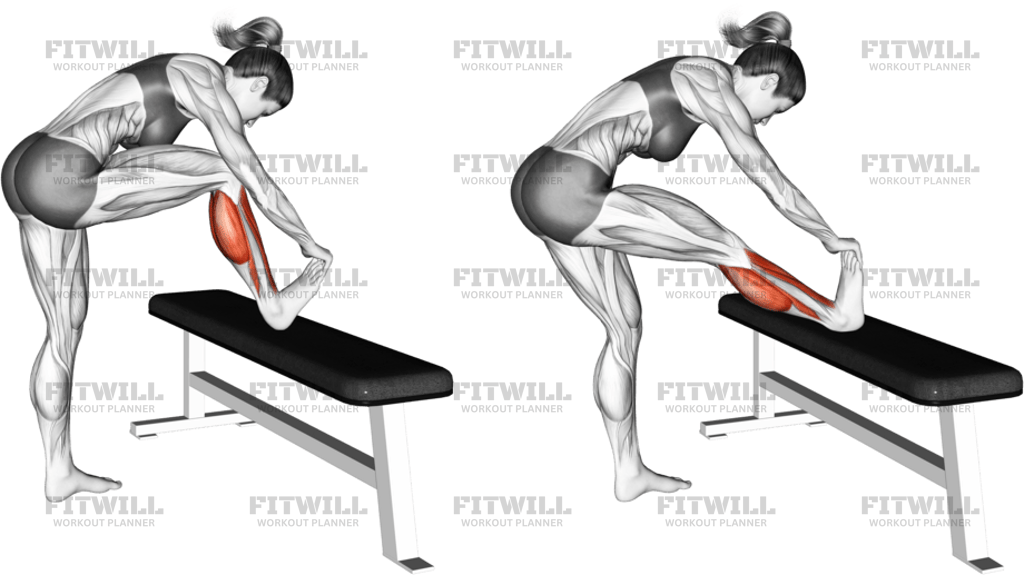
Instructions
- Stand facing a flat bench or sturdy support and place one foot on it so the leg is straight and the calf can lengthen.
- Keep the other foot flat on the floor and set it far enough back that you can hinge without losing balance.
- Square both hips toward the bench and keep the raised knee fully extended rather than letting it bend.
- Pull the toes of the raised foot back toward the shin or keep the foot firmly dorsiflexed so the calf stays on stretch.
- Hinge forward from the hips until you feel a clear stretch in the upper calf of the elevated leg.
- Keep the chest long and the spine neutral instead of rounding your lower back to chase more range.
- Hold the end position with steady breathing for the intended stretch time, usually 15 to 30 seconds.
- Ease out of the stretch under control, reset your stance, and repeat on the other calf.
Tips & Tricks
- Keep the raised knee straight; a soft bend turns this into a different calf stretch and reduces the gastrocnemius emphasis.
- Use a bench height that lets you stay square and balanced instead of reaching so high that your hips twist open.
- The stretch should land high in the calf belly, not as a stabbing pull behind the knee or a pinch at the heel.
- If your heel starts to peel or the foot rolls inward, reduce the lean and re-set the tripod of the standing foot.
- A small forward hinge is enough; forcing a deep torso fold usually just loads the low back.
- Exhale as you settle into the hold and keep the breath quiet so the calf can relax instead of guarding.
- Make both sides feel the same by holding each calf for the same amount of time and using the same bench setup.
- Back off immediately if you feel Achilles tendon pain, sharp knee discomfort, or numbness in the foot.
Frequently Asked Questions
What muscle does Standing Gastrocnemius Calf Stretch target most?
It mainly targets the gastrocnemius, the larger two-headed calf muscle on the back of the lower leg.
Why is the knee kept straight on the raised leg?
A straight knee biases the gastrocnemius. If you bend the knee, the stretch shifts more toward the soleus.
What should I feel on the bench-supported leg?
A firm stretch through the upper calf and possibly the outer or inner calf head, but not a sharp pull behind the knee.
Do I need to hold the foot with my hands?
No. The hands can help in some setups, but the stretch should still come from foot position, knee lockout, and the hip hinge.
Is this the same as a bent-knee calf stretch?
No. Bent-knee versions focus more on the soleus, while this straight-knee version puts more tension on the gastrocnemius.
How long should I hold each side?
A typical hold is 15 to 30 seconds, repeated for the same duration on both calves.
Can I do this after running or leg day?
Yes. It is commonly used after running, jumping, squats, or calf training when the lower leg feels tight.
What is a common setup mistake with this stretch?
The most common problem is twisting the hips or rounding the low back to get more range instead of keeping the stretch in the calf.