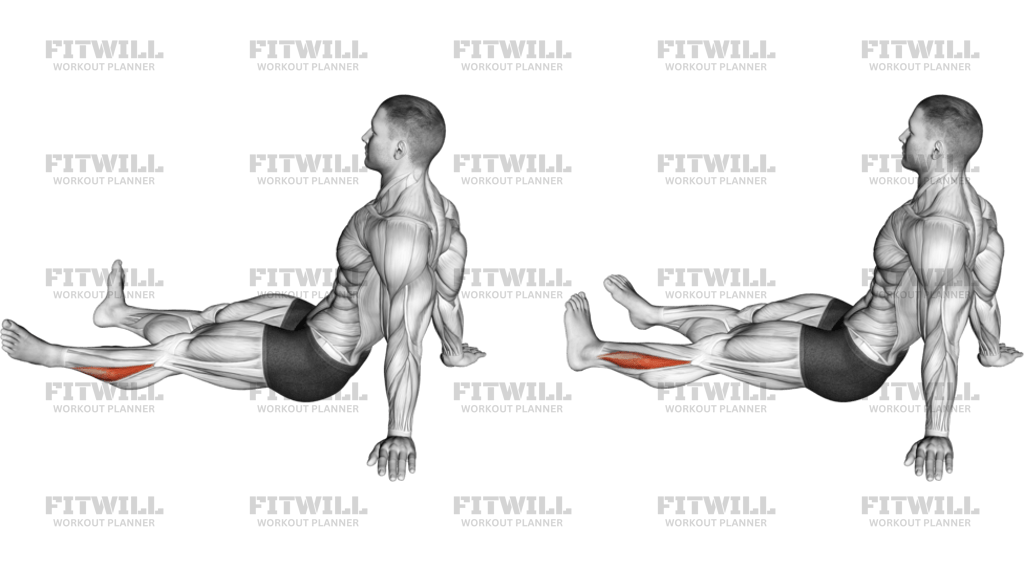
Peroneals Stretch
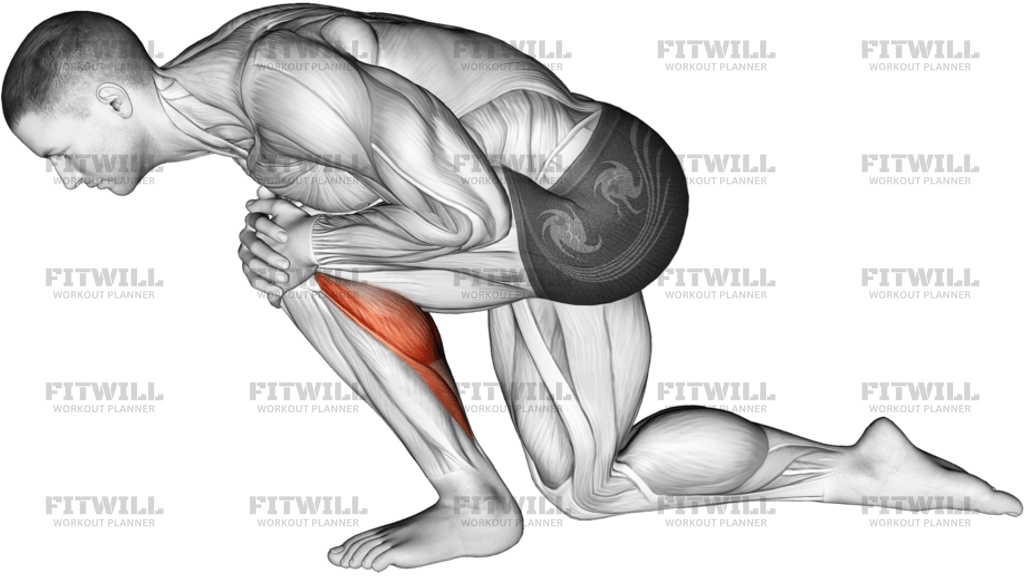
Peroneals Stretch is a seated lower-leg mobility exercise that opens the outside of the ankle and shin. It uses body weight, an exercise mat, and a strap or band around the forefoot to create a controlled stretch through the peroneal muscles. The position is simple, but the line of pull matters because a small change in ankle angle can shift the stretch from the outer shin to the calf or the top of the foot.
This movement is useful when the outside of the lower leg feels tight from running, cutting, jumping, or long periods in shoes that keep the ankle stiff. The target area is the peroneals, with nearby calf and foot muscles assisting as you hold the position. In anatomy terms, the main stretch is felt through the fibularis longus and fibularis brevis, while the calf and foot stabilizers help keep the knee and ankle organized.
The setup should leave the working leg long and relaxed, with the knee as straight as comfortable and the heel anchored to the floor or mat. From there, the strap helps you guide the foot into a mild stretch instead of yanking on the ankle. The best version of Peroneals Stretch feels like a steady pull along the outside of the shin, not a pinch in the ankle joint or a cramp in the toes.
Control is more important than intensity. Move the foot slowly, then hold the end position while breathing through the stretch and keeping the knee and hip quiet. If the foot twists or the arch collapses, the stretch usually stops being useful and becomes a generic ankle tug, so the goal is to keep the motion clean and specific to the outer lower leg.
Use Peroneals Stretch as part of a warm-up, cooldown, or recovery block when you want better ankle comfort and cleaner lower-leg mobility. It can also be helpful before exercises that demand ankle movement, such as lunges, squats, or change-of-direction work. Beginners can do it safely with a light pull and short holds, but the stretch should never create sharp pain, numbness, or tingling.
[ Workout Log & Planner ]
Put your next workout in Fitwill
Keep your plan and training log ready when you are.


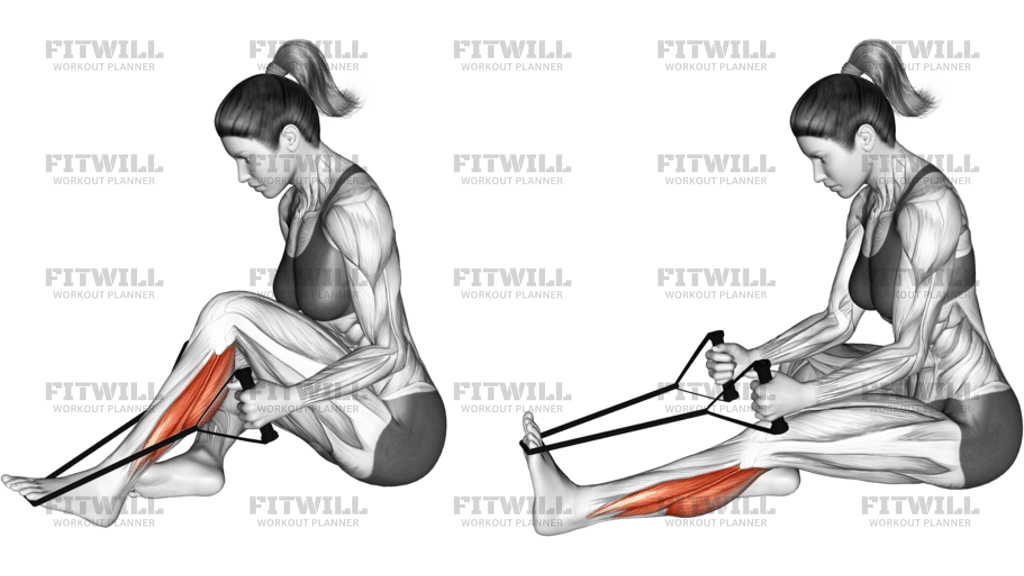
Instructions
- Sit on an exercise mat with one leg extended and the other leg bent comfortably out of the way.
- Loop a strap or band around the ball of the working foot and hold both ends with your hands.
- Keep the working knee straight or only slightly bent, with the heel resting down and the toes relaxed.
- Set your torso tall so the pull comes from the ankle instead of rounding your back.
- Gently draw the forefoot back while turning the sole slightly inward until you feel the stretch along the outside of the lower leg.
- Pause at the first firm stretch and keep the ankle steady instead of rocking or bouncing.
- Breathe slowly into the hold for the full duration, letting the outside of the shin lengthen on each exhale.
- Release the tension gradually, return the foot to neutral, and repeat on the other side if both ankles need work.
Tips & Tricks
- Keep the heel heavy on the floor or mat; if it lifts, the stretch usually shifts away from the peroneals.
- Pull through the strap with your hands, not your shoulder blades, so the ankle gets a clean, controlled line of tension.
- A slight inward turn of the sole is usually enough; forcing a hard twist can irritate the outer ankle.
- If you feel the stretch mostly in the calf, let the knee stay a little softer and bring the forefoot a touch farther inward.
- If your toes cramp, relax the toes and hold the strap lower across the forefoot instead of gripping the band.
- Keep the pelvis square to the floor so you do not cheat the stretch by rotating the hip.
- Longer exhales help the outer shin settle; do not chase more range on every breath.
- Back off immediately if you feel a pinch on the front or outside of the ankle joint rather than a muscle stretch.
Frequently Asked Questions
What does Peroneals Stretch target most?
It mainly targets the peroneal muscles on the outside of the lower leg, especially fibularis longus and fibularis brevis.
Do I need a strap or band for Peroneals Stretch?
A strap or band makes it easier to guide the foot into a steady stretch without forcing the ankle. You can also use a towel if you can keep the pull even.
Where should I feel Peroneals Stretch?
You should feel a steady stretch along the outside of the shin and ankle, not a sharp sensation in the joint or toes. If it moves into the calf, reduce the pull and adjust the foot angle.
Should my knee stay straight during Peroneals Stretch?
Keeping the knee mostly straight helps isolate the outer lower leg. A small bend is fine if your hamstrings or knee limit the position, but a fully bent knee usually changes the stretch.
Is Peroneals Stretch good before running or jumping?
Yes, it can be a useful ankle mobility drill before work that depends on foot and ankle control. Keep the hold short and gentle so it loosens the area without tiring it out.
What if I feel the stretch on the top of my foot instead?
That usually means the ankle is being pulled too far into toe-up position or the strap is sitting too low. Reposition the strap across the forefoot and use a smaller range.
Can beginners do Peroneals Stretch safely?
Yes, as long as the pull is light and the ankle stays comfortable. Start with short holds and stop before the stretch becomes sharp or numbing.
How long should I hold Peroneals Stretch?
A short hold of 20-30 seconds is usually enough for a mobility or cooldown set. Repeat it a few times on each side if the ankles feel especially stiff.