Lever Standing Leg Curl
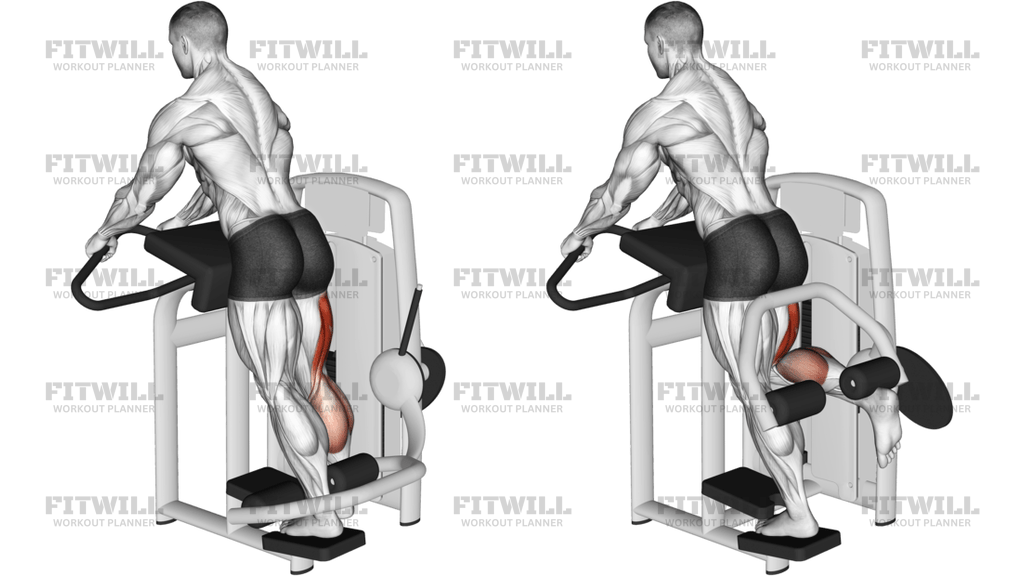
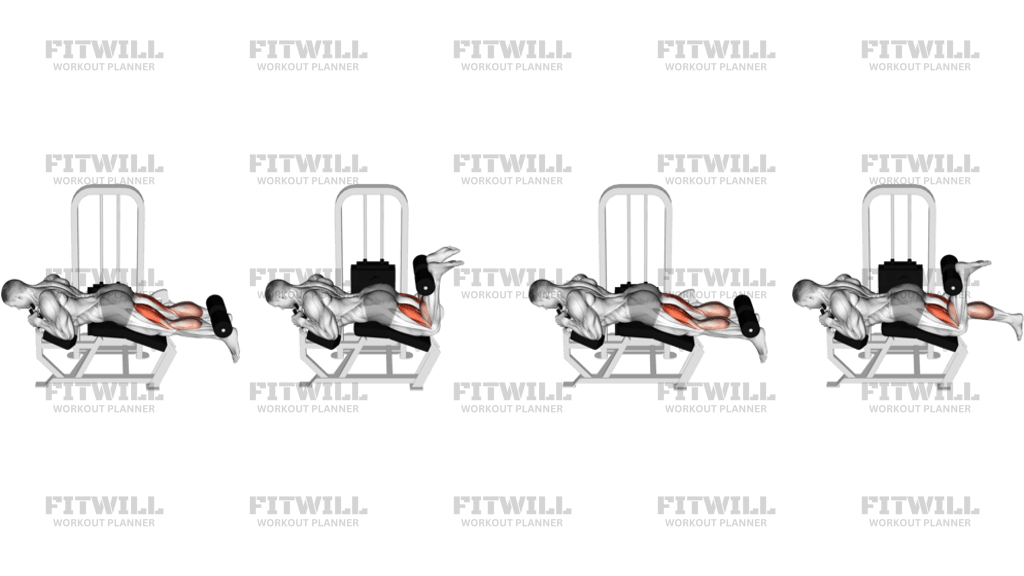
Lever Standing Leg Curl is a machine-based hamstring exercise performed one leg at a time. You stand with your torso braced against the support pad, place the working ankle behind the roller, and curl the heel toward your glute by flexing the knee against the machine lever. The fixed path makes it easier to isolate knee flexion without using much hip swing, which is why this movement is useful for building hamstring strength, improving leg balance, and teaching cleaner lower-body control.
The setup matters more here than on many free-weight exercises. If your hips are too far back, your lower back will take over; if you stand too close or too far from the roller, the knee line will feel awkward and the rep will turn into a partial range. A good setup lets the pad support your torso while the working leg moves smoothly from near-full extension into a strong curl, with the ankle staying planted on the roller and the pelvis staying square to the machine.
This exercise trains the hamstrings through knee flexion, so the working leg should do the bending while the rest of the body stays quiet. The non-working leg stays grounded on the platform for balance, and the hands usually hold the machine handles so you can keep your torso from drifting. At the top of the rep, the heel should come up under control rather than snapping into position. On the way down, let the roller return slowly so the hamstrings keep working instead of dropping the weight stack.
Because the machine removes a lot of balance demand, Lever Standing Leg Curl is a practical accessory movement for athletes, bodybuilders, and general lifters who want more direct hamstring work after squats, deadlifts, or lunges. It is also useful when you want unilateral training to expose left-right differences in strength or control. The exercise is not about maximal load; it is about repeating a smooth curl with the knee, keeping the hips still, and finishing each rep with the same position and tempo.
Treat any discomfort in the knee, ankle, or lower back as a setup problem first. The machine should feel stable enough that the hamstrings drive the motion without you having to lean, twist, or kick the pad. Clean reps, a controlled return, and a range you can own are the priorities.
[ Workout Log & Planner ]
Put your next workout in Fitwill
Keep your plan and training log ready when you are.


Instructions
- Set the roller pad just above your lower calf or Achilles and stand on the platform with your chest and hips braced against the machine support.
- Plant your non-working foot firmly and place the working ankle behind the roller so the knee starts nearly straight but not locked out.
- Grip the handles and square your hips and shoulders to the machine before you begin the first rep.
- Brace your torso, then curl the working heel upward by bending the knee against the lever.
- Keep the thigh still and let the movement come from knee flexion instead of swinging the hip forward.
- Curl until you feel a strong hamstring contraction and the roller reaches the top of your comfortable range.
- Pause briefly at the top without letting your hip lift or your lower back arch.
- Lower the lever slowly until the leg is almost straight again, keeping tension on the hamstrings the whole way down.
- Reset your stance if needed, then repeat for the planned reps before switching sides.
Tips & Tricks
- Place the roller low enough on the lower leg that it stays secure, but not so low that it slips toward the heel during the curl.
- If your torso shifts forward, move your feet and chest position before adding more weight.
- Use a slow lowering phase; the return is where many lifters lose hamstring tension and turn the set into a bounce.
- Keep the working knee pointing straight ahead so the curl stays clean and the hip does not rotate outward.
- Do not force the top position with a hard kick; stop where the hamstrings are fully shortened and the pelvis stays still.
- Hold the handles lightly enough to steady yourself, not so hard that you pull your whole body out of position.
- If the non-working leg is helping you shove through the rep, reduce the load and make the standing foot only a support point.
- A moderate load with full control usually trains this machine better than a heavy stack with partial range.
- Exhale as you curl and inhale as the roller returns, especially if you tend to brace too hard and lose rhythm.
- Stop the set when the hips start to rock or the roller stops following the same path on every rep.
Frequently Asked Questions
What does Lever Standing Leg Curl train most?
It primarily trains the hamstrings through knee flexion, with the glutes and calves helping stabilize the body.
Why do I stand on one leg for this machine?
The standing leg keeps you balanced while the working leg curls the roller, which makes the movement more isolated and unilateral.
Where should the roller pad sit on my leg?
It should sit just above the lower calf or Achilles so the pad stays secure as you curl the heel toward your glute.
Should my thigh move during the rep?
No, the thigh should stay mostly still. The action should come from bending the knee, not from swinging the hip or arching the back.
What is the most common mistake on this exercise?
The biggest mistake is using too much weight and kicking the lever with body sway instead of controlling the curl.
Is Lever Standing Leg Curl good for beginners?
Yes, as long as the load is light enough to keep the torso steady and the roller path smooth.
How far should I curl the leg?
Curl until the hamstrings are strongly contracted and the pelvis stays quiet; do not chase a range that forces you to twist.
Can this replace seated or lying leg curls?
It can be a useful hamstring accessory, but it is best treated as a variation rather than a full replacement for other curl patterns.