Legs-Up The Wall Yoga Pose
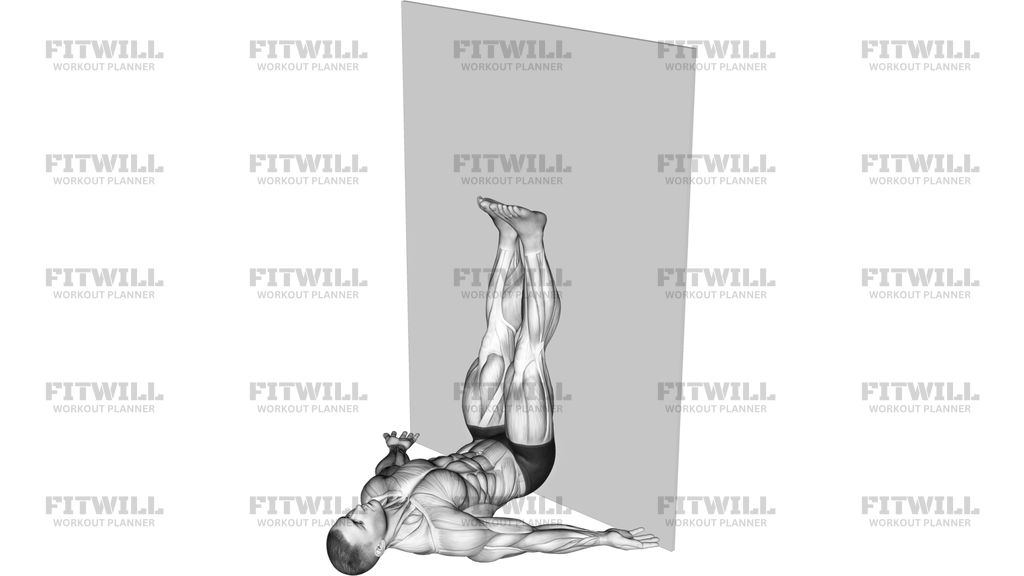
Legs-Up-the-Wall Yoga Pose is a restorative floor position used to unload the legs, calm the nervous system, and give the hamstrings and calves a long, passive stretch. The pose is not about repetition speed or load. It is about finding a position where the legs can relax vertically, the pelvis can settle, and the breath stays smooth enough to let the body downshift.
The image shows the classic setup: the back is on the floor, the hips are close to the wall, and both legs are supported with the feet reaching upward. That wall contact matters because it removes balance demands and lets you focus on alignment instead of effort. When the pelvis is too far from the wall, or the legs are forced straighter than the hamstrings allow, the low back can arch or the stretch can turn sharp. A small adjustment in distance is usually enough to make the position feel restorative instead of strained.
This pose primarily targets the back of the legs, especially the hamstrings and calves, while the glutes, hips, and trunk work lightly to keep the body organized. It can also feel good after running, standing work, cycling, or long periods of sitting because it changes the angle at the hips and encourages a slower breathing pattern. Many people use it at the end of training, before bed, or during recovery sessions when they want a simple position that helps the body settle.
To get the most from it, ease into the wall, let the shoulder blades rest on the floor, and allow the arms to open out to the sides as shown in the image. The goal is not to press the heels hard into the wall or chase a dramatic stretch. The goal is to let gravity do the work while you stay calm, keep the neck relaxed, and make tiny adjustments until the stretch is present but comfortable.
If the pose creates numbness, tingling, pinching in the low back, or cramping behind the knees, come out and reset. A bent-knee version, a slightly wider leg angle, or a small cushion under the pelvis can make the position more usable. For most people, the best version is the one that lets the legs rest heavily, the breath slow down, and the body stay in the position long enough for the stretch to actually settle in.
[ Workout Log & Planner ]
Put your next workout in Fitwill
Keep your plan and training log ready when you are.


Instructions
- Sit with one hip against the wall, then lower your shoulder and back to the floor before swinging both legs upward.
- Scoot your hips close enough to the wall that your legs can rest vertically without forcing your low back to arch.
- Let your arms open out from your sides with the palms facing up and the shoulder blades heavy on the floor.
- Extend the knees as far as is comfortable, keeping a soft bend if the hamstrings feel too tight.
- Settle the heels, calves, and backs of the thighs against the wall or let them hover slightly if that feels better.
- Relax the jaw, neck, and rib cage, and keep the pelvis neutral instead of tucking hard under.
- Breathe slowly through the nose and let each long exhale soften the hips and abdomen.
- Hold the pose for the planned time without pushing deeper into discomfort.
- To exit, bend the knees, roll to one side, and press up with the hands before standing.
Tips & Tricks
- If the hamstrings feel sharp rather than long, slide the hips a few inches away from the wall and keep a small knee bend.
- Keep the sacrum and tailbone heavy on the floor so the stretch stays in the back of the legs instead of dumping into the low back.
- The arms in the image are not decorative; opening them out helps the chest relax and makes it easier to stay there longer.
- Do not press the heels aggressively into the wall. This is a rest position, not an isometric leg drive.
- A blanket or folded towel under the pelvis can make the pose more comfortable for people with a sensitive lower back.
- Longer exhales usually deepen the relaxation better than trying to push the legs straighter.
- If your feet go numb, tingle, or feel cold, come out and reset the angle before holding again.
- This pose should feel easier after one or two minutes, not more intense. If it keeps ramping up, the setup needs to change.
Frequently Asked Questions
What does Legs-Up-the-Wall Yoga Pose mainly stretch?
It most strongly stretches the hamstrings and calves, with the hips and low back relaxing as the position settles.
Is this pose good for beginners?
Yes. It is one of the simplest restorative positions because the wall supports the legs and removes balance demands.
How close should my hips be to the wall?
Start with the hips close enough that the legs can rest upward without forcing the low back to arch. If the stretch feels too strong, move a little away and keep the knees softer.
Should my knees stay locked straight against the wall?
No. A small bend is fine and often better if the hamstrings are tight or the back of the knees feels compressed.
Why are the arms opened out to the sides?
That position helps the chest and shoulders relax, which makes it easier to keep the ribs soft and the breath slow.
What should I do if I feel my low back arching?
Slide the hips a little farther from the wall, soften the knees, or place a folded towel under the pelvis until the back feels neutral.
How long should I stay in the pose?
Most people hold it for one to five minutes, but the right time is the point where the breath stays easy and the position still feels comfortable.
When is this pose most useful?
It works well after running, standing work, or long periods of sitting, and it is also useful before sleep or after training as a down-regulation tool.